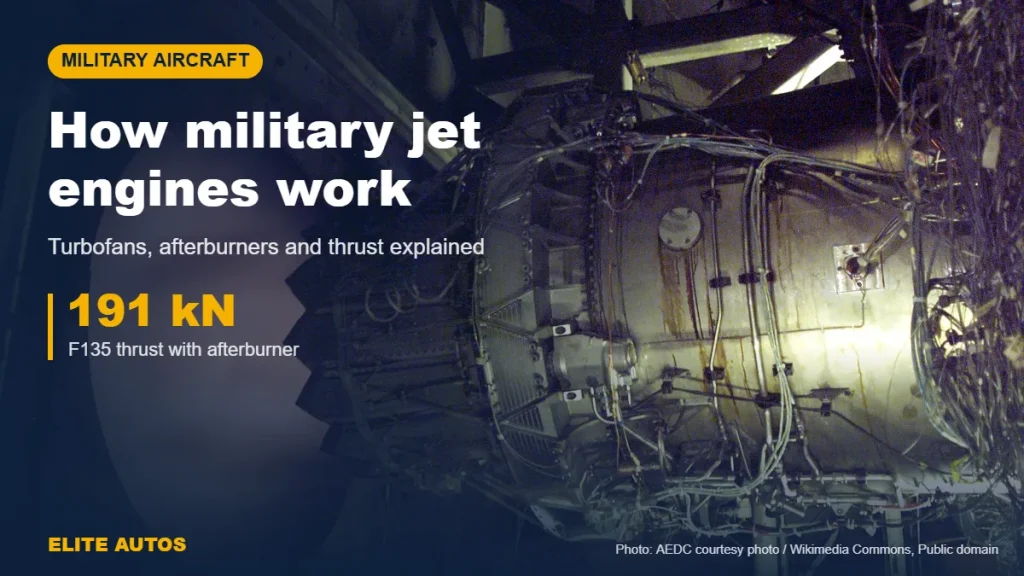
Quick answer: A military jet engine is usually a low-bypass turbofan with an afterburner. Air is sucked in, squeezed by a fan and compressor, burned with fuel, and blasted out through a nozzle; most of the push comes from the hot core, not the fan (NASA Glenn). The afterburner sprays extra fuel into the exhaust to add a large burst of thrust, but burns fuel several times faster, so pilots use it only for take-off and short bursts (Wikipedia: Afterburner). The F-35’s F135 produces about 43,000 lbf (191 kN) with afterburner (Wikipedia).
In this article
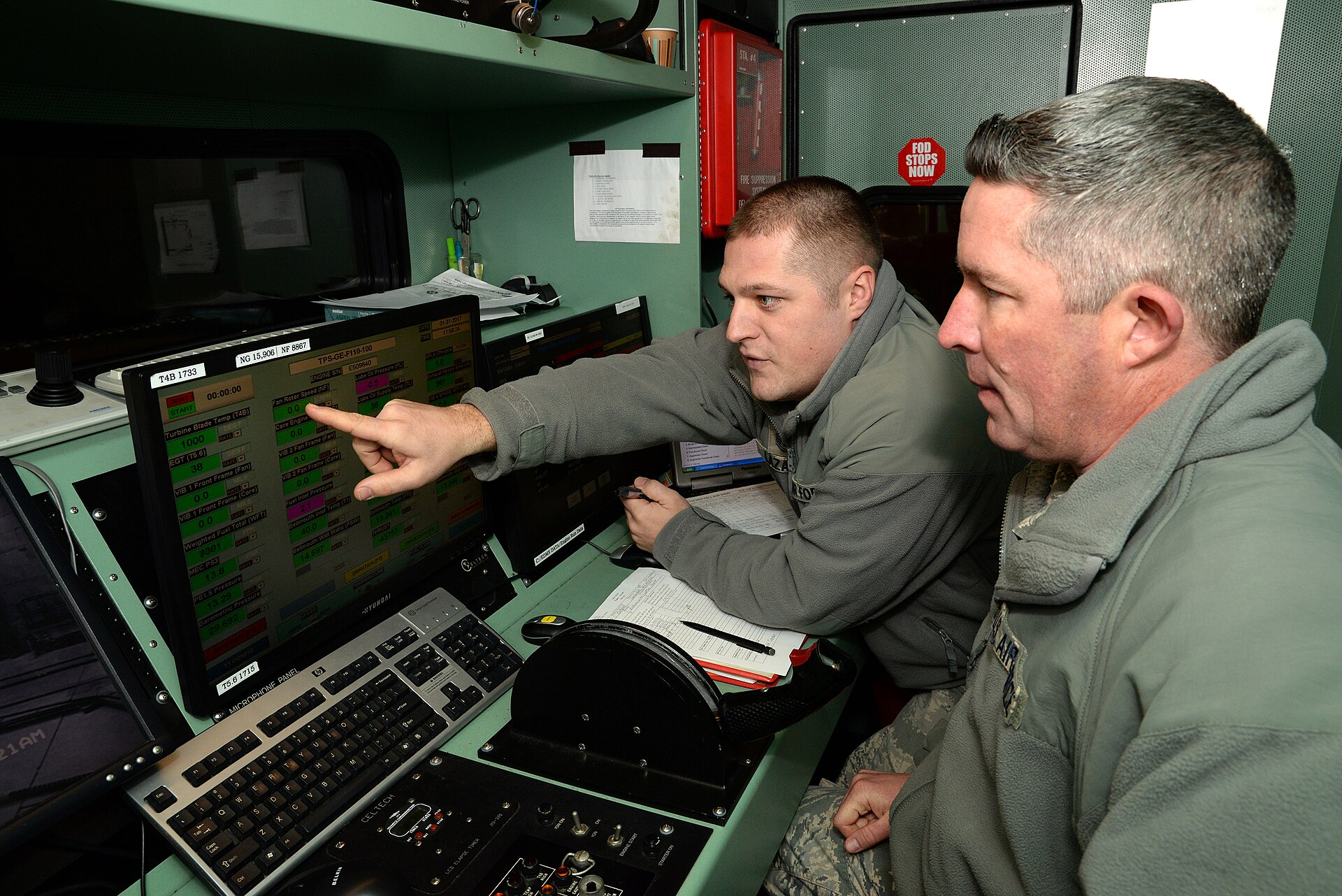
Educational guide based on public sources only. See our Data Source & Disclaimer Policy.
How does a military jet engine work, step by step?
NASA describes the airflow through a turbofan in this order: inlet, fan, compressor, burner, turbines and nozzle (NASA Glenn).
- 1. Inlet: guides air smoothly into the engine, even at supersonic speed.
- 2. Fan: a large front stage that pushes some air around the core (the “bypass” air) and some into it.
- 3. Compressor: many rows of blades squeeze the core air to a high pressure.
- 4. Combustor (burner): fuel is sprayed in and burned continuously.
- 5. Turbines: the hot gas spins turbines, which drive the compressor and fan through shafts.
- 6. Afterburner (optional): extra fuel is burned in the jet pipe behind the turbine.
- 7. Nozzle: a variable nozzle speeds up the exhaust to produce thrust.
Turbofan vs turbojet: what is the difference?
A turbojet sends all its air through the hot core. A turbofan adds a fan that pushes part of the air around the core, which is more fuel-efficient. Airliners use high-bypass turbofans, where most air goes around the core. Fighters use low-bypass turbofans, where only a small share bypasses the core, giving a slim engine that still works well at supersonic speed (NASA Glenn). The bypass ratio of the F-35’s F135 is about 0.57:1, and the F414’s is 0.25:1 (Wikipedia, Wikipedia).
What does an afterburner do?
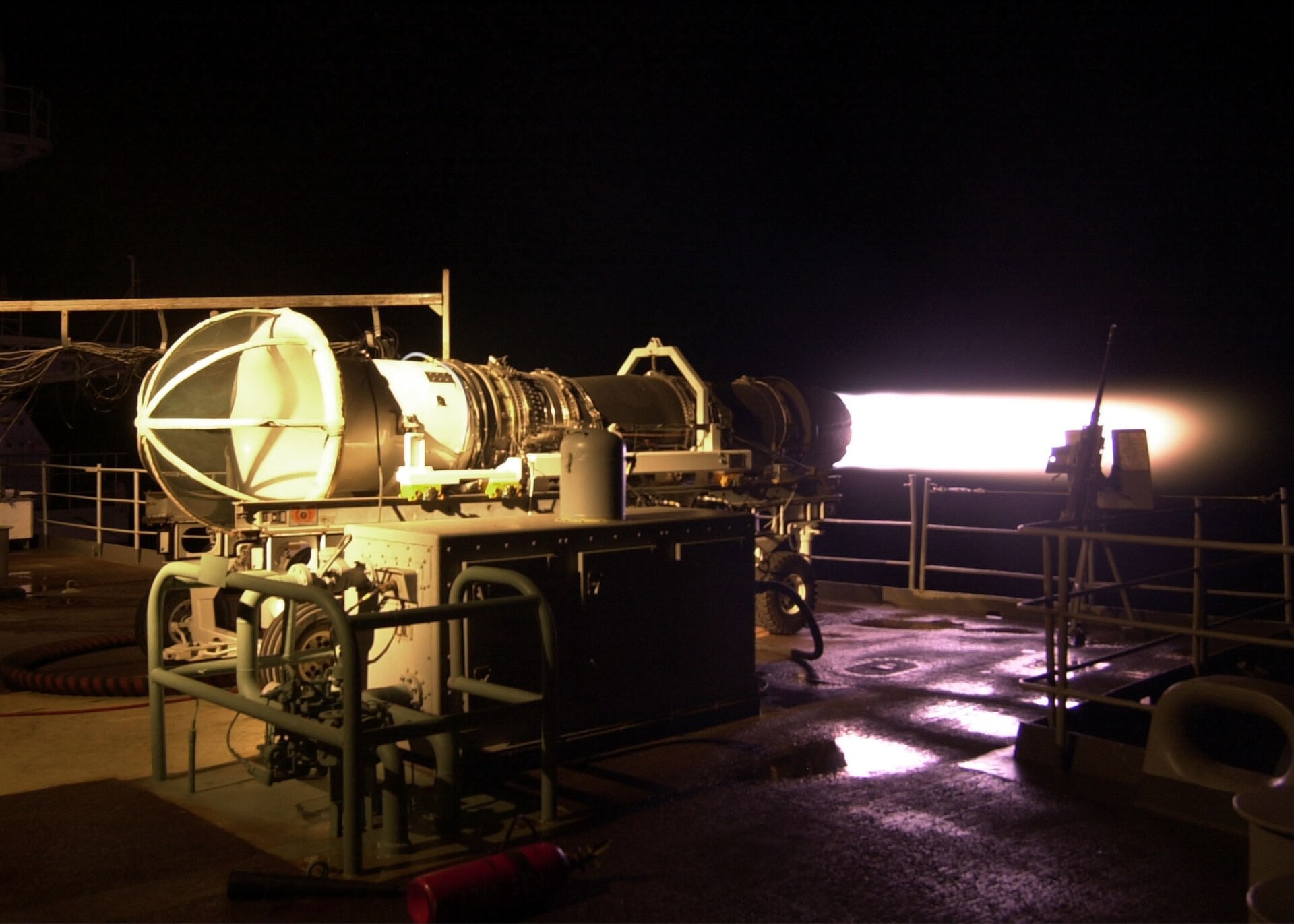
The afterburner sits in the jet pipe after the turbine and before the nozzle. It uses the oxygen left over after the main combustion to burn more fuel, heating and speeding up the exhaust. The nozzle opens wider at the same time so the extra gas can escape (Wikipedia).
How much extra thrust, and at what cost?
In the classic J57 example, the afterburner raised static thrust from 10,200 lbf to 16,000 lbf, about 57% more, while the afterburner’s fuel flow was roughly three times that of the main combustor (Wikipedia). That is why afterburners are used only for short periods such as take-off, carrier launches and high-speed manoeuvres.
Military jet engines compared
| Engine | Aircraft | Dry thrust | With afterburner | Bypass ratio |
|---|---|---|---|---|
| Pratt & Whitney F135 | F-35 | 125 kN (28,000 lbf) | 191 kN (43,000 lbf) | 0.57:1 |
| Saturn AL-41F1 | Su-57 | 88.3 kN | 142.2 kN (147.1 kN emergency) | — |
| Saturn AL-31F | Su-27, Su-30, J-11 | 76.5 kN | 122.6 kN | 0.56:1 |
| General Electric F414 | Super Hornet, Gripen E, Tejas Mk2, KF-21 | 57.8 kN (13,000 lbf) | 97.9 kN (22,000 lbf) | 0.25:1 |
| Eurojet EJ200 | Eurofighter Typhoon | 60 kN | 90 kN | 0.4:1 |
Bigger is not automatically better. The F414 and EJ200 are about a third lighter than the F135 (1,110 kg and 989 kg against 2,910 kg dry), which suits smaller twin- or single-engine fighters (Wikipedia: F414, EJ200, F135).
Why are jet engines so hard to make?
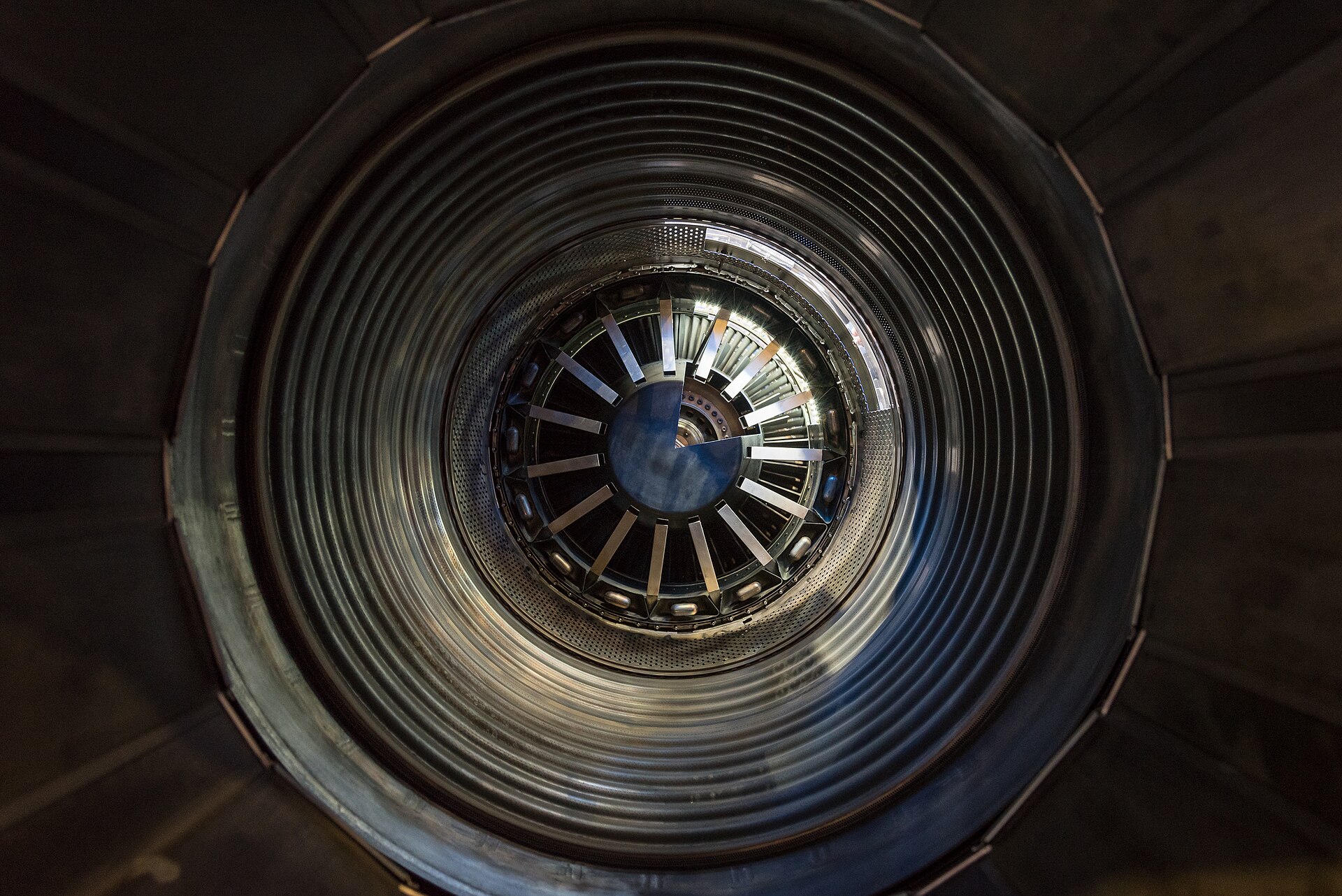
- Extreme heat: turbine blades work in gas hotter than their own melting point, so they need special alloys, coatings and internal cooling channels.
- Precision: thousands of parts spin at very high speed with tiny clearances.
- Testing: a new engine takes many years of ground and flight testing before service.
- Industrial base: only a handful of companies worldwide design complete fighter engines, which is why several countries license or import them.
What is next for military jet engines?
The next step is the adaptive-cycle engine, which can change its bypass ratio in flight: more bypass for efficient cruising, less for maximum thrust. Engineers are also working on better cooling and more electrical power for sensors. These are publicly announced development goals; detailed performance is not published.
Related: how military vehicles evolved: main battle tanks, the Defense & Military Vehicles section and the car-engine side of the story in our EV types explained.
Key takeaways
- Fighters use low-bypass turbofans with afterburners.
- Airflow: inlet → fan → compressor → combustor → turbines → afterburner → nozzle.
- An afterburner can add about 50% or more thrust but burns fuel roughly three times faster.
- The F-35’s F135 is among the most powerful fighter engines at 191 kN with afterburner.
Frequently asked questions
How does a fighter jet engine work?
It sucks in air, compresses it, burns it with fuel and blasts the hot gas out of a nozzle. Turbines driven by the exhaust power the compressor and fan.
What is an afterburner?
A section behind the turbine that burns extra fuel in the exhaust to add a large burst of thrust for take-off or high-speed flight.
Why don’t fighters use afterburner all the time?
Because it burns fuel about three times faster than the main engine, which would drain the tanks quickly.
What is the most powerful fighter jet engine?
The Pratt & Whitney F135 used in the F-35 produces about 191 kN (43,000 lbf) with afterburner, one of the highest published figures for a fighter engine.
What is the difference between a turbofan and a turbojet?
A turbofan sends part of its air around the hot core through a fan, which is more efficient; a turbojet sends all air through the core.
Sources
- NASA Glenn Research Center: Turbofan engine
- Wikipedia: Afterburner
- Wikipedia: Pratt & Whitney F135
- Wikipedia: General Electric F414
- Wikipedia: Eurojet EJ200
- Wikipedia: Saturn AL-31 / AL-41F1