The robotaxi is no longer a demo. In 2026, driverless cars with nobody behind the wheel are carrying paying passengers every day in the United States, China and the Gulf. Waymo alone was providing 500,000 paid rides a week across ten US cities by March 2026 and targets one million a week by the end of the year. Baidu Apollo Go ran 3.2 million fully driverless rides in the first quarter of 2026. Tesla began building its steering-wheel-free Cybercab in April. And Dubai became the first city where you can open Uber and get matched with a car that has no driver.
In this article
- Why 2026 is the breakout year
- Waymo: the US leader
- Tesla: Cybercab and the camera bet
- Baidu Apollo Go: China scale goes global
- Pony.ai, WeRide and the Chinese pack
- Zoox, May Mobility and the platforms
- Dubai and Abu Dhabi: the world test lab
- Side-by-side comparison
- How robotaxis make money
- Safety record and regulation
- What it means for drivers
- How to ride a robotaxi
- Will robotaxis come to Pakistan and South Asia?
- 2027 outlook
- Where you can ride a driverless taxi today
- Lidar vs cameras: the technology split explained
- The vehicles: what robotaxis look like
- Robotaxi myths vs facts
- What robotaxis mean for car ownership and dealers
- Robotaxi glossary
- How we got here: robotaxi timeline 2009 to 2027
- From your car to a robotaxi: the levels of automation
- Robotaxi stocks: how investors can follow the race
- November 2026 update: where the robotaxi race stands now
- Latest: Tesla Robotaxi cities (November 2026)
- Frequently asked questions
This guide maps the whole race: who is operating where, how many rides they give, what a ride costs and feels like, how the business makes money, what the safety record shows, and when (or whether) robotaxis will reach cities in Europe, South Asia and Pakistan. Every number is sourced and dated, because this market changes month by month.
ROBOTAXI RACE 2026: THE NUMBERS
ELITE AUTOS

Why 2026 is the breakout year
Self-driving cars spent a decade being “five years away.” Three things changed at once. First, the leading operators accumulated enough driverless miles to convince regulators in several places to let them charge fares at scale. Second, the cost of sensors and computers fell, so purpose-built robotaxis like Tesla Cybercab and newer Chinese designs became cheaper to build. Third, ride-hailing platforms such as Uber and Lyft decided to partner rather than fight, giving robotaxi companies instant access to millions of riders.
The result is a real market with real competition. In the US, Quartz notes that Tesla, Amazon Zoox, May Mobility and Avride are all carrying paid passengers alongside Waymo. In China, Baidu, Pony.ai and WeRide run large fleets in several cities. And in the Gulf, governments are using the technology as part of a broader push to become early adopters of new mobility.
Waymo: the US leader
Waymo, owned by Google parent Alphabet, is the clear leader outside China. Its growth curve is steep: from 50,000 weekly paid trips in May 2024 to 500,000 by March 2026, a tenfold rise in under two years, TechCrunch reported. At that point it was operating in ten US cities: Phoenix, the San Francisco Bay Area, Los Angeles, Austin, Atlanta, Miami, Dallas, Houston, San Antonio and Orlando.
Expansion kept accelerating. Electrek reported four more driverless markets including Las Vegas in July 2026, and on September 1, 2026, Waymo began paid service in Denver, San Diego and Tampa, taking it to 14 US markets with a fleet above 4,000 vehicles. Each new city starts with dozens of cars covering roughly 150 square miles and scales up from there.
| Milestone | Date | Source |
|---|---|---|
| 50,000 paid rides per week | May 2024 | TechCrunch |
| 100,000 paid rides per week | Late 2024 | TechCrunch |
| 10 US cities, 500,000 rides per week | March 2026 | TechCrunch |
| Las Vegas and three more cities | July 2026 | Electrek |
| Denver, San Diego, Tampa; 14 markets; 4,000+ cars | September 2026 | Crypto Briefing |
| Target: 1 million rides per week | End 2026 | Waymo co-CEO via Bloomberg |
Waymo plans international service in London, followed by Tokyo. Co-CEO Tekedra Mawakana has described one million weekly rides as an “inflection point” for the business. Electrek estimated that at that level Waymo would have annual revenue above $1 billion, growing around 100% a year.
What a Waymo ride is like
Riders book through the Waymo app or, in some cities, through Uber. The car is usually a Jaguar I-Pace fitted with lidar, radar and cameras on the roof and corners. You unlock it with your phone, sit in the back, and press start on a screen. The car drives cautiously and legally, which can feel slower than an aggressive human driver. A remote support team can help if the car gets stuck, but nobody is in the car with you.
Tesla: Cybercab and the camera bet
Tesla approach is the opposite of Waymo. Instead of expensive lidar and detailed maps, Tesla relies on cameras and neural networks trained on data from millions of customer cars. Its bet is that this will scale faster and cheaper, if the software becomes reliable enough.
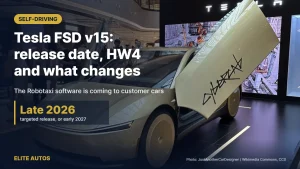
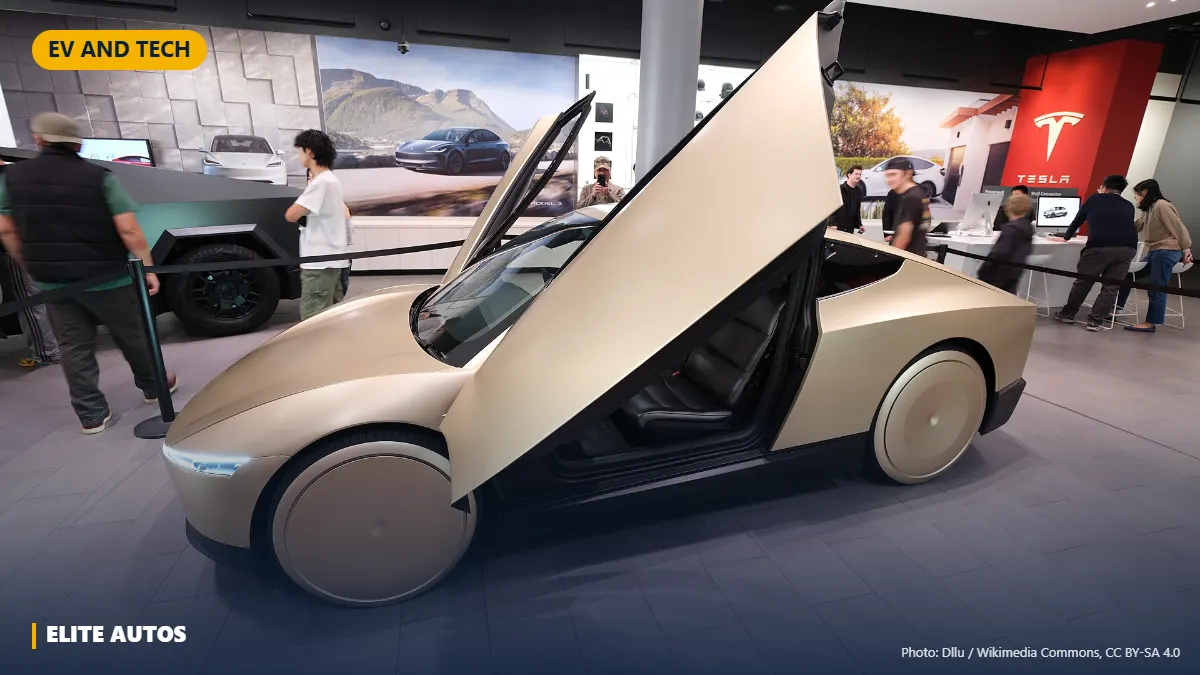
The hardware is now real. Elon Musk confirmed on the first-quarter 2026 earnings call that Tesla had started production of the Cybercab, a two-seat, two-door robotaxi with no steering wheel or pedals, at Giga Texas. A first unit came off the line in February, with continuous production from April. Musk warned that production would follow a “stretched-out S-curve,” slow at first and ramping towards the end of the year, and said material revenue was unlikely before 2027.
- Austin: Tesla said its Cybercab fleet there passed 300 vehicles after an eightfold increase in 30 days.
- Dallas: set as the next Cybercab market in November 2026.
- The production cap question: Tesla says the Cybercab meets existing federal vehicle safety standards without exemptions, so it is not limited by the 2,500-vehicle annual cap that applies to exempted autonomous vehicles. Congress has debated the SELF DRIVE Act, which would raise that cap to 90,000.
- Safety reporting: TechSpot reported that Tesla had disclosed 14 robotaxi crashes in Austin to federal regulators since launch, while redacting details that other operators make public.
Baidu Apollo Go: China scale goes global
If Waymo leads the US, Baidu Apollo Go leads the world by ride count. By February 2026 it had completed more than 20 million rides worldwide, with weekly rides peaking above 300,000 in the fourth quarter of 2025. In the first quarter of 2026 alone it ran 3.2 million fully driverless rides, up more than 120% year on year. By August its footprint covered 28 cities, with more than 350 million autonomous kilometres driven.
Apollo Go outside China
| Market | What happened | Date |
|---|---|---|
| Dubai | First driverless testing permit; then fully driverless commercial service via the Apollo Go app | Jan and Mar 2026 |
| Dubai via Uber | Riders can be matched with a driverless Apollo Go car in the Uber app | August 20, 2026 |
| Abu Dhabi | Fully driverless commercial service | 2026 |
| Hong Kong | First fully driverless trial permit in any right-hand-drive market; testing on Airport Island | July 2026 |
| London | Supervised road tests with Freenow by Lyft; public rides planned for 2027 | July 2026 |
| Switzerland | Level 4 permit in eastern Switzerland under the AmiGo brand | 2026 |
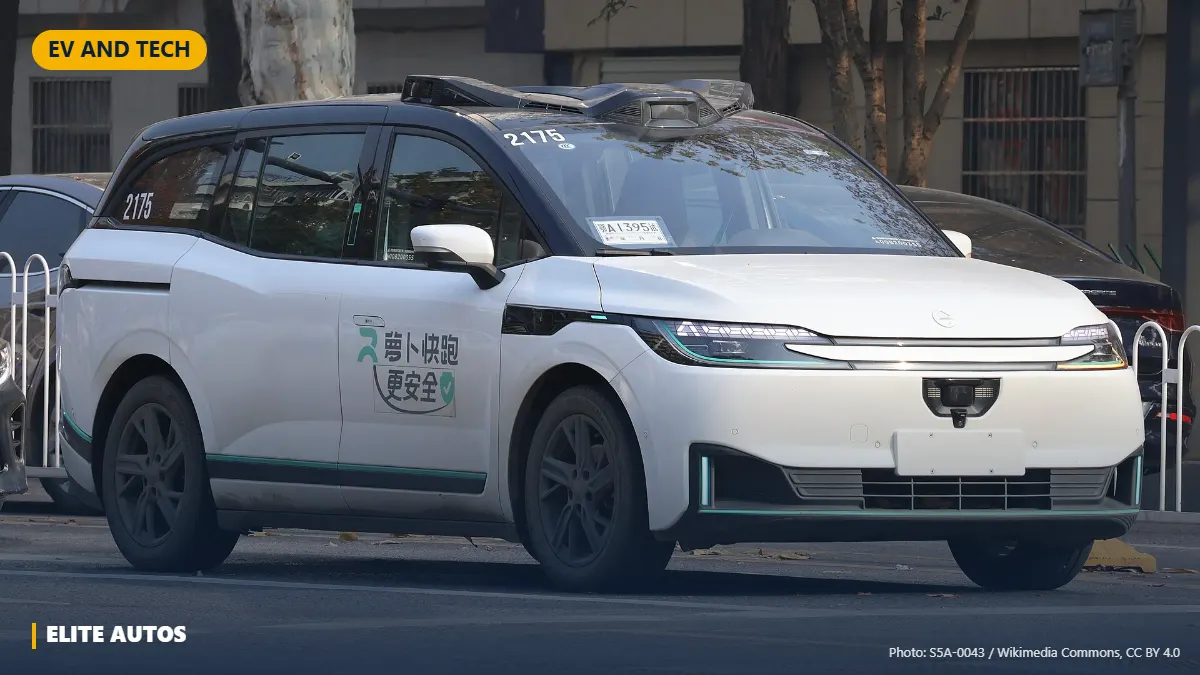
Apollo Go uses its RT6 robotaxi, designed to be cheap to build. Its strategy is partnership-led: Uber in the Middle East and beyond, Lyft and its Freenow subsidiary in Europe. As Electrek put it, in the West Apollo Go is still a supervised pilot; in China and the Gulf it is a full driverless service.
Pony.ai, WeRide and the Chinese pack
Pony.ai reported third-quarter 2026 revenue of $44.6 million, up 75.2%, with robotaxi services revenue up 165.4% and a fleet of 2,768 robotaxis as of September 30. It has operated fully driverless service across China four tier-one cities: Beijing, Shanghai, Guangzhou and Shenzhen. In 2026 it launched what it described as the first commercial robotaxi service in Europe, in Croatia with local partners. Read our full Pony.ai Q3 2026 analysis.
WeRide has pursued a global partnership model, including deployments in the Middle East and Singapore with Grab, the Southeast Asian super-app that invested in the company. Its range includes robotaxis, robobuses and autonomous street sweepers.
Together, Baidu, Pony.ai and WeRide give China a depth no other country matches: several companies operating at scale, competing on cost, and exporting their systems through partnerships rather than selling cars.
Zoox, May Mobility and the platforms
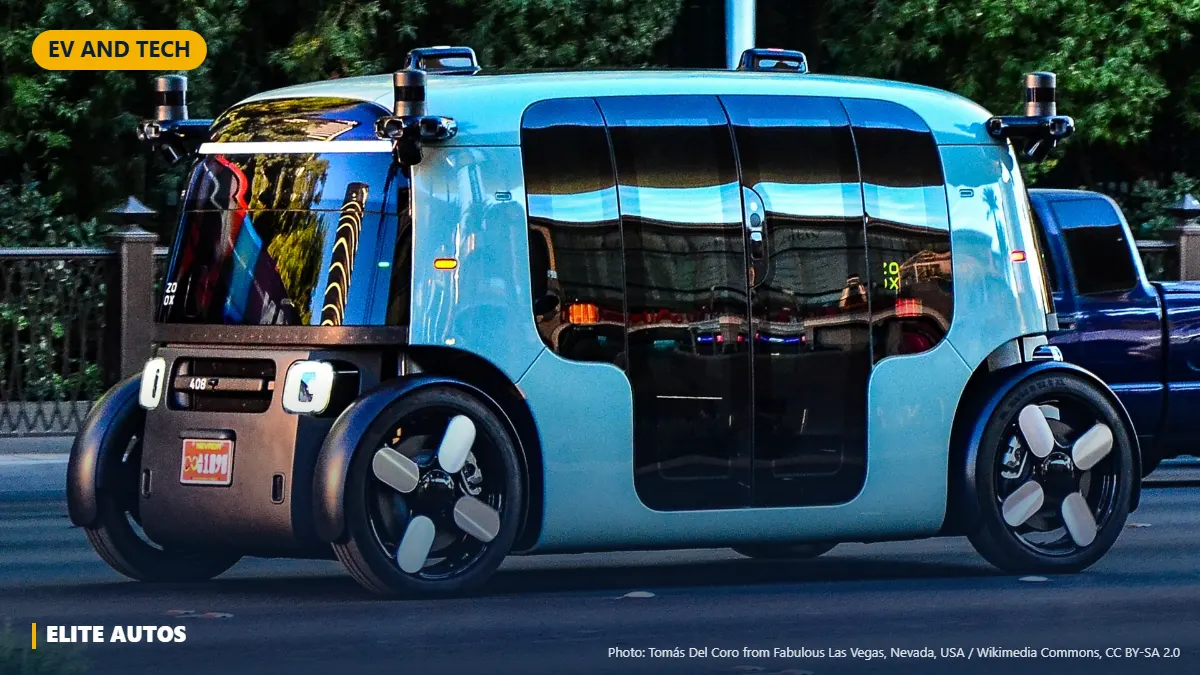
- Zoox (Amazon): builds a box-shaped vehicle with no steering wheel and seats facing each other. US regulators cleared Zoox steering-wheel-free robotaxis for paid rides, a first, InsideEVs reported.
- May Mobility and Avride: smaller operators carrying paid passengers in selected US cities, often through Uber or Lyft.
- Uber: has turned itself into an aggregator, offering Waymo, Apollo Go and others in its app depending on the city.
- Lyft: partnered with Baidu for Europe through Freenow, and with Waymo for Nashville.
The platform shift matters. A rider in Dubai or Phoenix may not even choose a robotaxi brand; the app decides. That makes the robotaxi business look less like car-making and more like airlines selling seats through travel sites.
Dubai and Abu Dhabi: the world test lab
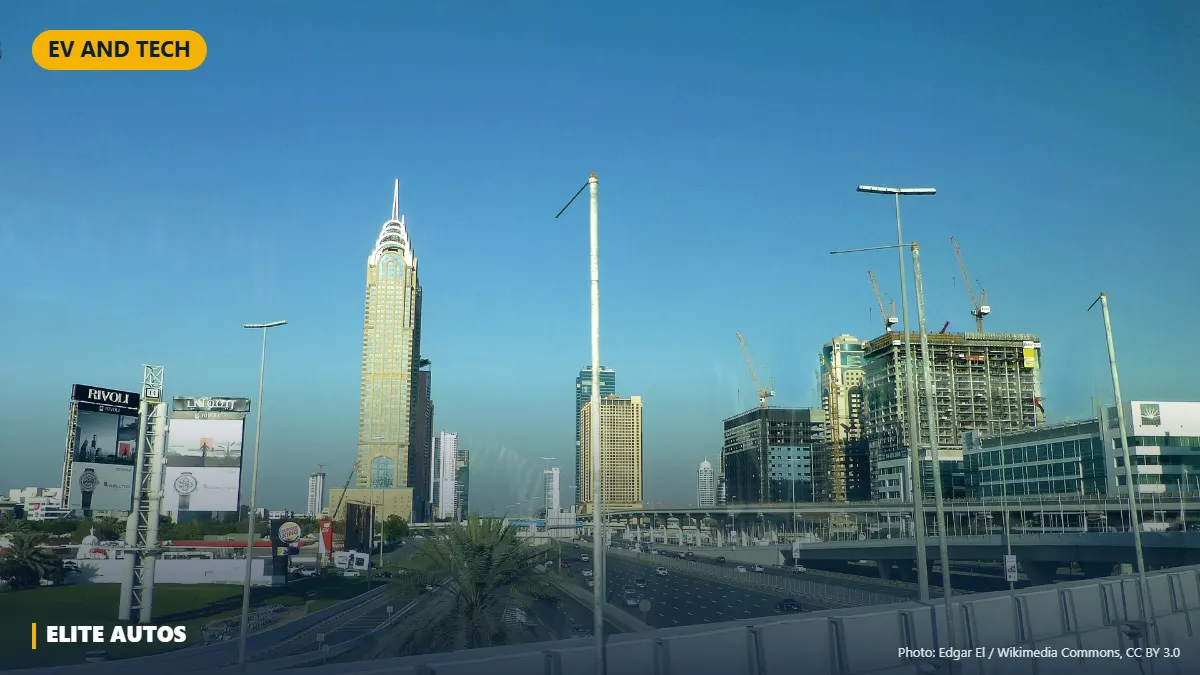
The United Arab Emirates has become the place where robotaxis and air taxis go first outside the US and China. Dubai Roads and Transport Authority partnered with Baidu, which launched fully driverless commercial rides there in 2026 and then went live on Uber in August. Joby Aviation holds an exclusive six-year agreement to run electric air taxis in Dubai and has been building vertiports, starting at Dubai International Airport. Abu Dhabi also hosts driverless commercial services.
Why the Gulf? Wide, well-marked roads, predictable weather apart from heat and dust, governments that can move quickly on permits, and an explicit policy goal to make a share of trips autonomous. For South Asian travellers and expatriates, Dubai is also the most likely place they will take their first robotaxi ride.
Side-by-side comparison
| Operator | Home base | Driverless markets (2026) | Scale indicator | Vehicle | Approach |
|---|---|---|---|---|---|
| Waymo | USA | 14 US markets; London and Tokyo next | 500,000+ paid rides per week; 4,000+ cars | Jaguar I-Pace and newer platforms | Lidar, radar, cameras, HD maps |
| Tesla | USA | Austin; Dallas from Nov 2026 | 300+ Cybercabs in Austin | Cybercab, Model Y | Cameras and neural nets |
| Baidu Apollo Go | China | 28-city footprint incl. Dubai, Abu Dhabi; HK trial | 3.2M driverless rides in Q1 2026 | RT6 | Lidar plus cameras, low-cost vehicle |
| Pony.ai | China | China tier-one cities; Croatia | 2,768 robotaxis; Q3 revenue $44.6M | Gen-7 robotaxi | Lidar plus cameras |
| Zoox | USA | Selected US cities | Paid rides approved | Purpose-built, no steering wheel | Lidar plus cameras |
How robotaxis make money
The economics are simple to describe and hard to achieve. In a normal taxi or ride-hail trip, the driver is the biggest cost. Remove the driver and, in theory, each car can earn more than it costs. Electrek estimated Waymo saves around $2,000 a week per vehicle by not paying a driver for a car running more than 16 hours a day.
- Revenue side: fares per ride, rides per car per day, and the share kept when a platform like Uber takes a cut.
- Cost side: vehicle purchase or lease, sensors, charging, cleaning, insurance, remote support staff, depots and mapping.
- Utilisation is everything: TechCrunch noted Waymo grew rides while keeping a fleet around 3,000 for a time, meaning each car was doing more trips. That is the lever that turns losses into profit.
- Unit economics in China: Pony.ai has said its Gen-7 robotaxi has reached positive unit economics in some cities, helped by cheaper vehicles.
ROBOTAXI ECONOMICS IN ONE PANEL
ELITE AUTOS
The risks are just as clear. A single serious crash can halt a service, as Cruise found in 2023. Fleets need depots and charging close to demand, which is expensive in dense cities. And fare levels may fall as competition grows.
Safety record and regulation
Supporters point to millions of driverless miles with relatively few injury crashes. Critics point to individual incidents and to how much data companies share. Both are true at the same time.
- Waymo: NHTSA opened an investigation after a Waymo robotaxi struck a child at about 6 mph near a school in Santa Monica in early 2026. Waymo said its system detected the child and braked hard from 17 mph.
- Tesla: 14 crashes reported in Austin to federal regulators since launch, with details redacted, according to TechSpot.
- Apollo Go: Baidu says its fleets have driven more than 220 million fully driverless kilometres with a strong safety record.
- Regulation: in the US, rules differ by state; New York permits for Waymo testing expired in March 2026. Federal debate continues over the production cap for vehicles without steering wheels.
What it means for drivers
Every city where robotaxis operate shows the same early pattern, according to Quartz analysis of Gridwise data: human ride-hail drivers complete fewer rides per hour and spend more time waiting. Per-trip pay actually rose in most robotaxi cities in late 2025, but whether that reflects higher fares or a different mix of rides is unclear.
For now, robotaxis cover limited zones, often excluding airports, highways or bad weather, so human drivers still handle many trips. The longer-term question is how fast fleets scale. If Waymo reaches a million weekly rides, that is a meaningful share of ride-hail in its cities, but still small next to total car trips.
How to ride a robotaxi
- Check the city: service only runs inside defined zones. Waymo, Tesla, Zoox and others publish their service maps in their apps.
- Pick the app: in many cities you can use the operator own app (Waymo, Apollo Go) or Uber, where available.
- Book and walk: the car may stop a short walk from your exact pin, at a safe pick-up point.
- Unlock and start: use the app to unlock, buckle up, and press start on the screen.
- Ask for help: every service has a help button connecting you to remote support.
- Rate the trip: feedback is used to improve routes and pick-up points.
Will robotaxis come to Pakistan and South Asia?
Not soon, and not first. As of November 2026 no driverless commercial robotaxi service operates in Pakistan, India or Bangladesh. The reasons are practical:
- Mixed traffic: motorbikes, rickshaws, carts, pedestrians and animals share roads with cars, a much harder environment than Phoenix or Dubai.
- Mapping and road markings: many roads lack consistent lane markings and signage that robotaxi systems rely on.
- Regulation: there is no legal framework for driverless commercial vehicles.
- Economics: driver wages are low, so removing the driver saves far less than in the US or the Gulf.
What is more likely is a gradual path: advanced driver assistance in new cars, autonomous shuttles on private campuses, airports and gated communities, and eventually limited zones in planned city districts. Pakistan car market is booming for very different reasons: our Pakistan auto industry 2026 brief shows car sales up 39% in FY26. For South Asian travellers, the realistic first robotaxi ride is in Dubai or Abu Dhabi.
2027 outlook
- Waymo aims to cross one million weekly rides and launch London and Tokyo.
- Tesla needs to show the Cybercab can scale beyond Austin and Dallas, and publish clearer safety data.
- Baidu plans public rides in London in 2027 and deeper partnerships with Uber and Lyft.
- Pony.ai and WeRide will try to replicate China unit economics in the Middle East, Europe and Southeast Asia.
- Regulators in the US and Europe will decide how fast steering-wheel-free vehicles can scale.
Where you can ride a driverless taxi today
This list covers places where members of the public can book a ride with no safety driver on board, based on announcements up to November 2026. Coverage zones inside each city are limited and change often, so check the operator app before you travel.
| Region | City or market | Operators (driverless, public) |
|---|---|---|
| USA, West | Phoenix, San Francisco Bay Area, Los Angeles, Las Vegas, San Diego, Denver | Waymo; Zoox in selected areas |
| USA, Texas | Austin, Dallas, Houston, San Antonio | Waymo; Tesla Cybercab in Austin, Dallas from Nov 2026 |
| USA, South and East | Atlanta, Miami, Orlando, Tampa | Waymo |
| China | Beijing, Shanghai, Guangzhou, Shenzhen, Wuhan and others | Baidu Apollo Go, Pony.ai, WeRide |
| UAE | Dubai, Abu Dhabi | Baidu Apollo Go (app and Uber in Dubai) |
| Europe | Croatia | Pony.ai with local partners |
| Testing only | London, Hong Kong, Switzerland, Tokyo plans | Apollo Go, Waymo (supervised or trial permits) |
Lidar vs cameras: the technology split explained
Every robotaxi has to answer three questions many times per second: where am I, what is around me, and what will happen next? The industry has split into two camps on how to answer the second question.
The multi-sensor camp: Waymo, Baidu, Pony.ai, Zoox
These companies combine lidar (laser scanners that measure distance precisely), radar (good in rain and fog, and for measuring speed), and cameras (needed to read signs, traffic lights and colours). They also use detailed high-definition maps of every street they serve. The advantage is redundancy: if one sensor is blinded by sun glare or rain, others still see. The disadvantage is cost and the need to map each new city before launch, although Waymo says it can now go from mapping to paid rides in a matter of months.
The camera-only camp: Tesla
Tesla argues that humans drive with eyes alone, so a car should be able to drive with cameras and a powerful neural network. It trains its software on video from millions of customer cars. The advantage is cost and scalability: no lidar, and in theory no need for special maps. The disadvantage is that the system must be extremely reliable in edge cases such as low sun, heavy rain, or unusual objects, and Tesla has not published as much safety data as its rivals.
The vehicles: what robotaxis look like
- Converted cars: Waymo started with Chrysler Pacifica minivans and now runs Jaguar I-Pace SUVs fitted with sensor pods. Apollo Go and Pony.ai have also used modified production cars.
- Purpose-built robotaxis: Tesla Cybercab (two seats, no steering wheel), Zoox (four facing seats, bidirectional, no front or back), Baidu RT6 (designed for low cost).
- Shuttles and robobuses: WeRide and others run small buses on fixed routes in business parks and city districts.
Purpose-built designs matter because they cut cost per ride. Without a steering wheel, pedals or a driver seat, the interior can be built for passengers, and the vehicle can be designed for very high mileage and easy cleaning.
Robotaxi myths vs facts
| Myth | Fact |
|---|---|
| Robotaxis are still just tests | Waymo runs over 500,000 paid rides a week; Apollo Go ran 3.2 million driverless rides in one quarter |
| They only work in perfect weather | Many services pause in heavy snow or storms, but operate daily in rain, night and dense traffic in several cities |
| A remote person is secretly driving | Remote teams give guidance when a car is stuck; they do not steer the car in real time |
| Tesla already has a nationwide robotaxi network | Tesla runs in Austin with Dallas next; Musk has scaled back earlier promises |
| Robotaxis will replace all taxis in a few years | Service areas are limited, fleets are thousands not millions, and many countries have no legal framework yet |
What robotaxis mean for car ownership and dealers
If robotaxis become cheap and common in a city, some households will drop a second car, and young people may delay buying a first one. That would hit new-car demand at the margin, along with insurance, parking and fuel businesses. It will not happen evenly: dense, wealthy, sunny cities first; rural areas and emerging markets much later.
- Dealers: fewer private buyers in robotaxi cities, but new business in fleet sales, servicing and cleaning contracts for operators.
- Carmakers: a new type of customer, the fleet operator, who buys on cost per mile rather than brand image.
- Insurers: liability shifts from individual drivers towards operators and software makers.
- Cities: less parking demand, but possible extra congestion from empty cars cruising between rides.
For more on how dealers are adapting, see our Dealership Ops section.
Robotaxi glossary
- Level 4: a vehicle that can drive itself without human attention inside a defined area and conditions.
- Safety driver: a human in the driver seat ready to take over; a service with one is not truly driverless.
- ODD (operational design domain): the area, roads, speeds and weather in which an autonomous car is allowed to drive itself.
- Lidar: a laser sensor that measures distance to build a 3D picture of the surroundings.
- Remote assistance: a human operator who gives the car high-level guidance when it is stuck, without driving it.
- Utilisation: how many hours a day a robotaxi is carrying paying passengers; the key to profit.
How we got here: robotaxi timeline 2009 to 2027
| Year | Milestone |
|---|---|
| 2009 | Google starts its self-driving car project, the forerunner of Waymo |
| 2016 | The project becomes Waymo, a separate Alphabet company |
| 2018 | Waymo One launches in the Phoenix area, initially with safety drivers |
| 2020 | Waymo opens fully driverless rides to the public in Phoenix |
| 2022 | Baidu Apollo Go begins fully driverless paid rides in Wuhan and Chongqing; Cruise starts driverless rides in San Francisco |
| October 2023 | California suspends Cruise driverless permits after a pedestrian was dragged by a Cruise car |
| December 2024 | GM stops funding Cruise robotaxi business |
| June 2025 | Tesla launches a small robotaxi service in Austin |
| 2026 | Waymo reaches 500,000+ weekly rides; Tesla starts Cybercab production; Apollo Go goes driverless in Dubai and on Uber |
| 2027 | London public rides planned (Apollo Go); Waymo London and Tokyo; US eVTOL air taxi passenger flights |
The Cruise episode is the most important lesson in that timeline. A single serious incident, and how a company handles it, can end a robotaxi programme backed by one of the world largest carmakers. Every operator now treats safety communication as a survival issue, not just a public relations task.
From your car to a robotaxi: the levels of automation
Most new cars sold today, including in Pakistan, the Gulf and India, offer some driver assistance. It helps to understand where that sits compared with a robotaxi.
| Level | What it means | Example | Who is responsible? |
|---|---|---|---|
| Level 0-1 | Warnings or one assist at a time | Lane departure warning, cruise control | Driver |
| Level 2 | Car steers and brakes together, driver must watch at all times | Tesla Autopilot and FSD (Supervised), most adaptive cruise with lane centring | Driver |
| Level 3 | Car drives itself in limited conditions; driver can look away but must take over when asked | Mercedes Drive Pilot on certain highways | Car in its conditions, driver when asked |
| Level 4 | Car drives itself with no human needed inside a defined area | Waymo, Apollo Go, Pony.ai, Tesla Cybercab service | Operator |
| Level 5 | Drives anywhere a human can, in all conditions | Does not exist yet | Operator |
Robotaxi stocks: how investors can follow the race
There is no pure-play Waymo stock; it sits inside Alphabet. Several listed companies give investors exposure to robotaxis, with very different risk profiles. Elite Autos does not give investment advice; this is a map of who is who.
| Company | Ticker | Robotaxi exposure |
|---|---|---|
| Alphabet | NASDAQ: GOOGL | Owns Waymo; a small part of total revenue today |
| Tesla | NASDAQ: TSLA | Cybercab and robotaxi network; much of its valuation rests on autonomy |
| Baidu | NASDAQ: BIDU / HKEX: 9888 | Owns Apollo Go |
| Pony AI | NASDAQ: PONY / HKEX | Pure-play robotaxi and robotruck operator |
| WeRide | NASDAQ: WRD | Robotaxis, robobuses, partnerships with Grab and others |
| Uber | NYSE: UBER | Platform partner for Waymo, Apollo Go and others |
Track the carmaker and EV share prices on our auto stocks page, and upcoming listings on the IPO tracker.
November 2026 update: where the robotaxi race stands now
The gap between the leaders has widened during 2026. On 1 September Waymo opened public service in Denver, San Diego and Tampa, taking its commercial operations to 14 U.S. cities with a fleet of more than 4,000 vehicles, including its new Ojai minivan alongside the Jaguar I-Pace. At the end of October it added nearly 250 square miles of driverless coverage in Los Angeles, Nashville, Orlando, San Diego and the San Francisco Bay Area without opening any new markets.
Tesla has also grown. It now charges for rides in driverless Model Y cars in Austin, Dallas, Houston, Miami, Orlando and Tampa. But the scale is very different: Waymo averaged about 3.9 million rider-only miles per week in the second quarter of 2026, while Tesla’s best week reached about 558,000 miles. In the week ending 18 October, Tesla reported 438,000 miles in Austin with no safety monitor aboard, up 30% on the week before.
| Indicator (late 2026) | Waymo | Tesla |
|---|---|---|
| U.S. cities with paid service | 14 | 6 |
| Fleet | 4,000+ vehicles | not disclosed |
| Driverless miles per week | about 3.9 million (Q2 average) | up to about 558,000 (best week) |
Waymo’s stated goal is more than one million paid trips per week by the end of 2026. Tesla’s advantage remains cost: its cars use cameras rather than expensive lidar sensors, and the purpose-built Cybercab is designed to be far cheaper to build than a converted SUV. The next twelve months will show whether that cost advantage can close a lead measured in millions of miles.
What it means for Pakistan and the Gulf: robotaxis will reach Dubai, Abu Dhabi and Riyadh long before Karachi or Lahore, because those cities have mapped roads, regulators actively inviting operators and high labour costs for drivers. In Pakistan, the more realistic near-term change is advanced driver-assistance features in imported and locally assembled cars, not driverless taxis.
How to read robotaxi claims: compare paid rides and driverless miles, not test permits or promised city lists. A service with safety drivers on board is still a test, and a geofence of a few square miles is not the same as a city-wide service.
For investors, the key numbers to track each quarter are paid rides per week, driverless miles per week, the number of cities without safety staff and the cost per vehicle. Those four figures will reveal the real winner faster than any product launch.
Latest: Tesla Robotaxi cities (November 2026)
Tesla launched unsupervised Robotaxi service in San Antonio, Texas, on 9 November 2026, its latest city after Fort Worth on 2 November (Teslarati). The service is now available in eight cities (Tesla Oracle) and runs around the clock in every market it serves (Drive Tesla Canada).
| City | Service area | First ride |
|---|---|---|
| Austin | About 435 sq mi | 22 June 2025 |
| San Antonio | About 275 sq mi | 9 November 2026 |
| Houston | About 254 sq mi | 18 April 2026 |
| Fort Worth | About 143 sq mi | 2 November 2026 |
| Dallas | About 81 sq mi | 18 April 2026 |
| Miami | About 31 sq mi | 2026 |
- Fleet: Cybercab and Model Y robotaxis have passed 1,000 vehicles in Texas (Tesla Oracle).
- Cybercab factory: Tesla plans to invest about €3 billion to expand Giga Berlin with a building that could eventually make up to 1 million Cybercabs a year; construction is targeted for the first half of 2027 and production for 2029 (Teslarati).
- 24/7 operation: Tesla moved from 20-hour days to round-the-clock service in under two weeks (Drive Tesla Canada).
Frequently asked questions
Which company has the most robotaxi rides?
By ride count, Baidu Apollo Go, with more than 20 million cumulative rides by February 2026 and 3.2 million driverless rides in Q1 2026. In the US, Waymo leads with more than 500,000 paid rides per week.
How many cities does Waymo operate in?
14 US markets as of September 2026, with London and Tokyo planned next.
Has Tesla started Cybercab production?
Yes. Musk confirmed production at Giga Texas on the Q1 2026 earnings call, with a slow ramp through the year.
Can I take a driverless taxi in Dubai?
Yes. Baidu Apollo Go runs fully driverless commercial rides in Dubai through its own app and, since August 20, 2026, through Uber.
Are robotaxis safe?
Leading operators report millions of driverless miles with few serious injuries, but incidents occur and regulators investigate them. Data transparency varies by company.
Will robotaxis come to Pakistan?
Not in the near term. Mixed traffic, regulation and low driver costs make Pakistan a late market. Dubai is the closest place for Pakistani travellers to try one.
What is the Tesla Cybercab?
A two-seat, two-door electric robotaxi with no steering wheel or pedals, built at Giga Texas.
Sources
- TechCrunch: Waymo skyrocketing ridership in one chart
- Electrek: Waymo goes driverless in Las Vegas and four new cities
- Crypto Briefing: Waymo paid rides in Denver, San Diego, Tampa
- Quartz: autonomous vehicles and the rideshare economy
- Electrek: Tesla confirms Cybercab production
- Quartz: Tesla Cybercab production at Giga Texas
- TechSpot: Tesla Cybercab and Austin crash reports
- Tech Insider: Cybercab Austin and Dallas
- Baidu: Apollo Go fully driverless in Dubai
- Baidu: Apollo Go live on Uber in Dubai
- Electrek: Apollo Go London testing
- CnEVPost: Apollo Go London road tests
- Pony AI Q3 2026 results (SEC)
- InsideEVs: Waymo doubles weekly ridership
This article was prepared with AI assistance and checked against the sources listed. Read our AI use policy and corrections policy.