Quick answer: The main battle tank (MBT) grew out of the first tanks of 1916, which crawled at about 6 km/h with a crew of eight (Wikipedia: Mark I). Today’s leading designs, such as the American M1A2 Abrams, German Leopard 2A7, Korean K2, Russian T-90M and Chinese Type 99A, weigh 48 to 67 tonnes, carry 120 mm or 125 mm smoothbore guns and use engines of about 1,100 to 1,500 hp. The next step, already in testing, is hybrid-electric drive, smaller crews and autoloaders.
In this article
- What is a main battle tank?
- 1916: the first tanks
- How did tanks evolve into MBTs?
- How does a modern main battle tank work?
- Modern MBTs compared: Abrams vs Leopard 2 vs K2 vs T-90M vs Type 99A
- Tank by tank: what makes each design different
- The automotive industry’s role in tank building
- What comes next for main battle tanks?
- Key takeaways
- Frequently asked questions
*This is an educational guide based only on public sources. Read our Data Source & Disclaimer Policy.*
What is a main battle tank?
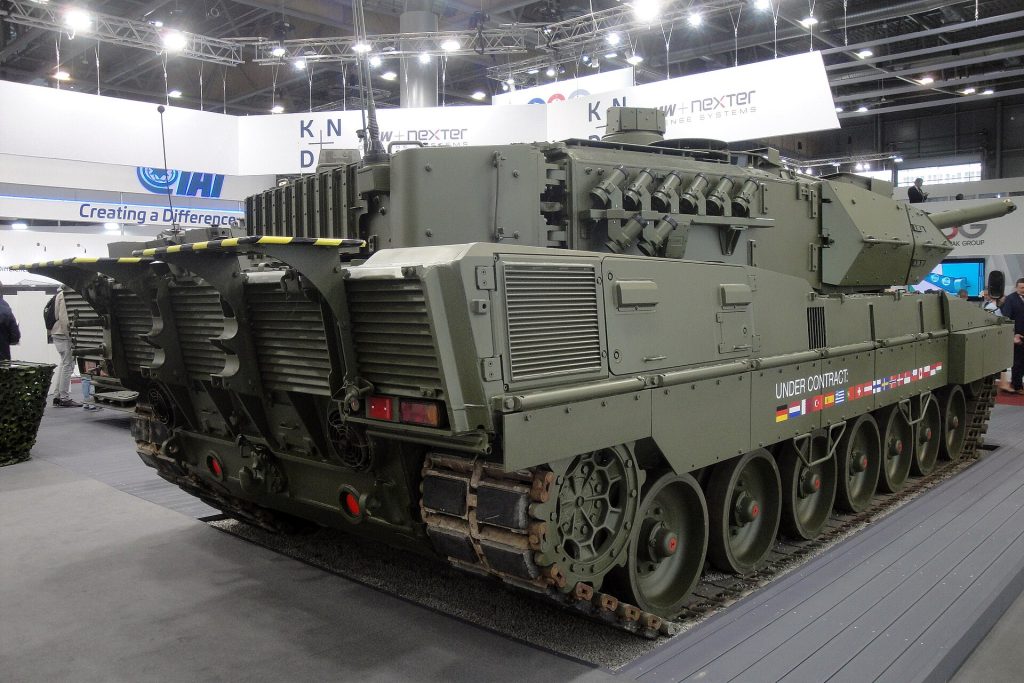
A main battle tank is a tracked, armoured vehicle that combines firepower, protection and mobility in one design. Before the MBT, armies built separate light, medium and heavy tanks. In 1957 the United States, the United Kingdom and Canada agreed at a conference in Quebec to adopt a single main battle tank instead of separate medium and heavy tanks, and the British Chieftain became the first tank officially called an MBT (Wikipedia: Main battle tank).
1916: the first tanks
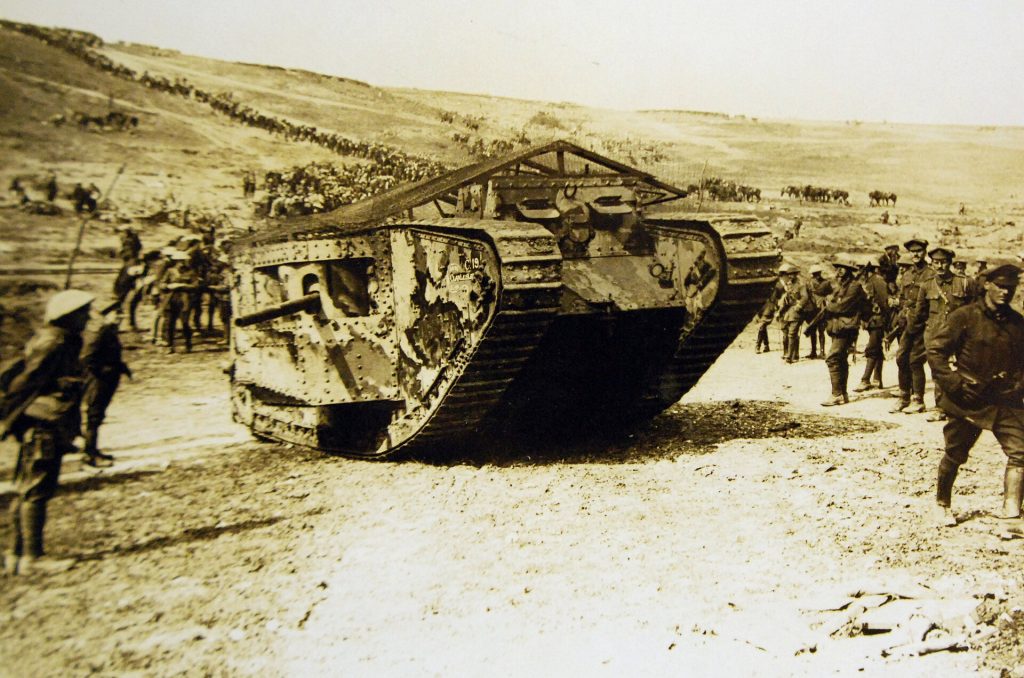
The British Mark I was first used in combat on 15 September 1916 at the Battle of Flers-Courcelette, part of the Somme offensive (Wikipedia). It was a very different machine from a modern tank:
- Weight: about 28 long tons (male version).
- Crew: 8.
- Engine: a 105 hp Daimler-Knight petrol engine.
- Top speed: about 6 km/h (3.7 mph).
- Production: 150 built, by William Foster & Co. of Lincoln and the Metropolitan Carriage, Wagon and Finance Company of Birmingham.
Notice who built them: an agricultural machinery firm and a railway carriage maker. From the very start, tanks were an industrial and automotive product as much as a military one.
How did tanks evolve into MBTs?
There is no single official numbering of tank “generations”, so historians group them in slightly different ways (Wikipedia). The grouping below follows the main technology changes:
| Period | What changed | Example tanks |
|---|---|---|
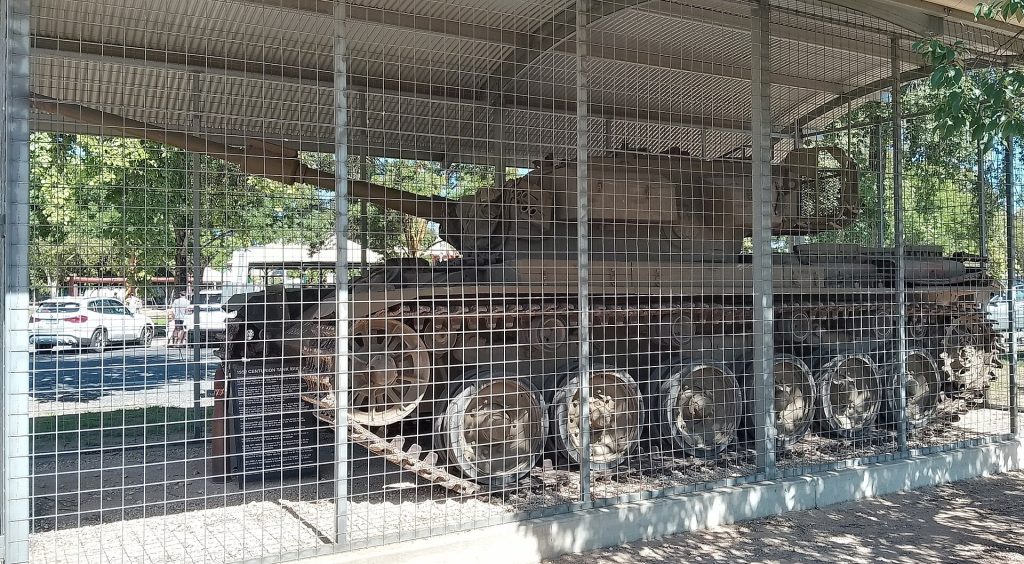
| Late 1940s–1950s | Multi-role tanks replace separate medium and heavy tanks | Centurion (UK), T-54/55 (USSR) |
| 1950s–1960s (first MBTs) | The MBT concept is adopted; rifled guns still common | Chieftain, M60, T-62, T-64A |
| 1970s | Composite armour, autoloaders and smoothbore guns spread | Leopard 2, M1 Abrams, Challenger 1 |
| 1980s–2000s | Explosive reactive armour, early active protection, urban upgrades | Leopard 2A6/A7, Challenger 2, M1A2 |
| 2010s–today | Unmanned turrets, radar-based protection, hybrid drives in testing | T-14 Armata, Type 100, Leopard 2A8, M1E3 |
How does a modern main battle tank work?
A modern MBT is built around three engineering systems that must be balanced against each other: firepower, protection and mobility. Adding more of one usually costs some of another, mainly through weight.
Engine and drivetrain
Most modern MBTs use a large diesel engine of about 1,500 hp driving the tracks through an automatic transmission. The Abrams is the exception: when it was designed, Chrysler chose a 1,500 hp gas turbine engine, while General Motors had proposed a 1,500 hp diesel (Wikiwand). Turbines are smooth and powerful but use more fuel than diesels, which is one reason the next Abrams is expected to move to hybrid-electric drive (Army Recognition).
The gun and loading
Western tanks such as the Leopard 2 and Abrams use 120 mm smoothbore guns, while Russian and Chinese designs use 125 mm guns (Wikipedia: Leopard 2, Wikipedia: T-90). Tanks with a human loader need a crew of four. Tanks with an autoloader, such as the K2, T-90M and Type 99A, need only three, which allows a smaller turret (Wikipedia: Main battle tank).
Armour and protection
Modern armour is layered. Composite armour, such as the British Chobham design first fitted to the M1 Abrams and Challenger 1, combines ceramics and other materials (Wikipedia). Explosive reactive armour tiles were added from the 1980s, and active protection systems, which detect and counter incoming threats before they reach the hull, are now being fitted to many fleets. We describe these systems only at the level published by their makers.
Modern MBTs compared: Abrams vs Leopard 2 vs K2 vs T-90M vs Type 99A
| Tank | Country | In service | Weight | Crew | Main gun | Engine | Road speed | hp per tonne* |
|---|---|---|---|---|---|---|---|---|
| M1A2 SEPv3 Abrams | USA | 1980 (M1) | 66.8 t | 4 | 120 mm smoothbore | 1,500 hp gas turbine | 67 km/h (governed) | 22.5 |
| Leopard 2A7V | Germany | 1979 (Leopard 2) | 66.5 t | 4 | 120 mm Rh-120 smoothbore | 1,500 hp V12 diesel | 70 km/h | 22.6 |
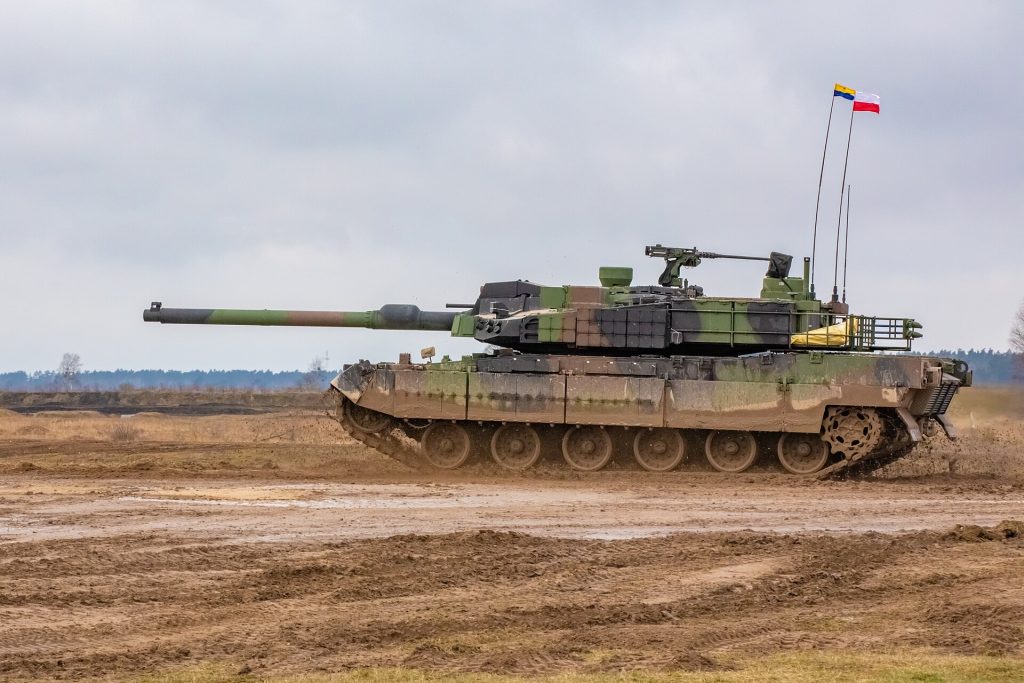
| K2 Black Panther | South Korea | 2014 | 56 t | 3 | 120 mm L/55, autoloader | 1,500 hp diesel | 70 km/h | 26.8 |
| T-90M | Russia | 2019 (T-90: 1992) | about 48 t (est.) | 3 | 125 mm, autoloader | 1,130 hp | about 60 km/h | about 23.5 |
| Type 99A | China | 2011 | 55 t | 3 | 125 mm, autoloader | 1,500 hp | 76–80 km/h (sources vary) | 27.3 |
Two things stand out. First, the three-person, autoloaded designs (K2, Type 99A, T-90M) are 10 to 18 tonnes lighter than the four-person Western tanks. Second, the lighter Asian designs have the best published power-to-weight ratios, which affects acceleration and the ability to cross soft ground. Weight is not only a weakness, though: it partly reflects the amount of protection carried. A specification table cannot tell you which tank is “best”, because training, maintenance, terrain and support matter at least as much.
Tank by tank: what makes each design different
- M1A2 SEPv3 Abrams (USA): built by General Dynamics Land Systems with a 1,500 hp turbine and upgraded suspension (GDLS). In U.S. Army operational testing, the SEPv3 exceeded its reliability requirement, though its upgrades also increased the tank’s weight (DOT&E). About 10,300 Abrams had been built by 2017 (Wikipedia).
- Leopard 2A7V (Germany): a 66.5-tonne upgrade of a design that entered service in 1979; about 3,600 Leopard 2s have been built and it is used by many European armies (Wikipedia).
- K2 Black Panther (South Korea): a 56-tonne tank with a 120 mm L/55 gun and a 1,500 hp engine, in South Korean service since 2014 (Janes). Poland received 180 K2s between 2022 and 2025 and ordered 180 more in 2025 (Wikipedia).
- T-90M (Russia): made by Uralvagonzavod, with a 125 mm gun, an autoloader and a 1,130 hp engine; the T-90M version entered service in 2019 (Wikipedia).
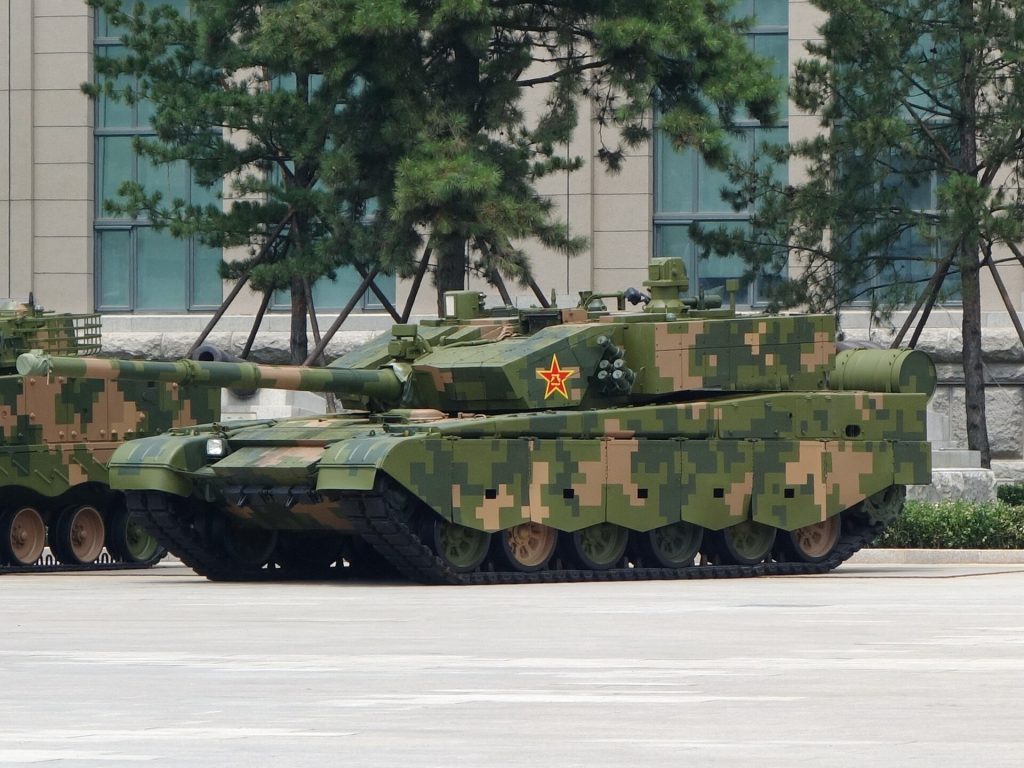
- Type 99A (China): a 55-tonne, three-crew tank with a 125 mm gun and 1,500 hp engine, in service since 2011 (Wikipedia).
The automotive industry’s role in tank building
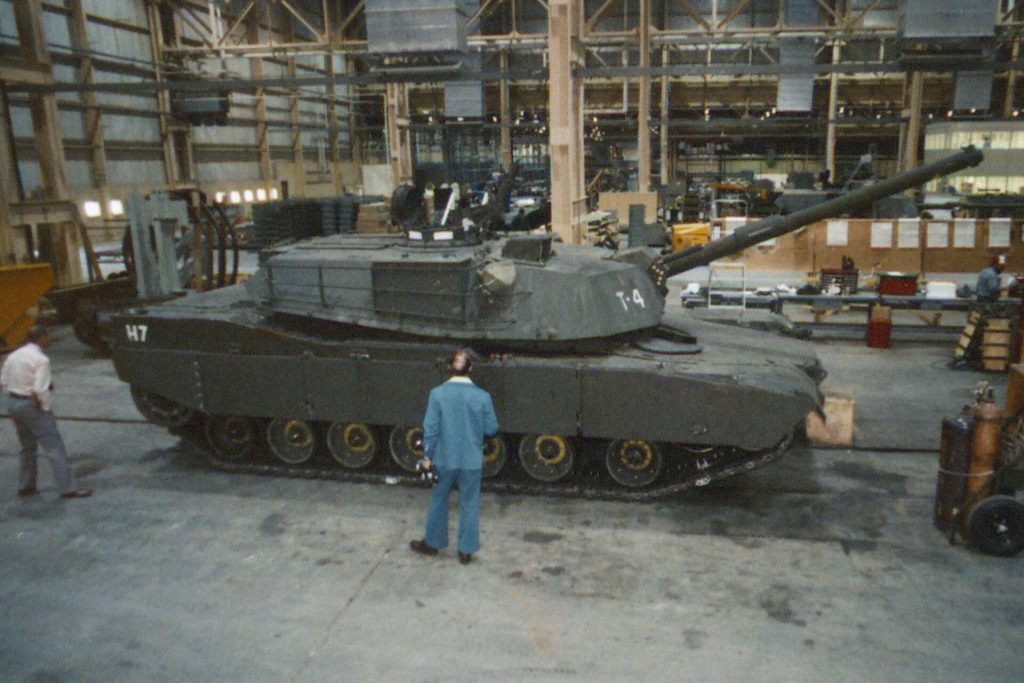
Tank making has always depended on car and engine makers. During the Second World War, Chrysler ran the government-owned Detroit Arsenal Tank Plant, which opened in 1940 and built roughly a quarter of the 89,568 U.S. tanks produced in the war, about 22,000 vehicles (Wikipedia). Chrysler Defense later designed the M1 Abrams, and General Dynamics bought Chrysler Defense in 1982 (Wikipedia).
The same link exists today. The K2 is built by Hyundai Rotem, part of the wider Hyundai business family, and later batches use the DV27K 1,500 hp engine from HD Hyundai Infracore, which localised the K2 engine in 2014 (Janes). Gearboxes, electronics, suspension and production methods all draw on skills from the civilian vehicle industry. Read more in our Defense Industry section.
What comes next for main battle tanks?
- Hybrid-electric drive: the planned M1E3 Abrams is expected to use hybrid-electric drive in production, with initial operational capability planned around 2030 (Army Recognition).
- Smaller crews and autoloaders: the M1E3 testbed moves to a three-person crew with an autoloader (Wikipedia).
- New designs: China’s Type 100 (2025) uses hybrid-electric drive and an armoured crew capsule, and Europe’s future MGCS programme targets around 2040 (Wikipedia).
- Lighter, smarter protection: active protection systems are replacing some of the weight once spent on passive armour.
Key takeaways
- The first tank, the 1916 Mark I, weighed about 28 tons, had 8 crew and reached about 6 km/h.
- The MBT concept was agreed in 1957, and the British Chieftain was the first tank officially called an MBT.
- Today’s leading MBTs weigh 48–67 tonnes and use 120 mm or 125 mm smoothbore guns.
- Autoloaded, three-crew designs are lighter; four-crew Western tanks are heavier.
- Car and engine makers, from Chrysler to Hyundai, have built tanks since the start.
Frequently asked questions
What was the first tank ever used in combat?
The British Mark I, first used on 15 September 1916 at the Battle of Flers-Courcelette during the Somme offensive.
What is the difference between a tank and a main battle tank?
“Tank” covers all armoured fighting vehicles of this type. A main battle tank is a single design that combines firepower, protection and mobility, replacing the older split into light, medium and heavy tanks.
Which tank has the most powerful engine?
Most leading MBTs, including the Abrams, Leopard 2, K2 and Type 99A, use engines of about 1,500 hp. The T-90M has a published 1,130 hp.
Why do some tanks have three crew and others four?
Tanks with an autoloader, such as the K2, T-90M and Type 99A, do not need a human loader, so they carry three crew. The Abrams and Leopard 2 use a human loader and carry four.
Did car companies build tanks?
Yes. Chrysler ran the Detroit Arsenal Tank Plant in the Second World War and later designed the M1 Abrams, and Hyundai Rotem builds Korea’s K2.
What will future tanks look like?
Public programmes point to hybrid-electric drive, three-person crews with autoloaders, and active protection systems, with new designs expected around 2030–2040.
Sources
- Wikipedia: Main battle tank
- Wikipedia: Mark I tank
- Wikipedia: M1 Abrams
- Wikipedia: Leopard 2
- Wikipedia: T-90
- Wikipedia: K2 Black Panther
- Wikipedia: Type 99 tank
- Wikipedia: Detroit Arsenal Tank Plant
- General Dynamics Land Systems: M1A2 SEPv3
- U.S. DOT&E FY2020 report: Abrams M1A2
- Janes: South Korea initiates K2 tank upgrade
- Janes: HD Hyundai Infracore K2 engine contract
- Army Recognition: M1E3 Abrams
- Wikiwand: M1A1 development history