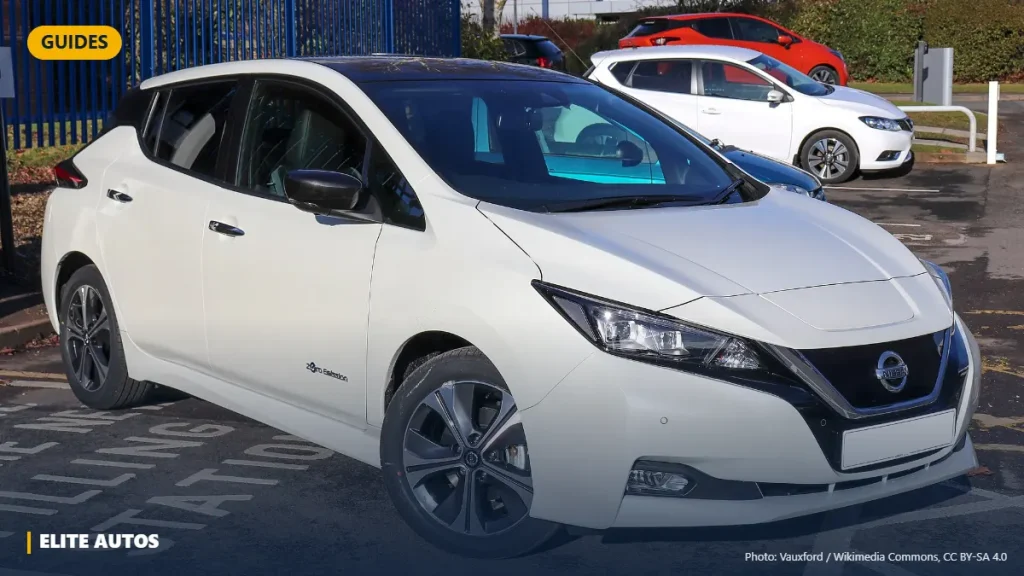
Quick answer: Before buying a used EV, ask for a battery state-of-health (SoH) report, check how much of the battery warranty is left, and test the real range from a full charge. Used EV sales are rising fast in the US (CBT News), so knowing what to check protects you from paying for a tired battery.
In this article
The checklist
1. Get a battery health report. Ask the seller or a dealer for a state-of-health reading. Above about 90% is very good for a car a few years old.
2. Check the warranty. Many makers cover the battery for around eight years, with a minimum capacity guarantee. Confirm the exact terms and whether they transfer to you.
3. Charge it to 100% and look at the range estimate. Compare it with the original rating for the same test standard.
4. Ask about charging habits. Frequent fast charging and regularly sitting at 100% can age a battery faster.
5. Check software and recalls. Make sure updates and any battery recalls have been done.
6. Inspect the charging port and cable. Damaged pins or missing cables are common and costly.
7. Test drive with heating or air conditioning on. Watch how quickly the range drops.
Red flags
- No battery report and a seller who will not allow one.
- A range estimate far below the original rating.
- Warning lights or reduced power on the test drive.
What battery health numbers mean
| State of health (SoH) | What it means | Verdict |
|---|---|---|
| 95–100% | Battery close to new | Excellent |
| 85–94% | Normal ageing for a few years of use | Good |
| 75–84% | Noticeable range loss | Check price and warranty carefully |
| Below 75% | Close to typical warranty thresholds | Negotiate hard or avoid unless a replacement is covered |
How to get a battery report
- Dealer or brand service centre: the most reliable; ask for a printed battery diagnostic.
- OBD apps: apps such as Car Scanner or model-specific tools read SoH through a Bluetooth OBD dongle on many models.
- Range test: charge to 100%, note the predicted range, and compare with the car’s original rating on the same test.
- Charging history: ask how often it was DC fast charged and whether it was stored at 100% for long periods.
Extra checks in hot climates
Heat is the main enemy of lithium batteries. In Pakistan and the Gulf, ask whether the car was parked in the shade or a garage, and whether it has liquid battery cooling: some older or very cheap EVs use passive air cooling, which ages faster in heat. LFP batteries, explained in our LFP vs NMC guide, usually cope better with heat.
Questions to ask the seller
- How many owners has the car had, and is the battery warranty transferable?
- Has the battery or any modules ever been repaired or replaced?
- How was it usually charged: at home on AC, or mostly on DC fast chargers?
- Are there any warning lights or software updates pending?
- Can I see the service history and a recent battery diagnostic?
Glossary
- SoH
- State of health: remaining battery capacity compared with when new.
- SoC
- State of charge: how full the battery is right now.
- BMS
- Battery management system that monitors and protects the cells.
- Degradation
- The gradual loss of capacity as a battery ages.
Elite Autos tip
An older EV with a healthy battery and remaining warranty is usually a better buy than a newer one with a tired battery and no cover.
Frequently asked questions
What is a good battery health percentage for a used EV?
Above about 90% is very good for a car a few years old; below about 80% deserves a lower price.
How long do EV batteries last?
Most are designed to last many years; makers typically back them with multi-year warranties. Check the exact terms for each car.
Can I check battery health myself?
Some cars show it in the menu or app; otherwise a dealer or specialist diagnostic tool can read it.
Sources
Related: LFP vs NMC batteries · All guides
This article was prepared with AI assistance and checked against the sources listed. Read our AI Use Policy and Corrections Policy.
Related on Elite Autos
 API SQ and ILSAC GF-7 explained: the new engine oil standards
 Do electric cars need oil? EV fluids and maintenance explained
 Prince of Monaco car collection: tickets, hours and the cars of Rainier III and Princess Grace
 Emirates National Auto Museum guide: tickets, hours, location and the Rainbow Sheikh’s cars
Pingback: The used EV boom: why second-hand electric cars are selling at record levels - Elite Autos