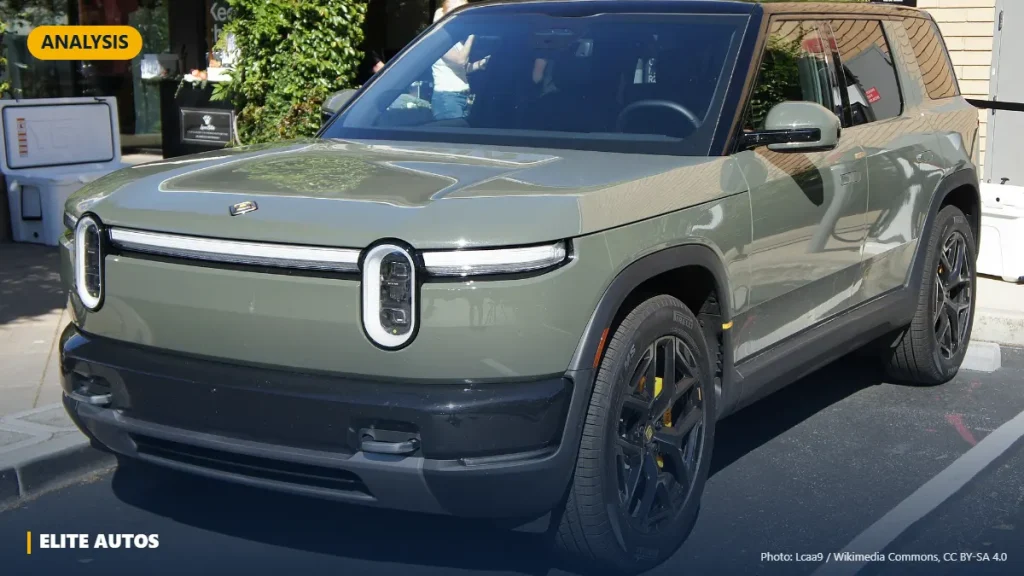
Quick answer: A software-defined vehicle (SDV) runs most of its functions on a few powerful central computers that can be updated over the air, instead of dozens of separate control units. Volkswagen and Rivian formed a joint venture in November 2024 to build exactly this: a zonal electronic architecture for VW Group and Rivian cars (Volkswagen Group), in a deal worth about $5.8 billion (InsideEVs).
In this article
The VW–Rivian deal in numbers
| Milestone | Detail | Source |
|---|---|---|
| Joint venture founded | November 2024 (RV Tech) | Volkswagen Group |
| Deal size | About $5.8 billion | InsideEVs |
| Engineering team | 1,500+ people in five countries | AMS |
| Winter testing | Completed; VW released a $1 billion tranche | AOL / Benzinga |
| First VW model on the platform | ID.EVERY1, 2027 | The EV Report |
Why carmakers need it
- Fewer, smarter computers: zonal architectures cut wiring and the number of control units.
- New features after purchase: over-the-air updates can improve driver assistance and infotainment.
- Lessons from failure: problems at VW’s in-house software unit Cariad delayed models such as the Porsche Macan EV and Audi Q6 e-tron (IEEE Spectrum).
The risks
- Chips and memory: SDVs need more memory, just as AI data centres compete for supply (EE Asia).
- Security and reliability: one software bug can affect a whole fleet.
- Subscriptions: buyers push back against paying monthly for features.
Elite Autos analysis
Software is now the main battleground between Tesla, Chinese brands and legacy carmakers. Partnerships like VW–Rivian show that even the biggest groups struggle to build it alone. Watch the Rivian R2 and VW ID.EVERY1 as the first real tests.
What has happened since: from lab to road
The Rivian–Volkswagen joint venture, called RV Tech, was founded in November 2024 to build a zonal electronic architecture and software for both companies’ future cars in Western markets (Volkswagen Group). By its first anniversary it had about 1,500 engineers, and its first production car on the Volkswagen side will be the small electric ID.EVERY1, due in 2027 (Carscoops, The EV Report). By March 2026 RV Tech had finished winter testing of its production-intent architecture on reference vehicles (Just Auto). Rivian uses the same technology in its R2, R3 and R3X models.
| Milestone | Date |
|---|---|
| RV Tech joint venture founded | November 2024 |
| Team of about 1,500 engineers | November 2025 |
| Winter testing of production-intent architecture completed | March 2026 |
| Rivian R2 launch with joint technology | First half of 2026 |
| First Volkswagen Group car (ID.EVERY1) | 2027 |
Zonal architecture in plain words
A traditional car can have 100 or more small electronic control units, each with its own software and wiring. A zonal architecture groups the car into a few physical zones, front, rear, left and right, each with a zone controller, and runs most features on a small number of powerful central computers. This cuts kilometres of wiring and weight, simplifies factory assembly, and lets the carmaker update almost any function over the air, the way a phone gets new features.
Why it matters for buyers
- Cars that improve over time: features, efficiency and driver assistance can be upgraded after purchase.
- Fewer recalls needing a workshop visit: many software faults can be fixed remotely.
- New business models: carmakers may sell subscriptions for some features, which buyers may not welcome.
- Data and privacy: connected cars collect more data, so privacy settings matter more.
Who is ahead
Tesla pioneered centralised electronics, and Chinese brands such as Xiaomi, XPeng, NIO and BYD now update their cars frequently with new features. Traditional carmakers are catching up through partnerships, like Volkswagen with Rivian, or by building their own operating systems. The memory-chip squeeze of 2026 adds pressure: cars with fewer, more powerful computers are easier to supply than cars with dozens of separate units. Read our car chip squeeze report for more.
What it means for Pakistan
Most cars assembled in Pakistan still use traditional electronics with limited over-the-air updates. Imported Chinese EVs and plug-in hybrids are the first software-defined cars many Pakistani buyers will own. Before buying, ask whether the car receives over-the-air updates in Pakistan, whether connected services work locally, and how long software support is promised.
Key takeaways
- Software-defined vehicles run most features on a few central computers with over-the-air updates.
- Volkswagen and Rivian’s RV Tech has moved from lab to road testing; VW’s first car with it arrives in 2027.
- Chinese brands and Tesla currently lead on in-car software.
- Buyers gain features over time but should check data and subscription policies.
Our view
The software-defined vehicle is the biggest change in car engineering since the move to electronic fuel injection, and it is as much about organisation as technology. Carmakers that treated software as something bought from suppliers are now learning to write and own it. The weak point is execution: several large carmakers have delayed models because software was not ready. Volkswagen’s decision to buy expertise from Rivian rather than keep building alone shows how hard that shift is. Buyers should judge a new car not only on hardware, but on how well and how long its software will be supported.
Elite Autos updates this guide as new software-defined cars reach showrooms. See our EV & Tech section for related coverage.
Frequently asked questions
What is a software-defined vehicle?
A car whose functions are controlled mainly by software on central computers, which can be updated and improved over the air.
Why did Volkswagen invest in Rivian?
To use Rivian’s software and electronic architecture after its own software unit, Cariad, suffered delays.
When will VW cars use the Rivian software?
The first Volkswagen model planned on the new architecture is the ID.EVERY1 in 2027.
Sources
- Volkswagen Group: Joint venture progress
- InsideEVs: Rivian–VW joint venture
- IEEE Spectrum: Rivian and Volkswagen software
- The EV Report: SDV architecture development
Related: The car chip squeeze · ADAS features explained · Technology
This article was prepared with AI assistance and checked against the sources listed. Read our AI use policy and corrections policy.
Related on Elite Autos
 Do electric cars need oil? EV fluids and maintenance explained
 Pakistan vs India car industry 2026: sales, exports, ownership and growth compared
 What’s next for royal and billionaire garages: electric coachbuilt cars, greener state fleets and new rivals
 Tesla FSD v15: release date, Hardware 4 requirement and what changes