 Logo shown for identification only. Trademark of its owner. Source: Wikimedia (Public domain).
Rolls-Royce is the benchmark every luxury car is measured against. It began with a meeting between an engineer and a car dealer in 1904, survived two world wars, bankruptcy of its parent and a bitter ownership fight, and today builds hand-finished cars at Goodwood in England under BMW Group ownership. This is the story from the first two-cylinder car to the Cullinan SUV and the electric Spectre.
In this article
| Fact | Detail |
|---|---|
| Founded | 1906 (partnership agreed 1904) |
| Founders | Charles Stewart Rolls and Frederick Henry Royce |
| Headquarters | Goodwood, West Sussex, England |
| Owner | BMW Group (since 2003) |
| Signature models | Silver Ghost, Phantom, Ghost, Cullinan, Spectre |
| 2025 deliveries | 5,664 cars (−0.8%) |
Contents
- How it started: an engineer meets a salesman
- The first great car: the Silver Ghost
- Aero engines, war and two separate companies
- The BMW and Volkswagen tug of war
- Living success: Rolls-Royce in 2025–2026
- What comes next
How it started: an engineer meets a salesman
Henry Royce was a self-taught electrical engineer in Manchester who built his first car, the Royce 10, in 1904 because he was unhappy with the quality of the French car he owned. Charles Rolls was an aristocratic motoring pioneer who ran a car dealership in London and was looking for a British car good enough to sell. The two met at the Midland Hotel in Manchester in May 1904. Rolls agreed to sell every car Royce could build, and the cars would carry both names.
Rolls-Royce Limited was formally founded in 1906. The pairing worked because each man covered the other’s weakness: Royce obsessed over engineering detail, while Rolls understood marketing, racing and wealthy customers.
The first great car: the Silver Ghost
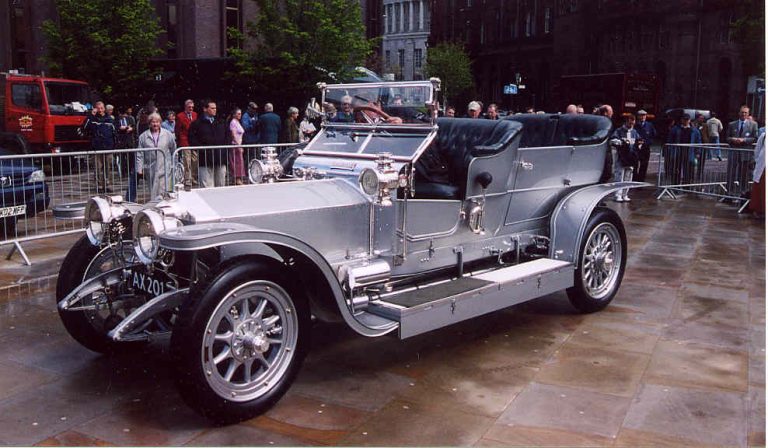
The car that made the name was the 40/50 hp model of 1907, nicknamed the Silver Ghost after a demonstration car painted silver with silver-plated fittings. It completed a 15,000-mile reliability trial that was extraordinary for the era, and the press began calling it the best car in the world. The phrase became the brand’s identity for the next century.
Rolls himself died in 1910 in a flying accident, the first Briton killed in a powered aircraft crash. Royce, in poor health, continued to lead engineering until his death in 1933.
Aero engines, war and two separate companies
During the First and Second World Wars Rolls-Royce became one of the world’s most important aero-engine makers. The Merlin engine powered the Spitfire and Hurricane fighters in the Second World War. Car production moved to Crewe after the war, and the company bought Bentley in 1931, which meant the two luxury brands shared factories and many components for decades.
In 1971 Rolls-Royce went bankrupt because of cost overruns on the RB211 jet engine. The British government nationalised the business and the car division was separated as Rolls-Royce Motors, which was later sold to the engineering group Vickers in 1980.
The BMW and Volkswagen tug of war
In 1998 Vickers sold Rolls-Royce Motors, including the Crewe factory and Bentley, to Volkswagen. But the right to use the Rolls-Royce name and logo on cars belonged to the aero-engine company, which licensed it to BMW, a long-time engine partner. After negotiations, BMW took control of the Rolls-Royce car brand from 1 January 2003, while Volkswagen kept Bentley and the Crewe plant.
BMW built a new factory and head office at Goodwood, and the first car of the BMW era, the Phantom VII, launched in 2003. The two brands that had been joined for almost 70 years went separate ways.
Living success: Rolls-Royce in 2025–2026
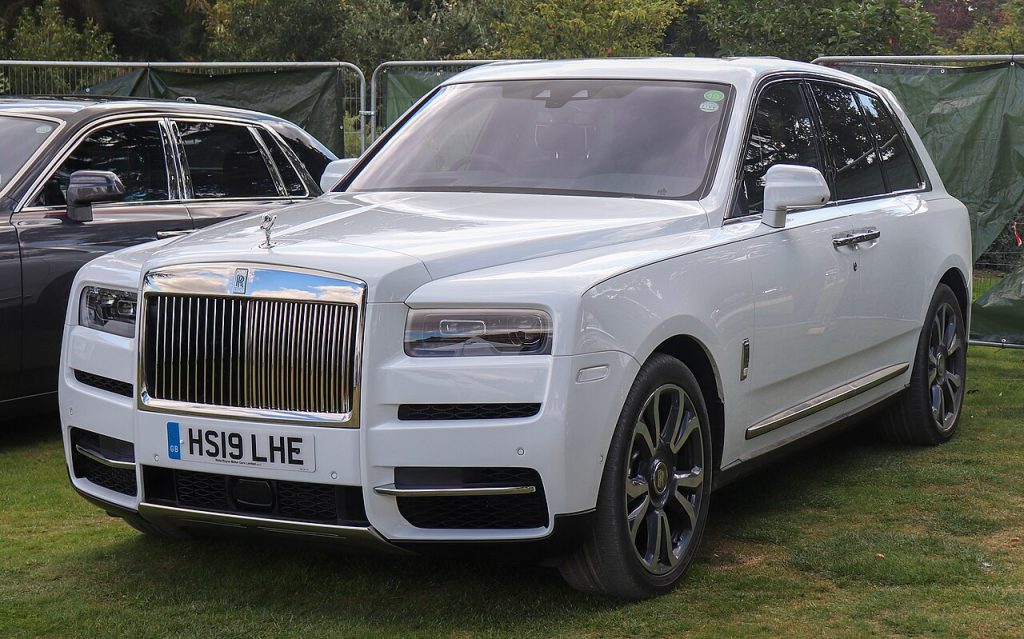
Rolls-Royce delivered 5,664 cars in 2025, a decline of only 0.8% from the year before and one of the strongest totals in the brand’s history. The Cullinan SUV is now the core of the business: deliveries rose 27.1% to 3,291, about 58% of all Rolls-Royce sales. The electric Spectre came second with 1,002 units, but demand for it fell by almost half compared with 2024. The Ghost rose 22.9% to 993 cars.
| Model (2025) | Deliveries | Change |
|---|---|---|
| Cullinan | 3,291 | +27.1% |
| Spectre (electric) | 1,002 | about −47% |
| Ghost | 993 | +22.9% |
| Total brand | 5,664 | −0.8% |
The company says Rolls-Royce is not and never will be a volume business. Its aim is to build cars that reflect the personality of each owner, and record sales were reported in markets such as the UK, Europe and Central Asia in 2025.
What comes next
The V12 engine remains in production and is being updated for Euro 7 rules, while Rolls-Royce continues to expand electric options after the Spectre. For buyers in Pakistan and the Gulf, the brand remains the ultimate status symbol, usually imported through official dealers in Dubai or as personal imports with very high duties.
Explore every marque on our Luxury car brands page, compare ownership on the Car brands A–Z and read more founder stories in the Brand stories hub.
Frequently asked questions
Who owns Rolls-Royce cars today?
Rolls-Royce Motor Cars has been owned by BMW Group since 2003. The separate Rolls-Royce plc makes aircraft engines and is not part of the car company.
What was the first Rolls-Royce car?
The first cars were 10 hp two-cylinder models built in 1904. The car that made the name famous was the 40/50 hp Silver Ghost of 1907.
How many cars does Rolls-Royce sell a year?
Rolls-Royce delivered 5,664 cars worldwide in 2025.
What is the best-selling Rolls-Royce?
The Cullinan SUV, with 3,291 deliveries in 2025.
Sources
- BMWBLOG: Rolls-Royce 2025 global sales winners and losers
- Tarantas News: Rolls-Royce 2025 sales figures
- Universul: Rolls-Royce 2025 results and philosophy
- Rolls-Royce Motor Cars official site
Related on Elite Autos
 Toyota Century Royal: the $500,000 V12 limousine of Japan’s Emperor, and only four exist
 British royal cars: the Bentley State Limousines, King Charles’s wine-powered Aston Martin and the Royal Mews
 Sultan of Brunei car collection: 7,000 cars, 500 Rolls-Royces and the one-offs built only for him
 Pagani history: Horacio Pagani’s journey from Argentina to the Utopia V12