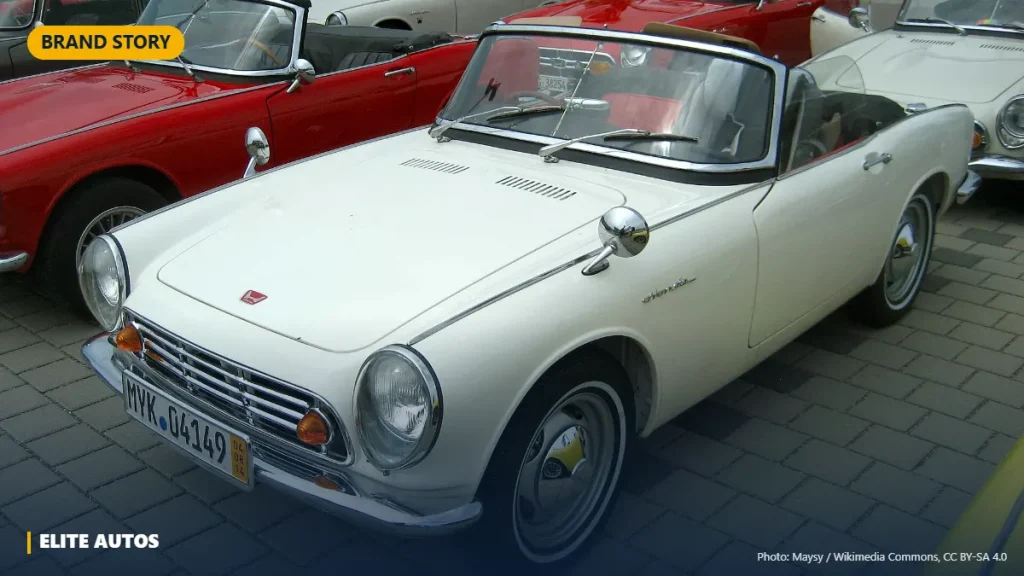
Honda Motor Co. was incorporated on September 24, 1948, in Hamamatsu, Japan, by Soichiro Honda, with Takeo Fujisawa later running the business side. It started by fitting small engines to bicycles and became the world largest motorcycle maker before it built a single car.
In this article
Timeline
| Year | Milestone |
|---|---|
| 1937 | Soichiro Honda founds Tokai Seiki to make piston rings |
| 1947 | The A-Type engine, the first product carrying the Honda name |
| 1948 | Honda Motor Co., Ltd. incorporated |
| 1962 | First overseas production, in Belgium |
| 1963 | First four-wheelers: the T360 mini-truck, then the S500 sports car |
| 1964 | Enters Formula 1 with the RA271 |
| 1965 | First Formula 1 win, in Mexico |
| 1973 | The Civic changes Honda car business |
| 2026 | Announces a $3 billion hybrid plant in Ohio |
The first car was a truck
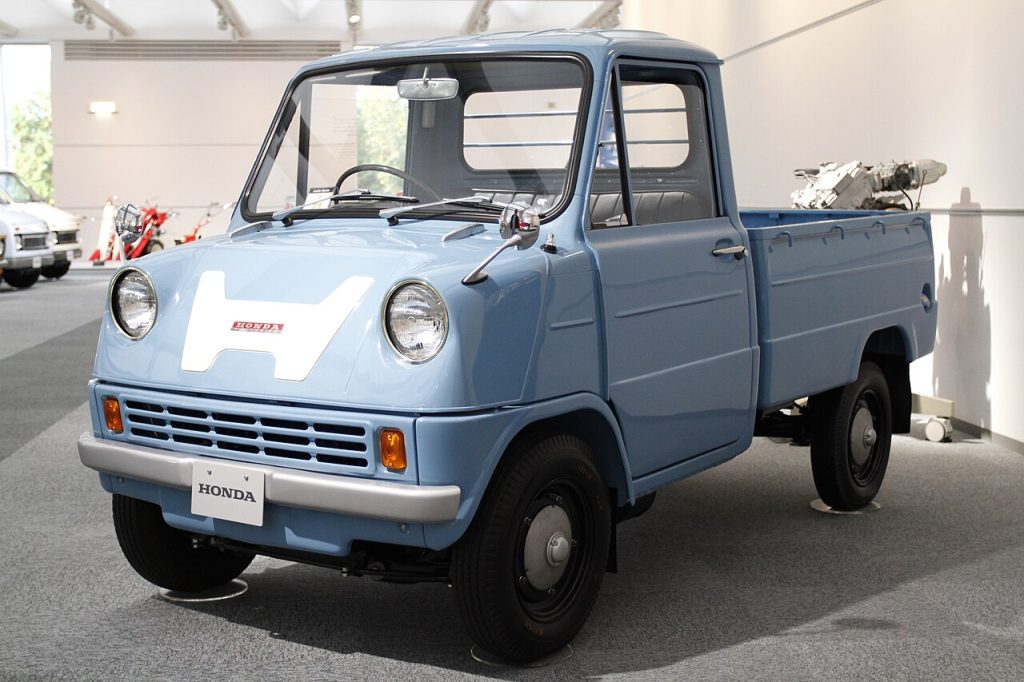
Honda first production four-wheeler was not a sports car. The T360, a tiny kei-class pickup with a 356cc four-cylinder engine, went on sale in 1963. The S500 roadster followed a few months later and is usually called Honda first production car. Both showed Honda motorcycle DNA: high-revving engines, and on the S500 a chain drive to the rear wheels.
Why it worked
- Engines first: Honda made its name on reliable, high-revving small engines, then put them in cars.
- Racing as a lab: Formula 1 from 1964 and a first win in 1965 built credibility abroad.
- Small, efficient cars: the Civic arrived just as the 1970s oil shocks made fuel economy matter.
Honda today
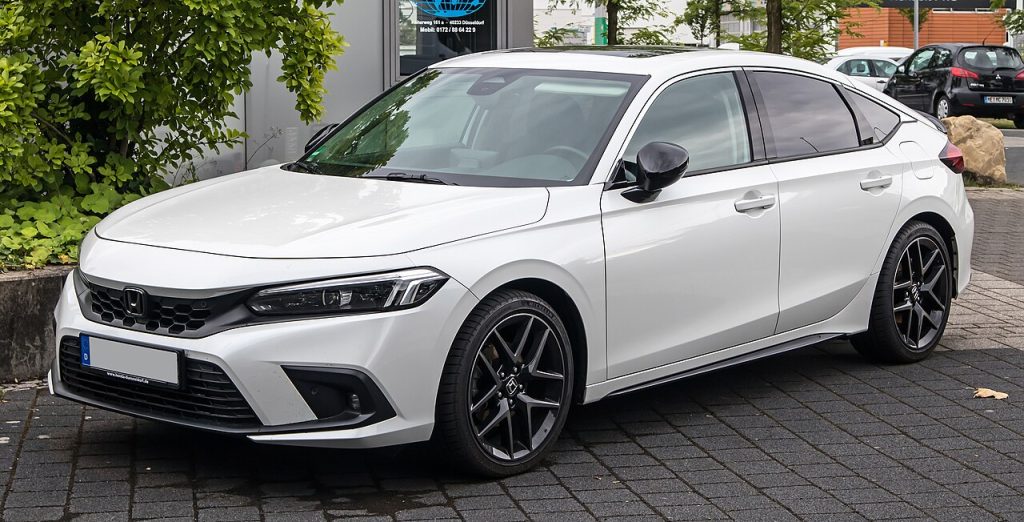
Honda is now pushing hybrids hard. On November 9, 2026, it announced a $3 billion assembly plant in Central Ohio with capacity for 240,000 vehicles a year from 2029. In Pakistan, the Civic and City remain top sellers, with 1,933 units in October 2026.
Honda in 2025: a difficult year
2025 was a hard year for Honda’s car business. Global sales fell about 9% to roughly 3.4 million vehicles, according to industry data, and worldwide production dropped to 3,396,057 units from 3,727,513 in 2024. The biggest problem was China, where Honda’s production fell to 682,289 units from 816,597 as local electric-car brands took market share. North America held up better, with 1,520,961 vehicles built in the region.
| Honda production (calendar year) | 2025 | 2024 |
|---|---|---|
| Worldwide | 3,396,057 | 3,727,513 |
| Japan | 689,802 | 693,259 |
| North America | 1,520,961 | 1,620,030 |
| China | 682,289 | 816,597 |
Honda also explored a merger with Nissan in late 2024 and early 2025, but the talks ended without a deal. The company is now focusing on hybrids, which sell strongly in the United States and Japan, while slowing some electric-car investments.
Five things most people do not know about Honda
- Honda is the world’s largest maker of motorcycles and of internal combustion engines.
- Soichiro Honda’s first products were piston rings and small engines for bicycles.
- Honda builds aircraft too: the HondaJet business jet.
- The Civic and Accord helped Honda become the first Japanese carmaker to build cars in the United States, in Ohio in 1982.
- Honda’s robot ASIMO, launched in 2000, became a symbol of Japanese robotics.
Honda in Pakistan and the Gulf
In Pakistan, Honda cars are assembled in Lahore by Honda Atlas Cars, a joint venture with the Atlas Group. The Civic and City have been among the country’s most popular sedans for decades, and the HR-V and BR-V extended the range into SUVs and MPVs. Honda motorcycles, made by Atlas Honda, dominate Pakistan’s two-wheeler market. In the Gulf, Honda is sold through official distributors, with the Accord, Civic, CR-V and Pilot among its main models.
Three lessons from the Honda story
- Engineering culture is a moat: Honda’s engines built its reputation for reliability.
- China changed the rules: even a strong global brand can lose share fast to local EV makers.
- Two-wheelers matter: Honda’s motorcycle business remains a huge profit engine in Asia, including Pakistan.
What it means for buyers today
Honda’s strengths for buyers remain reliable engines, good fuel economy and strong resale values, especially for the Civic and City in Pakistan. Its hybrid systems, known as e:HEV, are among the most efficient on the market and are a sensible choice for drivers who cover long distances. The weaknesses are price and features: in many markets Honda now offers less equipment for the money than Korean and Chinese rivals, and waiting times for popular models can be long.
In Pakistan, buyers should compare the Civic and City with locally assembled Toyota, Hyundai and Kia models and with Chinese alternatives such as Changan and Haval. A Honda will usually be easier to resell, while some newer brands may offer more technology at the same price.
What to watch from Honda next
Honda plans a new range of electric cars called the 0 Series and a new generation of hybrids. It is also working with Sony on the Afeela electric car brand. How quickly Honda can recover in China and whether its electric models can compete with BYD and other Chinese brands will decide its next decade.
Read more brand histories in the Brand stories hub, including the Honda vs Hyundai comparison and the Toyota story.
For Honda’s latest launches and prices in Pakistan, follow our News and Prices sections.
Honda’s next chapter will show whether an engine company can thrive in the electric age.
Frequently asked questions
When was Honda founded?
Honda Motor Co., Ltd. was incorporated on September 24, 1948, in Hamamatsu, Japan.
What was Honda first car?
The T360 mini-truck (1963) was the first four-wheeler; the S500 roadster (1963) is usually called the first production car.
Who founded Honda?
Soichiro Honda, with Takeo Fujisawa as co-founder on the business side.
Sources
- Honda global: history
- Auto123: Honda is incorporated
- Autocar: Honda T360 and S500
- Honda: $3 billion Ohio plant
This article was prepared with AI assistance and checked against the sources listed. Read our AI use policy and corrections policy.
Related on Elite Autos
 Toyota Century Royal: the $500,000 V12 limousine of Japan’s Emperor, and only four exist
 British royal cars: the Bentley State Limousines, King Charles’s wine-powered Aston Martin and the Royal Mews
 Sultan of Brunei car collection: 7,000 cars, 500 Rolls-Royces and the one-offs built only for him
 Pagani history: Horacio Pagani’s journey from Argentina to the Utopia V12