Cartoon cars are not just children’s entertainment. They have changed which real cars people buy, how much old cars are worth, which roads tourists drive and how toy companies make billions. From Pixar’s Cars to the Japanese street-racing series Initial D, animated vehicles have shaped real-world car culture for more than six decades. This guide explains the most famous cartoon cars, the real machines and places behind them, and the measurable effect they had on the auto industry. For copyright reasons we show real cars and real places only, not cartoon characters.
In this article
- Contents
- Why cartoon cars matter to the car industry
- Pixar’s Cars and Route 66
- Initial D and the Toyota AE86
- Speed Racer and the Mach 5
- Flintstones, Jetsons and Wacky Races
- Transformers: cars that become robots
- Today’s cartoons for small children
- Lessons for carmakers and marketers
- Frequently asked questions
Contents
- Why cartoon cars matter to the car industry
- Pixar’s Cars and Route 66
- Initial D and the Toyota AE86
- Speed Racer and the Mach 5
- Flintstones, Jetsons and Wacky Races
- Transformers: cars that become robots
- Today’s cartoons for small children
- Lessons for carmakers and marketers
Why cartoon cars matter to the car industry
Children decide very early which cars they love. A child who grows up with a toy race car, a cartoon pickup truck or an animated sports coupe often keeps that attachment into adulthood, when they finally have money to buy a real car. Carmakers know this, which is why brands from Chevrolet to Toyota and Volkswagen have worked with animation studios, licensed their designs for toys and appeared in cartoons and films.
The effect shows up in three ways. First, demand and prices for specific real models can jump when they appear in a popular series. Second, tourism and places connected to a story can be revived. Third, merchandise such as die-cast toys, clothing and video games can become a larger business than the original film or show.
Pixar’s Cars and Route 66
Pixar’s Cars, directed by John Lasseter, was released on 9 June 2006. The film tells the story of a young race car stranded in Radiator Springs, a forgotten desert town on Route 66, the historic highway that once linked Chicago with Santa Monica before interstate motorways bypassed it.
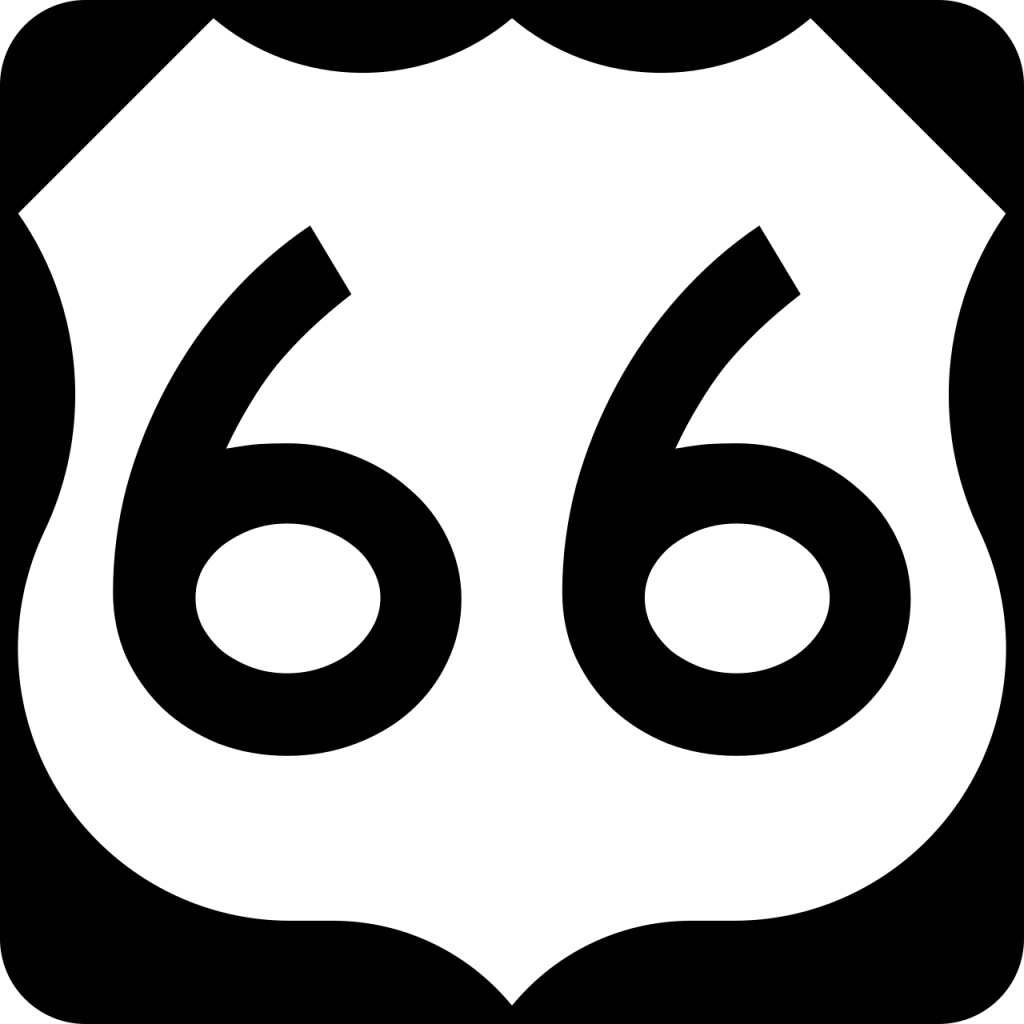
Pixar treated the road itself as a character. In 2001 Lasseter took nine members of the creative team on a nine-day research trip along Route 66 in four white Cadillacs, guided by Route 66 historian Michael Wallis, author of “Route 66: The Mother Road”. Wallis later voiced the Sheriff in the film. Pixar says more research went into Cars than any of its earlier projects, and the team placed Radiator Springs somewhere between Gallup, New Mexico, and Kingman, Arizona.
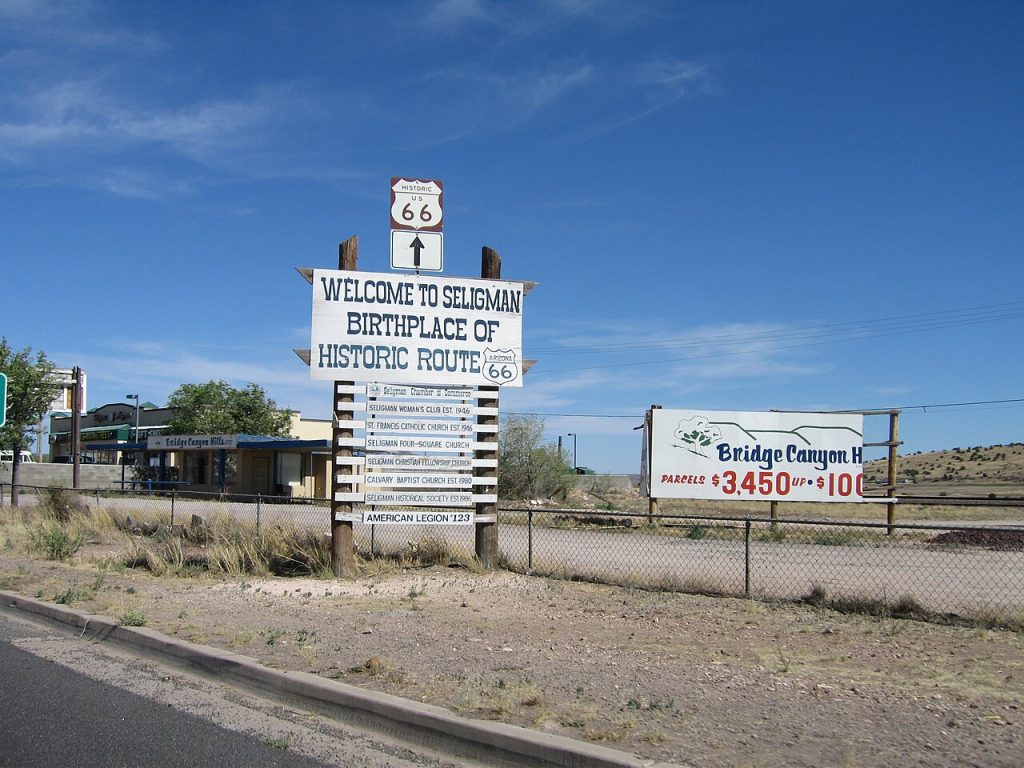
Many of the film’s details came from real places. The small town of Seligman, Arizona, is widely seen as the main inspiration for Radiator Springs, and stops such as the Hackberry General Store became pilgrimage sites for fans. After the film, visitors from around the world began driving Route 66 to find “the real Radiator Springs”, giving small businesses on the old road a second life. In 2026 Route 66 celebrates its 100th anniversary, the same year Cars turns 20.
The money behind the movie
Cars became one of the most successful merchandise brands in history. Disney said merchandise tied to the franchise generated more than $10 billion in global retail sales in its first five years, and more than 200 million die-cast cars had been sold by the time Cars 2 arrived in 2011. Mattel has held the toy licence since the beginning, and its 1:55-scale die-cast line became a collecting hobby for children and adults alike. Disney also built a 12-acre Cars Land at Disney California Adventure, opened in 2012.
To mark the 20th anniversary, Disney and Pixar re-released Cars in cinemas from 4 September 2026, timed with “Lightning McQueen Day” on 5 September, a reference to the character’s racing number 95. The number itself is a nod to 1995, the year Toy Story was released.
Initial D and the Toyota AE86
If Cars shows how animation can revive places, Initial D shows how it can change the price of a real car. The Japanese manga by Shuichi Shigeno ran from 1995 to 2013 and was adapted into an anime from 1998. It follows a teenage tofu-delivery driver who masters mountain roads in his father’s 1983 Toyota Sprinter Trueno AE86, a light, rear-wheel-drive coupe that was already old when the story began.
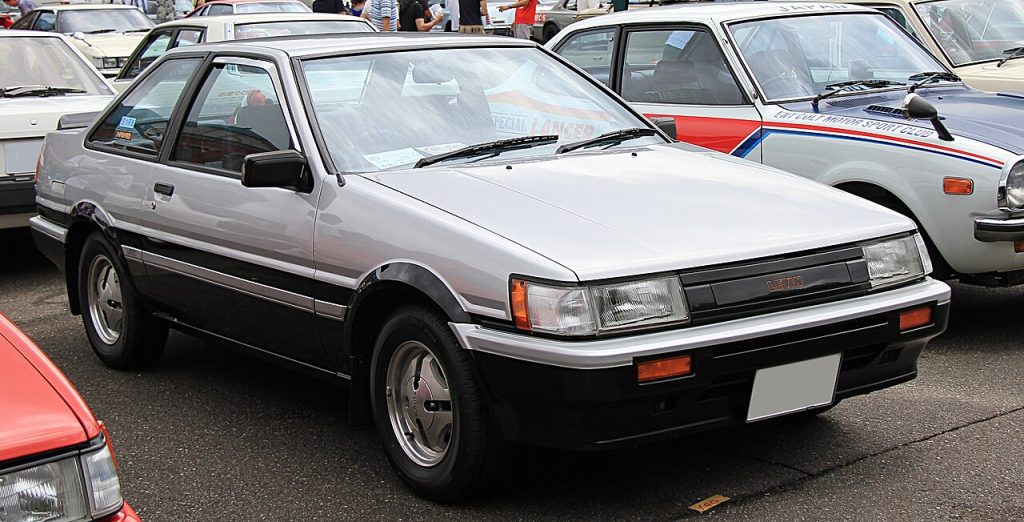
The series turned the AE86, also called the Hachi-Roku or Eight-Six, into a global cult object. Prices for clean examples rose so sharply that enthusiasts nicknamed the premium the “Takumi tax” or “tofu tax”, after the main character and his job. In 2021 a UK-registered AE86 Corolla sold at auction for £46,250, an amount that would have bought several of these cars a couple of decades earlier. Even scale models are affected: Toyota Australia notes that a mint 1:18-scale Initial D AE86 model can be valued at over $1,000.
The influence went further. Drifting, the technique of sliding a car through corners that features heavily in Initial D, became a worldwide motorsport, and Toyota’s modern GR86 and the earlier 86 coupe openly reference the AE86’s spirit. For the 30th anniversary of Initial D, die-cast maker AUTOart released a special commemorative AE86 model.
Speed Racer and the Mach 5
Before Initial D, there was Mach GoGoGo, known in English as Speed Racer. Created by Tatsuo Yoshida and first shown in Japan in 1967, it followed a young driver and his gadget-filled Mach 5 race car. Dubbed for American television, it became one of the first Japanese animated series to find a large Western audience and helped open the door for anime overseas. The Mach 5’s white body, red “M” and long nose inspired real replica builds, toys and a 2008 live-action film.
Flintstones, Jetsons and Wacky Races
American studio Hanna-Barbera created three of the best-known cartoon vehicles of the 1960s. The Flintstones (1960) gave the world a stone-age car powered by the driver’s feet, now a favourite theme for joke vehicles and parade floats. The Jetsons (1962) showed a family commuting by flying car, an image that still shapes how people imagine the future; every new air-taxi or flying-car project, like the ones covered in our Tesla flying Roadster report, is still compared to the Jetsons.
Wacky Races (1968) put eleven bizarre vehicles into a cross-country race full of traps and cheating. Its mix of strange machines influenced real-world fun events such as soapbox derbies and novelty car races, and you can see the same spirit in our Funny wheels collection.
Transformers: cars that become robots
Transformers began in 1984 as a toy line by Hasbro, based on Japanese toys from Takara, supported by an animated series. Its central idea, ordinary cars and trucks that turn into robots, made toy cars exciting for a new generation. In the original cartoon the character Bumblebee was a Volkswagen Beetle; in the 2007 live-action film he became a Chevrolet Camaro, and General Motors used the film to help launch the new Camaro. Toy, film and carmaker were promoting each other at the same time.
Today’s cartoons for small children
A new generation of shows teaches pre-school children about vehicles and road safety. Tayo the Little Bus, a Korean series from 2010, follows a group of city buses and became so popular that Seoul painted real buses as Tayo characters. Robocar Poli, also from Korea, features rescue vehicles that teach traffic safety. Blaze and the Monster Machines, launched in 2014, uses monster trucks to teach basic science and engineering. These shows are widely watched in Pakistan, India and the Gulf through YouTube and children’s channels, and toy versions are common in Karachi and Lahore markets.
Lessons for carmakers and marketers
- Emotion beats specifications: the AE86 was never the fastest car, but a good story made it priceless.
- Places are products too: Route 66 towns earned new income because a film made the road itself a character.
- Toys build future buyers: die-cast cars are often a child’s first relationship with a car brand.
- Partnerships multiply reach: Transformers and Chevrolet, or Mattel and Pixar, show how film, toys and carmakers can promote each other.
- Respect the creators: cartoon characters are protected by copyright and trademarks, so brands and businesses must license them rather than copy them.
Frequently asked questions
Which real car is Lightning McQueen based on?
Pixar has said the character is a custom design mixing elements of stock cars and sports cars rather than a single real model.
What is the “Takumi tax”?
It is the nickname for the price premium on the Toyota AE86, caused by its starring role in the anime Initial D.
Is Radiator Springs a real place?
No, but it was inspired by real Route 66 towns, especially Seligman, Arizona.
How much money did Cars make from toys?
Disney said Cars merchandise generated more than $10 billion in global retail sales within five years of the 2006 release.
When did Cars return to cinemas?
Cars returned to cinemas on 4 September 2026 for its 20th anniversary.
Sources
- D23: 10 things inspired by Cars (2001 research trip, Cars Land)
- Pixar: Cars feature film page
- Google Arts and Culture: Seligman, the real-life Radiator Springs
- Hollywood Reporter: Cars merchandise passes $10 billion
- Hollywood Reporter: 200 million die-cast cars sold
- The Walt Disney Company: Cars 20th anniversary on 4 September
- Laughing Place: Lightning McQueen Day screenings
- Toyota Australia: Tofu and the Trueno (Takumi tax)
- Hagerty UK: AE86 sells for £46,250
- Otaku USA: the legacy of Initial D and the AE86
Related on Elite Autos
 Pakistan vs India car industry 2026: sales, exports, ownership and growth compared
 What’s next for royal and billionaire garages: electric coachbuilt cars, greener state fleets and new rivals
 Tesla–SpaceX merger explained: 12 questions answered (valuation, vote, China, timeline)
 Tesla’s flying Roadster just revealed something bigger than the car: a Tesla–SpaceX merger