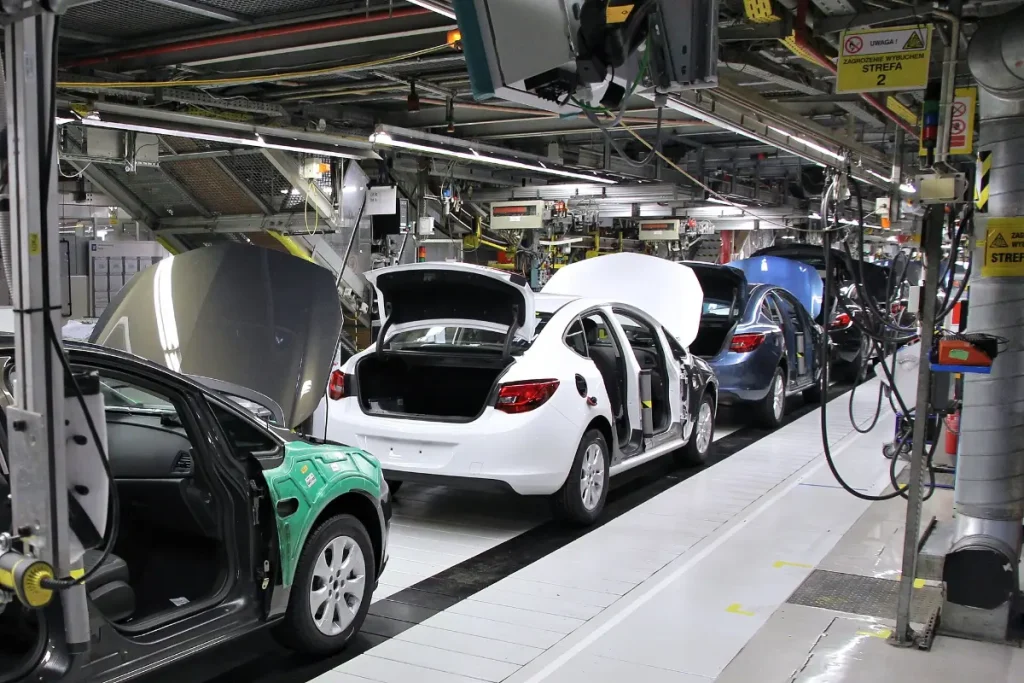
Quick answer: Carmakers are automating more of their factories to cut costs and compete with lower-cost Chinese rivals. GM is targeting a 20% increase in factory automation by 2028 (CBT News), ABB will supply over 1,700 robots for BMW’s Neue Klasse production, and Toyota has mapped out robotics plans to 2030 (Automotive World).
In this article
The announcements
| Company | Plan | Source |
|---|---|---|
| General Motors | 20% increase in factory automation by 2028 | CBT News |
| BMW | Over 1,700 ABB robots for Neue Klasse production | Automotive World |
| Toyota | Robotics, Arene software and L2++ plans to 2030 | Automotive World |
Why now
- Cost pressure: Chinese carmakers build EVs at lower cost, pushing rivals to cut production costs.
- New EV platforms: Fresh factories and platforms make it easier to design automation in from the start.
- Labour and quality: Robots handle repetitive, heavy tasks with consistent quality.
What it means for workers and buyers
Automation changes jobs more than it removes them overnight: more roles in maintenance, programming and quality, fewer in repetitive assembly. For buyers, the payoff is lower costs, which only matter if they reach the price tag.
Elite Autos analysis
Factory automation is the quiet half of the EV race. The winners will be the carmakers that cut cost per car fastest, not only the ones with the best batteries.
Frequently asked questions
Why are carmakers adding more robots?
To lower costs, improve quality and keep up with cheaper Chinese competitors.
How much will GM automate?
It aims for a 20% increase in factory automation by 2028.
What is BMW’s Neue Klasse?
BMW’s new generation of EV platforms and models, which ABB robots will help build.
Sources
Related: China’s car exports pass all of 2025 · More Future Tech
This article was prepared with AI assistance and checked against the sources listed. Read our AI Use Policy and Corrections Policy.
Related on Elite Autos
 Tesla FSD v15: release date, Hardware 4 requirement and what changes
 BYD Flash Charging network 2026: 10,000 megawatt stations, 9-minute charging and overseas plans
 Can you own a flying car in Pakistan or the UAE? Laws, airspace and Dubai’s air taxis explained
 Flying cars in 2026: Tesla Roadster vs Alef Model A, Joby, Archer and PAL-V compared