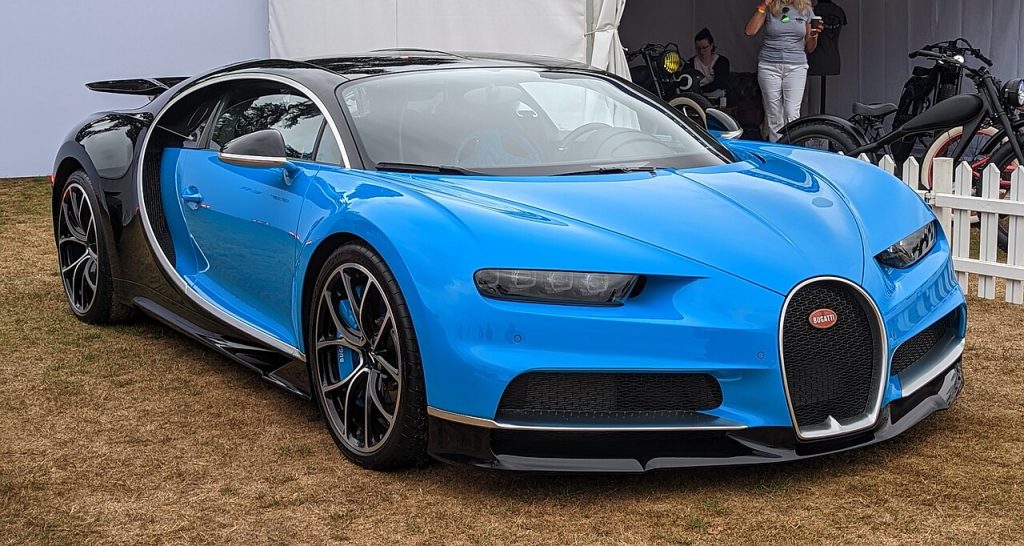
 Logo shown for identification only. Trademark of its owner. Source: Wikimedia (Public domain).
Few car brands have died and come back as dramatically as Bugatti. Founded by an Italian-born artist-engineer in a small Alsace town, it built the most successful racing car of the 1920s, faded away after the Second World War, was revived twice, and is now run by a Croatian electric-car entrepreneur who is launching a V16 hybrid hypercar.
In this article
- Contents
- How it started: art meets engineering
- The first great car: Type 35
- Two revivals: Romano Artioli and Volkswagen
- Bugatti Rimac: the electric entrepreneur takes over
- Living success: the Tourbillon era
- What comes next
- Five things most people do not know about Bugatti
- Owning a Bugatti in Pakistan and the Gulf
- Frequently asked questions
| Fact | Detail |
|---|---|
| Founded | 1909, Molsheim, Alsace (now France) |
| Founder | Ettore Bugatti |
| Headquarters | Molsheim, France |
| Owner | Bugatti Rimac: Rimac Group 55%, Porsche AG 45% |
| Signature models | Type 35, Type 57, Veyron, Chiron, Tourbillon |
| Current flagship | Tourbillon: 1,800 hp V16 hybrid, 250 units |
Contents
- How it started: art meets engineering
- The first great car: Type 35
- Two revivals: Romano Artioli and Volkswagen
- Bugatti Rimac: the electric entrepreneur takes over
- Living success: the Tourbillon era
- What comes next
How it started: art meets engineering
Ettore Bugatti was born in Milan in 1881 into a family of artists; his father Carlo was a famous furniture designer. Ettore chose engineering, designed cars for other makers and in 1909 set up his own works in Molsheim, then part of Germany. His cars combined light weight, precise engineering and an artistic sense of shape, a mix that still defines the brand.
The first great car: Type 35
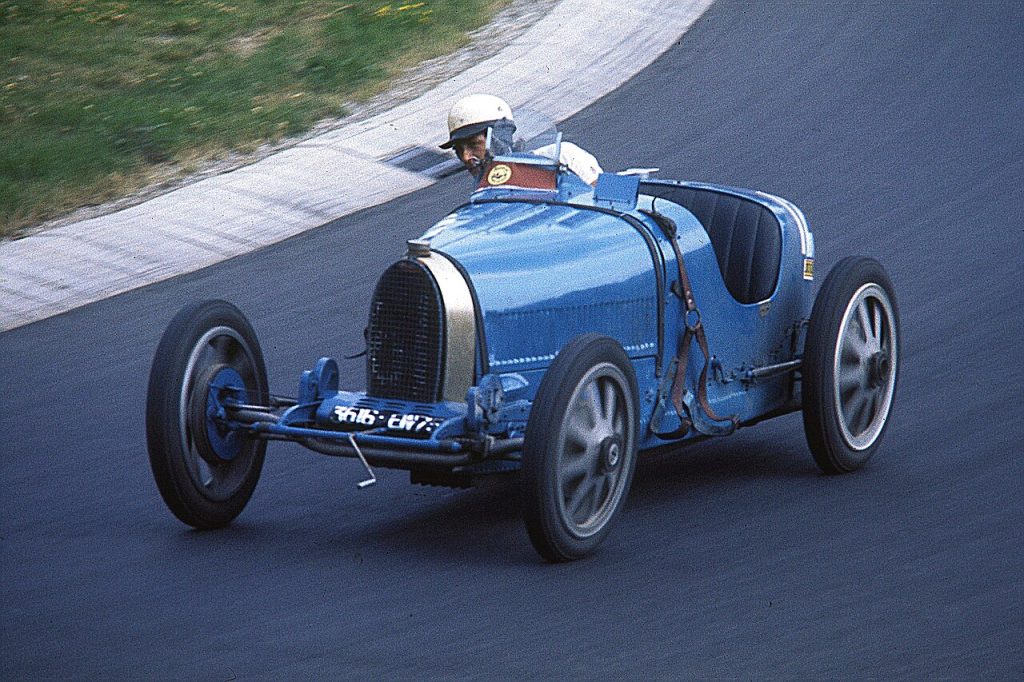
Bugatti’s early Type 13 won races before the First World War, but the Type 35 of 1924 made the brand a legend. With its eight-cylinder engine and distinctive alloy wheels, it is widely regarded as one of the most successful racing cars ever built, winning more than a thousand races in the 1920s and 1930s. The horseshoe-shaped grille that appears on every modern Bugatti dates from this period.
Ettore’s son Jean Bugatti designed some of the most beautiful cars of the 1930s, including the Type 57 Atlantic. Jean died in 1939 while testing a car, and Ettore died in 1947. Without them the company never recovered, and car production effectively stopped in the 1950s.
Two revivals: Romano Artioli and Volkswagen
In 1987 the Italian businessman Romano Artioli bought the name and built the EB110 supercar in a new factory near Modena, but the company went bankrupt in 1995. In 1998 the Volkswagen Group, under Ferdinand Piëch, bought the brand and set an outrageous goal: a road car with more than 1,000 horsepower and a top speed above 400 km/h.
The result, the Veyron, arrived in 2005 with a 16-cylinder quad-turbo engine and became the fastest production car of its time. The Chiron followed in 2016 and extended the W16 era with the Divo, Centodieci, Bolide and W16 Mistral.
Bugatti Rimac: the electric entrepreneur takes over
In 2021 Bugatti was merged with the Croatian electric-hypercar maker Rimac to form Bugatti Rimac. Rimac Group holds 55% and Porsche AG holds 45%. Mate Rimac, who founded his company in 2009 with ten employees, became chief executive of both brands. The Tourbillon is the second new Bugatti since that merger and the first created under his direction.
Living success: the Tourbillon era
The Tourbillon replaces the Chiron with a naturally aspirated 8.3-litre V16 developed with Cosworth that makes 1,000 hp on its own, plus electric motors for a combined 1,800 hp. Production is limited to 250 cars at roughly $4 million or more each, and Mate Rimac says the full run is already spoken for, with first deliveries planned for 2026 from a new Atelier building in Molsheim.
| Bugatti flagship | Years | Engine | Output |
|---|---|---|---|
| Veyron | 2005–2015 | 8.0L W16 quad-turbo | 1,001 hp (later 1,200 hp) |
| Chiron | 2016–2024 | 8.0L W16 quad-turbo | 1,500–1,600 hp |
| Tourbillon | from 2026 | 8.3L V16 hybrid | 1,800 hp |
In October 2026 Bugatti Rimac appointed Hendrik Malinowski as chief commercial officer to lead sales, aftersales and marketing as Tourbillon deliveries approach.
What comes next
After the Tourbillon, Bugatti is expected to keep building one-off cars through its Solitaire programme. The brand’s future depends on Rimac’s ability to blend electric technology with the mechanical theatre that Bugatti buyers expect.
Explore every marque on our Luxury car brands page, compare ownership on the Car brands A–Z and read more founder stories in the Brand stories hub.
Five things most people do not know about Bugatti
- Only six examples of the giant Type 41 Royale of the 1920s and 1930s were built, and they are among the most valuable cars ever made.
- The dancing elephant mascot on the Royale was based on a sculpture by Ettore’s brother, the artist Rembrandt Bugatti.
- The Veyron was named after Pierre Veyron, who won the 24 Hours of Le Mans for Bugatti in 1939; the Chiron honours racing driver Louis Chiron.
- The red oval badge with white letters has barely changed since the early years of the company.
- Molsheim was part of Germany when Bugatti was founded and became French after the First World War.
Owning a Bugatti in Pakistan and the Gulf
In the Gulf, Bugatti cars are sold through official dealers in the UAE, Saudi Arabia and Qatar, and the region is one of the most important markets for luxury brands. In Pakistan there is usually no full official Bugatti network, so most cars arrive as personal or commercial imports. That means very high customs duty and taxes on large engines, limited factory-trained service, and the need to check carefully that the car is genuine, has a clean history and can get parts locally. For a car this rare, buying happens directly through Bugatti’s small dealer network, mostly in the Gulf, Europe, the US and Asia, and every Tourbillon is already allocated.
Frequently asked questions
Who owns Bugatti now?
Bugatti is part of Bugatti Rimac, which is 55% owned by Rimac Group and 45% by Porsche AG.
What is the Bugatti Tourbillon?
It is Bugatti’s new hypercar with a V16 hybrid powertrain making 1,800 hp. Only 250 will be built.
Who founded Bugatti?
Ettore Bugatti founded the company in Molsheim in 1909.
How much does a Bugatti Tourbillon cost?
Pricing is reported at about $4 million to $4.6 million before options and taxes.
Sources
- Spear’s: Mate Rimac and the Bugatti Tourbillon, shareholding
- Motor Authority: Bugatti Tourbillon price and specs
- carsales: Tourbillon V16 revealed
- duPont Registry: Bugatti names CCO as Tourbillon era begins
- Bugatti newsroom
Related on Elite Autos
 Toyota Century Royal: the $500,000 V12 limousine of Japan’s Emperor, and only four exist
 British royal cars: the Bentley State Limousines, King Charles’s wine-powered Aston Martin and the Royal Mews
 Sultan of Brunei car collection: 7,000 cars, 500 Rolls-Royces and the one-offs built only for him
 Pagani history: Horacio Pagani’s journey from Argentina to the Utopia V12