 Logo shown for identification only. Trademark of its owner. Source: Wikimedia (public domain).
Mercedes-Benz can claim something no other brand can: its founder built the first true automobile. Karl Benz patented his three-wheeled Motorwagen in 1886, and Gottlieb Daimler built his own motor carriage the same year. Their companies merged in 1926, and the three-pointed star became the symbol of German engineering and luxury. In 2025 the brand faced falling China sales but enjoyed record demand for its G-Class and AMG models.
In this article
- Contents
- How it started: two inventors, one star
- The first car and the Mercedes name
- Icons and innovation
- Mergers, splits and the new Mercedes
- Living success: Mercedes-Benz in 2025–2026
- Five things most people do not know about Mercedes-Benz
- Mercedes-Benz in Pakistan and the Gulf
- Mercedes-Benz timeline at a glance
- What it means for buyers today
- Three lessons from the Mercedes-Benz story
- Frequently asked questions
| Fact | Detail |
|---|---|
| Origins | 1886: Benz Patent-Motorwagen and Daimler motor carriage |
| Brand formed | 1926 merger of Daimler-Motoren-Gesellschaft and Benz and Cie. |
| Headquarters | Stuttgart, Germany |
| Owner | Mercedes-Benz Group AG (listed) |
| Signature models | 300 SL Gullwing, S-Class, G-Class, E-Class, AMG GT |
| 2025 car sales | 1,800,800 (−9%) |
| Group sales incl. vans | about 2.16 million |
Contents
- How it started: two inventors, one star
- The first car and the Mercedes name
- Icons and innovation
- Mergers, splits and the new Mercedes
- Living success: Mercedes-Benz in 2025–2026
How it started: two inventors, one star
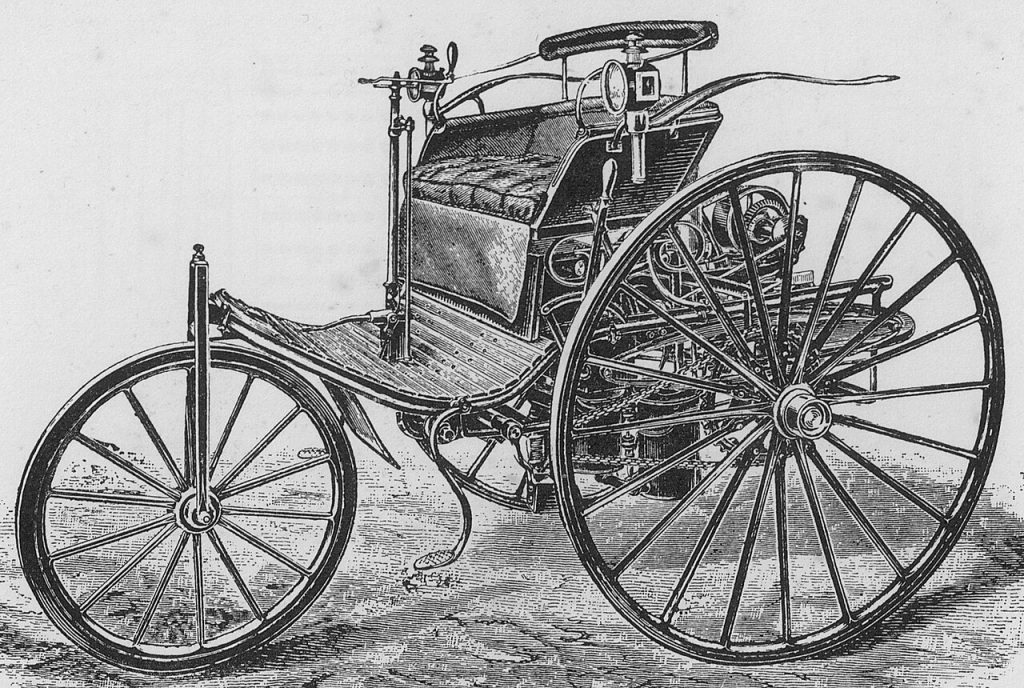
Karl Benz in Mannheim and Gottlieb Daimler with Wilhelm Maybach in Cannstatt worked separately on petrol engines in the 1880s. Benz received a patent for his Motorwagen in January 1886, which is widely seen as the birth certificate of the automobile. In 1888 his wife Bertha Benz drove it about 100 km to her mother’s home to prove it was practical, the first long-distance car journey.
The first car and the Mercedes name
The name Mercedes came from Mercedes Jellinek, the daughter of Emil Jellinek, an Austrian businessman and Daimler dealer who raced Daimler cars under that name and ordered the advanced Mercedes 35 hp in 1900. After economic crisis in Germany, Daimler and Benz merged in 1926 to form Daimler-Benz, and the cars became Mercedes-Benz. The three-pointed star stands for motorisation on land, at sea and in the air.
Icons and innovation
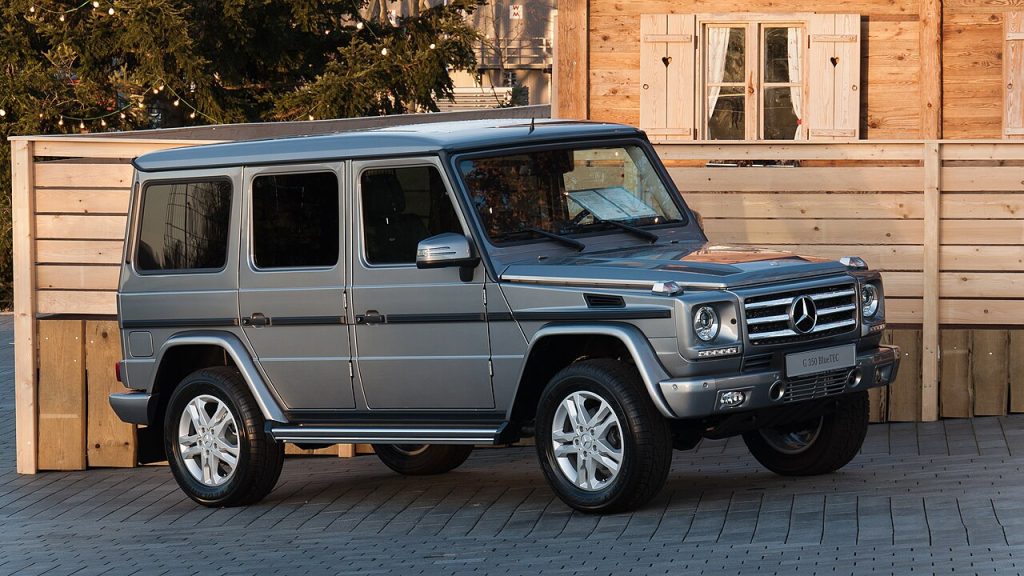
Mercedes-Benz built some of the most famous cars ever, including the 300 SL Gullwing of 1954. It pioneered safety features such as the crumple zone, and the S-Class became the benchmark luxury saloon from the 1970s. The G-Class, first built in 1979 as a military off-roader, became a global luxury icon.
Mergers, splits and the new Mercedes
In 1998 Daimler-Benz merged with Chrysler, a deal that failed and was undone in 2007. In 2021 the truck business was spun off as Daimler Truck, and in 2022 the company renamed itself Mercedes-Benz Group AG, focused on cars and vans.
Living success: Mercedes-Benz in 2025–2026
2025 was hard. Mercedes-Benz Cars sold 1,800,800 vehicles, down 9%, and Group sales including vans fell 10% to about 2.16 million. China, its largest market, fell 19% to 551,900 cars. Yet the top of the range did well: AMG deliveries rose 7%, the G-Class had its best year ever, and top-end vehicles reached 15% of sales. Sales grew 54% in South America and 3% in the Gulf states.
| Measure (2025) | Value | Change |
|---|---|---|
| Mercedes-Benz Cars | 1,800,800 | −9% |
| Electrified cars (xEV) | 368,600 | flat |
| Fully electric cars | 168,800 | −9% |
| Vans | 359,100 | −11% |
| China sales | 551,900 | −19% |
Customer orders for the new electric CLA and GLC were well above expectations, with the order bank filled well into the second half of 2026, according to the company. Mercedes-Benz Cars achieved an adjusted return on sales of 5.0% for 2025.
Five things most people do not know about Mercedes-Benz
- Bertha Benz’s 1888 drive is remembered today as the Bertha Benz Memorial Route in Germany.
- The Mercedes name comes from the daughter of a dealer, not from a founder.
- The G-Class has been built in Graz, Austria, since 1979.
- Mercedes-Maybach’s share of S-Class sales grew in 2025, according to market data.
- Mercedes-AMG started as an independent tuning company founded in 1967.
Mercedes-Benz in Pakistan and the Gulf
In Pakistan Mercedes-Benz cars are sold through an authorised distributor and many more arrive as used imports from Japan and the UK. In the Gulf, the brand is one of the strongest luxury names, and its G-Class is a status symbol in the UAE, Saudi Arabia and Qatar.
Explore more founder stories in the Brand stories hub, compare owners on the Luxury car brands page and browse the Car brands A–Z.
Mercedes-Benz timeline at a glance
| Year | Milestone |
|---|---|
| 1886 | Benz Patent-Motorwagen patented; Daimler builds his motor carriage |
| 1888 | Bertha Benz’s long-distance drive |
| 1901 | First Mercedes-branded Daimler car |
| 1926 | Daimler and Benz merge |
| 1954 | 300 SL Gullwing |
| 1979 | G-Class production begins |
| 2022 | Company renamed Mercedes-Benz Group |
| 2025 | Record G-Class year; 1.8 million cars sold |
What it means for buyers today
For buyers, Mercedes-Benz’s shift toward top-end models means more expensive cars but stronger resale values for the S-Class, G-Class and AMG ranges. The new electric CLA and GLC are the brand’s most important launches in years; early buyers should check charging access and battery warranty terms. Used imports remain popular in Pakistan, but parts and diagnostic equipment for the latest models can be hard to find outside major cities, so buyers should confirm service support before purchase.
Three lessons from the Mercedes-Benz story
- Invention is not enough: Benz and Daimler both built early cars, but it was the 1926 merger that created the scale to survive economic crisis.
- Icons protect a brand: the S-Class and G-Class have carried Mercedes-Benz through weak years because buyers will pay more for them.
- China can change everything: a 19% fall in its biggest market in 2025 shows how exposed German luxury brands are to one country.
Frequently asked questions
Who invented the first car?
Karl Benz is credited with the first practical automobile, the Benz Patent-Motorwagen of 1886.
Where does the name Mercedes come from?
From Mercedes Jellinek, daughter of Daimler dealer Emil Jellinek.
How many cars did Mercedes-Benz sell in 2025?
Mercedes-Benz Cars sold 1,800,800 vehicles in 2025.
Who owns Mercedes-Benz?
Mercedes-Benz Group AG, a publicly listed German company.
Sources
- Mercedes-Benz Group: sales 2025
- Mercedes-Benz Media: 2.2 million cars and vans in 2025
- Carscoops: Mercedes 2025 sales and China
- Mercedes-Benz Group annual report 2025
- Best Selling Cars: Mercedes-Benz 2025
Related on Elite Autos
 Toyota Century Royal: the $500,000 V12 limousine of Japan’s Emperor, and only four exist
 British royal cars: the Bentley State Limousines, King Charles’s wine-powered Aston Martin and the Royal Mews
 Sultan of Brunei car collection: 7,000 cars, 500 Rolls-Royces and the one-offs built only for him
 Pagani history: Horacio Pagani’s journey from Argentina to the Utopia V12