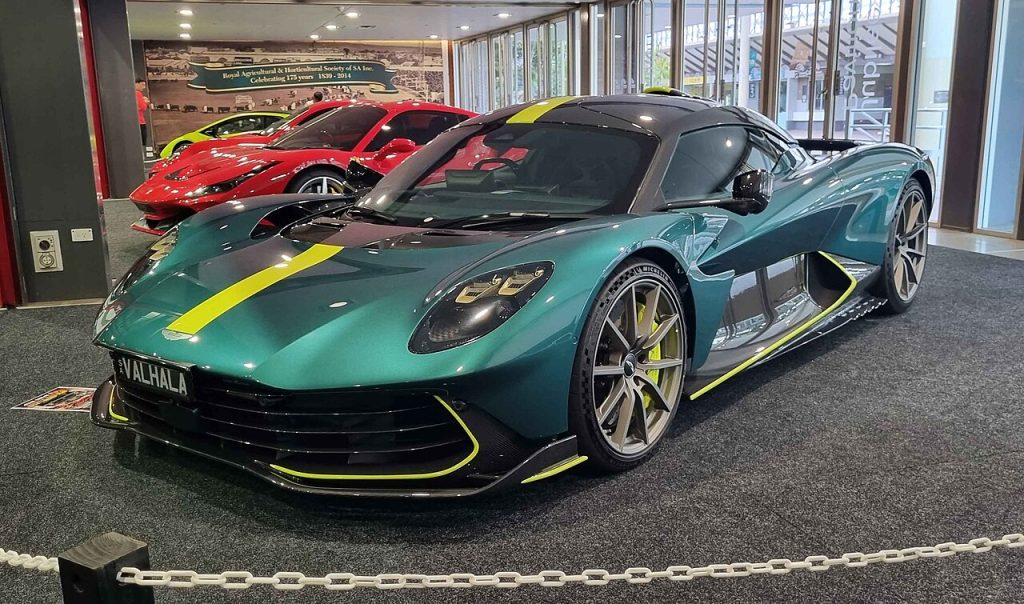
Aston Martin is the most glamorous survivor in the car industry. It has gone bankrupt seven times, yet its name is known worldwide thanks to beautiful grand tourers and a fictional British spy. Today it is a listed company controlled by a consortium led by Lawrence Stroll, fighting to turn brand fame into steady profit.
In this article
- Contents
- How it started: Bamford and Martin
- The first car and the DB years
- Hard times and new owners
- Racing, hypercars and the DBX
- Living success and struggle: Aston Martin in 2025–2026
- What comes next
- Five things most people do not know about Aston Martin
- Owning a Aston Martin in Pakistan and the Gulf
- Frequently asked questions
| Fact | Detail |
|---|---|
| Founded | 1913, London |
| Founders | Lionel Martin and Robert Bamford |
| Headquarters | Gaydon, Warwickshire, England |
| Owner | Aston Martin Lagonda Global Holdings plc (listed in London) |
| Signature models | DB5, Vantage, DBS, DBX, Valkyrie, Valhalla |
| 2025 wholesales | 5,448 cars (−10%) |
| 2025 revenue | £1.258 billion |
Contents
- How it started: Bamford and Martin
- The first car and the DB years
- Hard times and new owners
- Racing, hypercars and the DBX
- Living success and struggle: Aston Martin in 2025–2026
- What comes next
How it started: Bamford and Martin
Lionel Martin and Robert Bamford set up Bamford and Martin in London in 1913 to sell cars. Martin raced at the Aston Hill climb near Aston Clinton, and the brand name was formed from that hill and his surname. The first car registered as an Aston Martin appeared in 1915, but the First World War delayed production until the 1920s.
The first car and the DB years
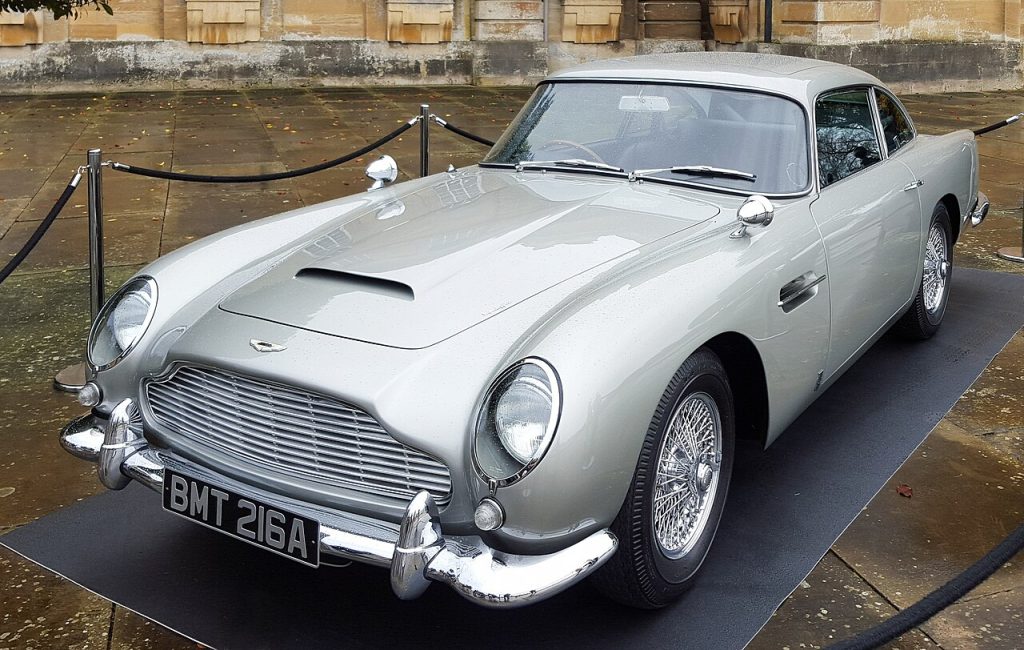
Early Aston Martins were small, sporty and expensive to build, and the company changed hands several times. The turning point came in 1947 when the industrialist David Brown bought it and later added Lagonda. His initials gave the famous DB name to a run of grand tourers, from the DB2 to the DB4, DB5 and DB6.
The DB5 appeared in the 1964 film Goldfinger as James Bond’s car, complete with gadgets, and became one of the most famous cars in cinema history. The Bond connection has continued in many films since.
Hard times and new owners
After David Brown sold in 1972, Aston Martin went through a long series of owners and near-collapses. Ford took control in 1987 and gave the company a period of stability, launching the DB7 and opening the Gaydon factory. A consortium bought it from Ford in 2007, and the company listed on the London Stock Exchange in 2018. Weak results led a group led by the Canadian billionaire Lawrence Stroll to invest in 2020, with Stroll becoming executive chairman.
Racing, hypercars and the DBX
Under Stroll, Aston Martin returned to Formula One and launched the Valkyrie hypercar with Red Bull’s Adrian Newey and its first SUV, the DBX, built in Wales. The DBX quickly became an important part of sales. The Valhalla, the brand’s first series-production mid-engined plug-in hybrid, began customer deliveries in October 2025.
Living success and struggle: Aston Martin in 2025–2026
2025 was a difficult year. Total wholesale volumes fell 10% to 5,448 cars and revenue dropped 21% to £1.258 billion. The fall was blamed on the global economy, U.S. tariffs, geopolitical uncertainty, fewer special models and a decision to match production carefully to demand. Of the 5,448 cars, 3,549 were Sport and GT models, 1,717 were DBX SUVs and 182 were specials such as the Valhalla.
| Measure | FY 2025 | FY 2024 |
|---|---|---|
| Wholesale volumes | 5,448 | 6,030 |
| Revenue | £1,258m | £1,584m |
| Gross margin | 29.4% | 36.9% |
The fourth quarter was much stronger than the first nine months, with wholesales up 47% on the third quarter thanks to new models and the first Valhalla deliveries. The company expects 2026 volumes to be similar to 2025 and has announced job cuts as it tries to improve profit and cash flow.
What comes next
Aston Martin has pushed back its first fully electric car into the 2030s and is relying on the Valhalla, updated Vantage and DB12 family and the DBX to recover. Its Formula One team, also controlled by Stroll, keeps the name in front of a global audience.
Explore every marque on our Luxury car brands page, compare ownership on the Car brands A–Z and read more founder stories in the Brand stories hub.
Five things most people do not know about Aston Martin
- The winged badge was introduced in the 1920s and has been refined many times since.
- Lagonda, the luxury brand David Brown bought in 1947, still belongs to Aston Martin.
- The Valkyrie hypercar was co-developed with Formula One designer Adrian Newey.
- Aston Martin’s SUV, the DBX, is built in St Athan, Wales, in a former Royal Air Force site.
- The company’s Formula One team was relaunched under the Aston Martin name in 2021.
Owning a Aston Martin in Pakistan and the Gulf
In the Gulf, Aston Martin cars are sold through official dealers in the UAE, Saudi Arabia and Qatar, and the region is one of the most important markets for luxury brands. In Pakistan there is usually no full official Aston Martin network, so most cars arrive as personal or commercial imports. That means very high customs duty and taxes on large engines, limited factory-trained service, and the need to check carefully that the car is genuine, has a clean history and can get parts locally. Residual values for Aston Martins fall faster than Ferrari or Porsche, which makes used examples tempting but means buyers should budget for maintenance.
Frequently asked questions
Where does the name Aston Martin come from?
From the Aston Hill climb race and co-founder Lionel Martin.
Who owns Aston Martin?
It is a listed company; a consortium led by Lawrence Stroll is the largest shareholder and Stroll is executive chairman.
Which Aston Martin did James Bond drive?
The most famous is the DB5, first seen in Goldfinger in 1964.
How many cars did Aston Martin sell in 2025?
Total wholesale volumes were 5,448 cars.
Sources
- Aston Martin preliminary results FY2025 (LSE RNS)
- PistonHeads: Aston’s 2025 volumes by model line
- AJ Bell: Aston Martin to cut jobs, 2026 volume outlook
- Shares Magazine: Valhalla deliveries commenced October 2025
Related on Elite Autos
 Toyota Century Royal: the $500,000 V12 limousine of Japan’s Emperor, and only four exist
 British royal cars: the Bentley State Limousines, King Charles’s wine-powered Aston Martin and the Royal Mews
 Sultan of Brunei car collection: 7,000 cars, 500 Rolls-Royces and the one-offs built only for him
 Pagani history: Horacio Pagani’s journey from Argentina to the Utopia V12