
China sold a record 1.94 million new energy vehicles (NEVs) in October 2026, but the record rests entirely on exports, Automotive World reported. Domestic NEV sales fell 8.6%, the eleventh consecutive monthly decline. The China Passenger Car Association (CPCA) separately estimated October NEV wholesale sales at a record of around 1.8 million, according to CnEVPost, using a narrower passenger-vehicle definition.
In this article
- What the numbers say
- Why China domestic market is shrinking
- Hybrids rerouted abroad
- Who is winning
- What to watch
- How this affects car prices around the world
- Why it matters
- The full breakdown
- The honest picture: exports, not home demand
- What it means for Pakistan and the Gulf
- Our view
- CAAM vs CPCA: why the numbers differ
- Battery-electric is pulling ahead again
- Bottom line
- How this compares with a year ago
- Key takeaways
- Background
- Frequently asked questions
The split between a booming export trade and a shrinking home market is now the defining story of the world largest car industry. It shapes prices, trade policy and product plans everywhere from Mexico to Europe to Pakistan.
CHINA CAR MARKET, OCTOBER 2026
ELITE AUTOS
What the numbers say
| Indicator | Value | Source |
|---|---|---|
| NEV sales, October 2026 | About 1.94 million (record) | Automotive World |
| CPCA NEV wholesale estimate, October | About 1.8 million (record) | CnEVPost |
| Domestic NEV sales, October | -8.6% YoY, 11th consecutive decline | Automotive World |
| Domestic car sales, Jan-Aug 2026 | Down about 20% | SCMP, citing CPCA |
| Domestic retail forecast, 2026 | About 18.5 million, lowest in years | Manufacturing.net, citing CPCA |
| Overseas sales forecast, 2026 | Over 12 million (+44%) | SCMP, citing CPCA |
The figures come from different bodies and definitions, which is why they do not match exactly. The direction, however, is consistent across every source: exports up sharply, domestic demand down.
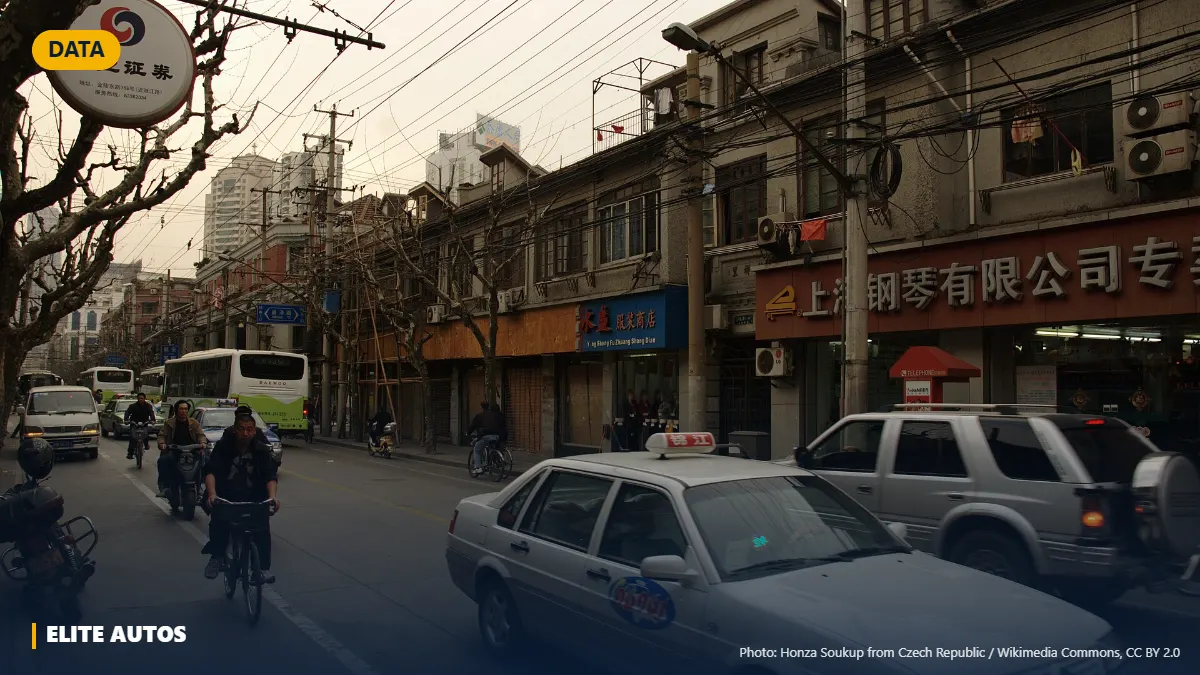
Why China domestic market is shrinking
- End of subsidies and incentives: changes to purchase incentives pulled demand forward into 2025 and left a gap in 2026.
- Price war fatigue: years of discounting trained buyers to wait for the next price cut.
- Economic caution: households are cautious about big purchases.
- Saturation in big cities: licence-plate limits and high car ownership in tier-one cities restrict new demand.
CPCA secretary general Cui Dongshu has said a sluggish domestic market is fuelling carmakers efforts to export, and that the export boom from January to August exceeded the association expectations.
Hybrids rerouted abroad
Automotive World highlighted a subtle shift. Chinese carmakers are redirecting plug-in hybrids abroad, partly because European Union anti-subsidy duties apply only to battery-electric vehicles. The EU is now scrutinising hybrid shipments routed through Southeast Asia. In response, BYD, Chery and others are building plants in Hungary and Spain, although that does not solve China excess domestic capacity.
Who is winning
- BYD reached 490,168 sales in October, a 2026 high, with exports around 35% of its total.
- Chery remains China largest passenger car exporter, with 1,724,187 exports in January to October.
- Geely more than doubled overseas sales in October, but grew only 1% overall, Automotive World noted, showing how weak China itself is.
What to watch
- Whether domestic demand stabilises before the end of 2026.
- New export licensing and pricing rules from Beijing.
- EU decisions on hybrid shipments and minimum prices.
- The ramp-up of Chinese plants in Thailand, Brazil, Turkey and Hungary.
- Profitability: high export volumes do not guarantee profits in a price war.
Read our China car exports 2026 guide and BYD October sales analysis.
How this affects car prices around the world
When China home market weakens, its carmakers have two choices: cut production or sell the surplus abroad. In 2026 they have chosen to sell abroad, often at aggressive prices. That is good news for buyers in open markets such as the Gulf, Australia, Mexico, Southeast Asia and South Asia, who are seeing more features for the money and pressure on established brands to cut prices or add equipment. It is less welcome for carmakers and workers in Europe and Japan, where Chinese competition is one reason for factory closures and job cuts. Governments are responding with tariffs, local-content rules and incentives to build factories locally, which is why the next phase of the Chinese export story will be written in plants in Hungary, Spain, Turkey, Brazil and Thailand rather than in shipping statistics.
Why it matters
Exports are now doing the heavy lifting for China’s carmakers while the home market weakens. Expect more Chinese EVs and plug-in hybrids in overseas showrooms, and more trade pushback.
The full breakdown
China sold 1.94 million new energy vehicles (NEVs) in October 2026, up 13.1% year on year, according to the China Association of Automobile Manufacturers (CAAM). The figure combines about 1.334 million domestic sales with 606,000 exports. Battery-electric vehicles reached a record 1.353 million, up 22%, while plug-in hybrids, including range extenders, accounted for about 587,000 (CnEVPost, Electrive).
| Measure (October 2026) | Figure | Change |
|---|---|---|
| Total NEV sales (CAAM) | 1.94 million | +13.1% |
| Battery-electric | 1.353 million | +22% |
| Plug-in hybrid and range extender | About 587,000 | — |
| NEV exports | 606,000 | About +140% |
| Domestic NEV sales | About 1.334 million | −8.6% |
| NEV share of domestic sales | 68.4% | Record |
| All vehicle exports | 1.066 million | +60.2% |
The honest picture: exports, not home demand
The record rests almost entirely on exports. Domestic NEV sales fell 8.6%, an 11th straight monthly decline, and retail NEV sales measured by the China Passenger Car Association (CPCA) fell 13.7% to 1.109 million (Automotive World, GoodCarBadCar). Overall passenger-car retail fell 27.1%, so NEVs reached a record 67.5% share mainly because petrol car sales fell even faster, by about 45% (Yicai).
Exports made up 33% of carmakers’ NEV wholesale sales in October, compared with 15% a year earlier (CnEVPost). In the first ten months, China exported 9.271 million vehicles, including 4.612 million NEVs, up 130% (Global Times). Some analysts read the record as a sign of overcapacity: Chinese factories are building far more electric cars than the home market can absorb.
What it means for Pakistan and the Gulf
When Chinese factories cannot sell at home, they push harder abroad. Pakistan and the Gulf are open markets for Chinese EVs and plug-in hybrids, and Pakistan’s new auto policy cuts sales tax on battery-electric cars to 1%. Expect more Chinese EV launches, sharper prices and stronger warranties in Karachi, Lahore, Dubai and Riyadh through 2027. Read our China car exports guide for the bigger picture.
Our view
The headline record is real, but it hides a weak home market. If more countries raise tariffs on Chinese EVs, the export valve could narrow, and China’s carmakers would face painful consolidation. For buyers in open markets, the next 12 months are likely to bring the best prices yet on Chinese electric cars.
CAAM vs CPCA: why the numbers differ
Readers often see two different Chinese EV figures for the same month. CAAM counts wholesale shipments from factories, including exports and commercial vehicles such as buses and trucks. CPCA reports passenger cars only and separates retail sales, cars actually sold to customers in China, from wholesale. That is why CAAM can report a record 1.94 million NEVs while CPCA reports domestic retail NEV sales falling. Both are correct; they measure different things. For understanding real consumer demand inside China, CPCA retail is the better guide. For understanding factory output and exports, CAAM is more useful.
Battery-electric is pulling ahead again
For much of 2024 and 2025, plug-in hybrids and range-extended EVs grew faster than pure battery-electric cars in China. In October 2026 the balance shifted back: battery-electric sales rose 22% to a record, and made up about 70% of all NEVs. Cheaper batteries, faster charging and longer driving ranges are making pure EVs easier to live with. Exports also lean toward battery-electric models, which face lower tariffs in some markets than plug-in hybrids.
Bottom line
China’s electric car industry has never been bigger, but its growth now depends on the rest of the world buying its cars. That makes Chinese EVs cheaper and more widely available in markets like Pakistan, while increasing trade tensions elsewhere.
Elite Autos updates this brief every month when CAAM and CPCA publish new data.
How this compares with a year ago
In October 2025, NEVs made up just over half of China’s new-car sales, according to state media reports. One year later they are close to two-thirds of the domestic market, and exports have more than doubled. Few industries anywhere have changed this quickly. See our BYD brand story for how China’s biggest EV maker got here.
All figures are checked against CAAM and CPCA releases.
Updated November 2026.
Key takeaways
- China NEV sales set a record of about 1.94 million in October 2026, driven entirely by exports.
- Domestic NEV sales fell 8.6%, an eleventh straight monthly decline.
- CPCA expects domestic retail sales of about 18.5 million in 2026, the lowest in years, and overseas sales above 12 million.
- Plug-in hybrids are being redirected to markets where tariffs on battery-electric cars apply, including Europe.
- Expect more Chinese cars, more price competition and more trade disputes in 2027.
Background
China has been the world largest car market since 2009 and the largest exporter by volume since 2023. New energy vehicles, which include battery-electric and plug-in hybrid cars, passed half of new car sales in China during 2025, years ahead of most other countries.
Frequently asked questions
How many NEVs did China sell in October 2026?
About 1.94 million according to Automotive World, a record; the CPCA wholesale estimate was around 1.8 million.
Is China car market growing?
Total sales are being held up by exports. Domestic NEV sales fell 8.6% in October 2026, an 11th straight decline.
How many cars will China export in 2026?
CPCA forecasts overseas sales of over 12 million vehicles, up 44%.
Why are Chinese hybrids going to Europe?
EU anti-subsidy duties apply only to battery-electric cars, so hybrids face lower barriers.
Sources
- Automotive World: exports carry China NEV sales to a record
- CnEVPost: China NEV exports by automaker, October 2026
- SCMP: China carmakers eye record 12 million overseas sales
- Manufacturing.net: China passenger car exports surge
- Automotive World: BYD October record
This article was prepared with AI assistance and checked against the sources listed. Read our AI use policy and corrections policy.
Related on Elite Autos
 How car dealerships make money in 2026: new, used, F&I and service
 US new car inventory October 2026: 87 days’ supply, Toyota 39 days vs Jeep 159
 Pakistan vs India car industry 2026: sales, exports, ownership and growth compared
 US average new car price hits record $51,109 in October 2026: what buyers pay now