Chinese carmakers are selling more cars abroad than ever, and in 2026 exports have become the main engine of their growth. In the first ten months of 2026, Chery exported 1,724,187 passenger vehicles, up 63.7%, and BYD exported 1,465,753 new energy vehicles, up 95.3%, according to China Passenger Car Association rankings reported by CnEVPost. The association has forecast that overseas sales of Chinese vehicles could top 12 million units in 2026, up 44% from 8.3 million the year before, the South China Morning Post reported.
In this article
- Why China is exporting so hard
- The export leaders: Chery, BYD, Geely and more
- Where the cars go
- Tariffs and trade barriers
- Factories abroad: the next phase
- The hybrid shift
- Market by market
- What it means for Pakistan
- Advice for buyers
- What it means for Japanese, Korean and European brands
- Risks and weak points
- 2027 outlook
- How we got here: a short history of Chinese car exports
- How Chinese cars got good
- Brand guide: Chinese car brands you will see abroad
- Myths vs facts about Chinese cars
- What dealers and importers should do
- More markets in focus
- What Chinese exports mean for car prices worldwide
- Five scenarios for 2030
- How to read Chinese export numbers
- Case study: BYD in four regions
- Questions to ask before buying a Chinese car
- October 2026 update: exports pass one million a month
- Who is exporting the most?
- What to watch in 2027
- Frequently asked questions
The reason is not only ambition. China home market is shrinking: domestic sales slumped about 20% in the first eight months of 2026, and the CPCA expects domestic retail sales of around 18.5 million, the lowest in years. Factories built for a bigger China now need buyers in Mexico, Brazil, the Gulf, Russia, Southeast Asia, Europe and South Asia. This guide explains who is exporting, where the cars go, how trade barriers are changing the strategy, and what it means for buyers, dealers and local industries, including in Pakistan.
CHINA CAR EXPORTS 2026
ELITE AUTOS
Why China is exporting so hard
Three forces push Chinese carmakers abroad at the same time.
- A weak home market. Domestic demand has fallen for months; Automotive World reported October 2026 domestic NEV sales down 8.6%, an 11th consecutive monthly decline, while exports carried total NEV sales to a record 1.94 million.
- Too much capacity. China built factories for a market that was expected to keep growing. Spare capacity has to go somewhere, and exports are the outlet.
- Better products at lower prices. Chinese brands now offer electric and plug-in hybrid cars with long range, large screens and driver assistance at prices that undercut many established rivals.
Cui Dongshu, secretary general of the CPCA, summed it up: a sluggish domestic market has been fuelling carmakers efforts to spur exports, and the boom exceeded expectations. Overseas markets have become, in his words, the most reliable growth track for Chinese automakers.
The export leaders: Chery, BYD, Geely and more
| Company | Export figure | Period | Source |
|---|---|---|---|
| Chery | 1,724,187 passenger vehicles (+63.7%), 21.7% share of China passenger exports | Jan-Oct 2026 | CPCA via CnEVPost |
| BYD | 1,465,753 NEVs (+95.3%), 32.8% of China NEV exports | Jan-Oct 2026 | CPCA via CnEVPost |
| BYD | 164,679 NEVs in October (+105.6%) | October 2026 | CPCA via CnEVPost |
| Chery | Exports grew almost 59%, above 200,000 units | October 2026 | Kurs |
| Geely | Overseas sales more than doubled | October 2026 | Automotive World |
Chery: the quiet giant
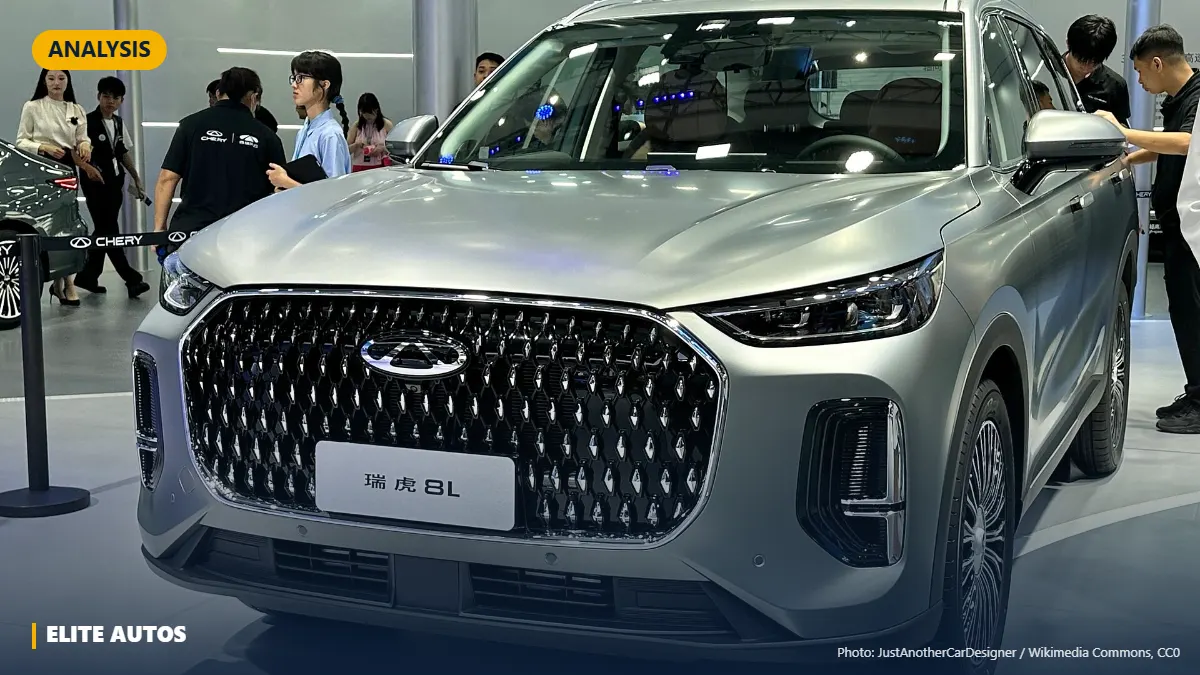
Chery has been China largest car exporter for years and is less famous abroad than BYD because it sells under several brands, including Chery, Omoda, Jaecoo, Exeed and Jetour, and partners with local assemblers. Caixin reported it operates ten manufacturing plants outside China, including in Spain and Brazil, and targeted 1.5 million exports for 2026. It had already passed that by October.
BYD: the electric champion
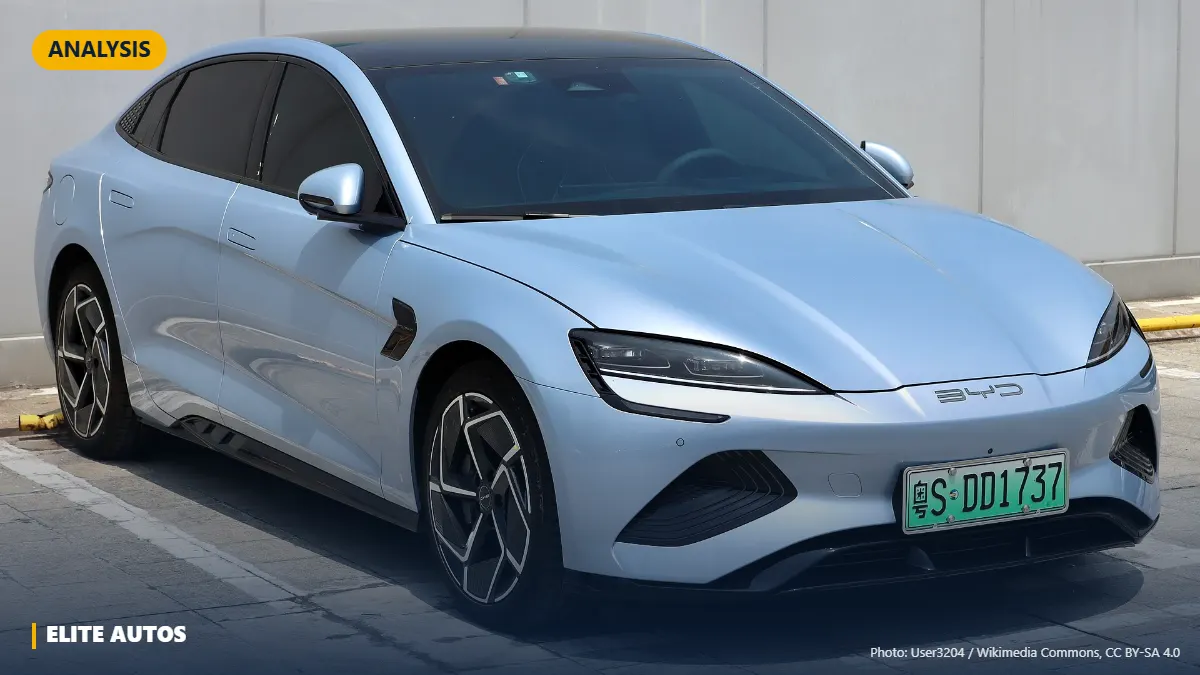
BYD is the world biggest maker of new energy vehicles and the face of Chinese EVs abroad. In October 2026 its total sales rose 11% to 490,168, with battery-electric sales topping 300,000 for the first time, Automotive World reported. About 35% of its October sales were exports, electrive noted. But its overall 2026 sales through October were slightly below 2025, because sales in China fell. Exports are holding the company up.
Geely, Leapmotor, SAIC and the rest
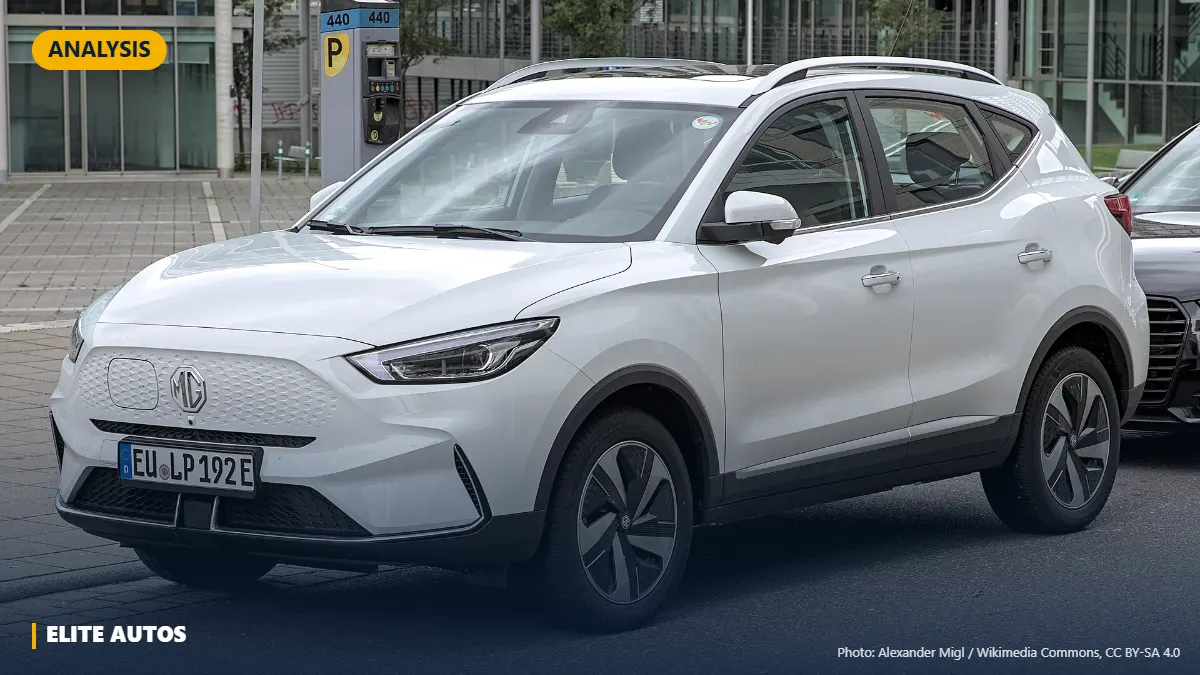
Geely owns Volvo Cars, Polestar, Lotus, Zeekr and a stake in Renault businesses, and its overseas sales more than doubled in October. Leapmotor sells abroad through a joint venture with Stellantis. SAIC sells widely under the MG brand, which many buyers in the UK, Australia, the Gulf and Pakistan do not even think of as Chinese. Changan, Great Wall (Haval and Tank) and Xpeng are expanding too.
Where the cars go
Chinese exports are spread across many regions, which makes them resilient to any single country tariffs.
| Region | Why it buys Chinese cars | Notes |
|---|---|---|
| Mexico and Latin America | Price, features, no high EV tariffs in many markets | Mexico became China top export market in 2025 with 625,200 units; BYD builds in Brazil |
| Middle East and Gulf | Fast-growing markets, buyers open to new brands | UAE among strong growth markets; robotaxis and EVs adopted early |
| Russia and Central Asia | Western brands left Russia after 2022 | Chery, Haval, Geely filled the gap; BYD has a plant in Uzbekistan |
| Southeast Asia | EV incentives, regional trade deals | BYD plant in Thailand; Chinese brands lead EV sales in several countries |
| Europe | Strong EV demand, but tariffs on Chinese BEVs | Plants in Hungary and Spain; hybrids redirected to avoid BEV duties |
| South Asia | Price-sensitive buyers, local assembly deals | Pakistan: BYD, Changan, Haval, MG; local CKD expanding |
Tariffs and trade barriers
Success has triggered resistance. The United States applies a 100% tariff on Chinese electric vehicles. Canada matched it, though it has discussed changes. The European Union imposed extra anti-subsidy duties on Chinese battery-electric cars. Turkey, Brazil and others have raised duties to protect local factories or attract investment.
- United States: effectively closed to Chinese-built EVs because of the 100% tariff and rules on connected-car software.
- European Union: anti-subsidy duties apply only to battery-electric cars, which is why Chinese brands are shipping more plug-in hybrids to Europe, Automotive World reported. The EU is also scrutinising hybrids routed through Southeast Asia.
- Emerging markets: many use duties to push brands into local assembly rather than to block them.
The trade picture can change quickly; see our auto tariff watch for the latest US, Mexico and China moves.

Factories abroad: the next phase
The smartest Chinese companies are moving from shipping cars to building them where they sell them. That avoids tariffs, cuts shipping costs and earns political goodwill through local jobs.
| Company | Overseas plants (selected) | Status |
|---|---|---|
| BYD | Thailand, Brazil, Turkey, Uzbekistan, Hungary | Thailand, Brazil and Turkey ramping up; Hungary for Europe |
| Chery | Ten plants abroad including Spain and Brazil | Operating |
| Various | Brazil and Hungary as regional hubs | Expanding |
Shipping is a constraint too. BYD blamed limited shipping capacity rather than weak demand for a dip in September exports, and has invested in its own fleet of car-carrier ships. Local plants reduce that bottleneck. A Foley report summarised forecasts that Chinese export growth could slow to about 10% in 2027 after a 75% jump in the first ten months of 2026, partly because local production will replace some exports.
The hybrid shift
Within BYD, battery-electric cars now make up 63% of passenger sales, as plug-in hybrid sales fell in China. Abroad, the story is the reverse in some markets: because EU duties hit only battery-electric cars, Chinese brands are sending more hybrids to Europe. Hybrids also suit markets with weak charging networks, such as much of Latin America, the Middle East and South Asia. Expect Chinese plug-in hybrids to become one of the most common new-car types in emerging markets over the next few years.
Market by market
Mexico
Mexico became China largest export market in 2025. Chinese brands offer more features for the money than many incumbents, and Mexico had not imposed US-style EV tariffs. That may change: US pressure on Mexico over Chinese content in North American supply chains is growing, and Mexico has its own debates about duties.
Brazil
Brazil is both a big market and a production base. BYD took over a former Ford site in Camaçari, Bahia, and Chery and Great Wall have operations there. Brazil raised import duties on EVs in steps to encourage local production.
The Gulf
Gulf buyers have embraced Chinese brands quickly, especially SUVs and EVs. The UAE is also a testing ground for Chinese robotaxis, with Baidu Apollo Go running driverless rides in Dubai. Read our robotaxi race 2026 guide.
Europe
Europe is the most contested market. Chinese brands including BYD, MG, Leapmotor, Xpeng, Omoda and Jaecoo are expanding dealer networks, while EU duties and local plants in Hungary and Spain shape their strategy. European makers are cutting jobs and pushing for softer CO2 rules, partly in response.
Russia
After Western brands left Russia in 2022, Chinese brands took a large share of the market. Russia raised recycling fees and pushed local assembly, and Chinese exports to Russia have become more volatile.
What it means for Pakistan
Pakistan is a small market by Chinese standards but a growing one, and Chinese brands are central to its future.
- Local assembly: Changan (Master Motor), Haval (Sazgar), MG (JW SEZ) and BYD (Mega Motor Company, a HUBCO business) all operate in Pakistan. BYD local CKD production of the Sealion 6 PHEV is targeted for December 2026.
- Price pressure: Chinese brands offer more features than many Japanese models at similar prices, forcing incumbents to add equipment.
- EVs and hybrids: almost every plug-in car sold in Pakistan today is Chinese. BYD Atto 2 starts at Rs7.29 million.
- Policy: Auto Policy 2026-31 cuts duties gradually and sets ambitious export targets; Chinese partners could help Pakistani assemblers export, though that is unproven.
- Risks: parts availability and resale values for newer brands are still developing outside major cities.
See our Pakistan car buying guide 2026 and Pakistan auto industry brief.
Advice for buyers
- Check the local partner. A strong local assembler or distributor matters more than the badge for service and parts.
- Ask about warranty and battery cover. Many Chinese brands offer long warranties; read the terms, especially for batteries.
- Look at resale. Newer brands can lose value faster; check used prices for two- to three-year-old cars in your city.
- Test the software. Large screens are common; make sure menus, maps and phone connection work well in your language and region.
- Compare safety ratings. Many Chinese models have strong Euro NCAP or ANCAP results; confirm your local variant has the same equipment.
What it means for Japanese, Korean and European brands
Established brands are responding in three ways: cutting costs, partnering with Chinese companies, and moving upmarket. Toyota still leads globally by volume and raised its profit forecast in November 2026, but its China sales fell sharply, and it is under price pressure in Southeast Asia. Volkswagen, Stellantis and others have formed partnerships with Chinese firms for technology and platforms. In Europe, job cuts at suppliers such as Schaeffler and at Volvo Cars show how hard the squeeze has become. See our Toyota earnings analysis and Europe auto restructuring.
Risks and weak points
- Profitability: strong export volumes do not automatically mean profits; price wars at home and abroad squeeze margins.
- Trade retaliation: more countries may raise tariffs or local-content rules as Chinese market share grows.
- Shipping and logistics: capacity constraints and costs can slow exports.
- Brand trust: some buyers still worry about long-term reliability, parts and resale.
- Data and security concerns: connected-car data rules are tightening in the US and Europe.
2027 outlook
- Export growth slows to around 10% as local plants take over some supply.
- More plug-in hybrids sent to markets with weak charging and EU-style BEV duties.
- BYD plants in Thailand, Brazil, Turkey and Hungary reach higher output.
- More partnerships between Chinese companies and established brands.
- More trade disputes, especially around Mexico and North American supply chains.
How we got here: a short history of Chinese car exports
| Period | What happened |
|---|---|
| 1990s | BYD founded in 1995 as a battery maker; Chery founded in 1997 in Wuhu |
| 2000s | Chery and Great Wall begin exporting cheap cars to Russia, the Middle East and Africa; quality is basic |
| 2007 | SAIC acquires MG Rover assets, later reviving MG as a global brand |
| 2010 | Geely buys Volvo Cars from Ford, gaining engineering know-how and a premium brand |
| 2010s | Joint ventures with VW, GM, Toyota and others train a generation of Chinese engineers and suppliers |
| Late 2010s | Government support and the LFP battery boom give Chinese firms an EV cost lead |
| 2023 | China overtakes Japan as the world largest car exporter by volume |
| 2025 | Exports jump; Mexico becomes the largest export market |
| 2026 | Chery passes 1.7 million and BYD 1.4 million NEV exports by October; CPCA forecasts 12 million overseas sales |
The turning point was the electric car. In petrol engines, Chinese companies were followers. In batteries, power electronics and software, they built scale early, helped by a huge home market and government support, and by the time EV demand grew abroad they had the cheapest supply chain in the world.
How Chinese cars got good
- Batteries: Chinese suppliers dominate lithium iron phosphate (LFP) cells, which are cheaper and more durable than many alternatives. CATL alone held 39.9% of the global EV battery market in the first half of 2026, Electrek reported from SNE Research.
- Vertical integration: BYD makes its own batteries, motors, chips and many components, cutting costs and speeding up development.
- Speed: Chinese brands often develop a new model in around two years, faster than many legacy carmakers.
- Software and screens: large displays, voice assistants and driver assistance are standard even on cheaper models.
- Plug-in hybrids: systems such as BYD DM-i offer long electric range with a petrol engine as backup, ideal for markets with weak charging.
Brand guide: Chinese car brands you will see abroad
| Brand | Parent group | Known for |
|---|---|---|
| BYD | BYD | EVs and plug-in hybrids: Atto 2, Atto 3, Seal, Sealion, Shark 6 |
| Denza, Yangwang, Fang Cheng Bao | BYD | Premium, luxury and off-road brands |
| Chery, Omoda, Jaecoo, Exeed, Jetour | Chery | SUVs at many price points, petrol and electrified |
| Geely, Zeekr, Lynk and Co | Geely | Mainstream to premium EVs |
| Volvo Cars, Polestar, Lotus | Geely (ownership or control) | European premium brands with Chinese ownership |
| MG | SAIC | Affordable SUVs and EVs, very common in the UK, Australia, the Gulf and Pakistan |
| Haval, Tank, Ora | Great Wall Motor | SUVs, off-roaders and small EVs |
| Changan, Deepal, Avatr | Changan | Sedans, SUVs and EVs |
| Xpeng | Xpeng | Tech-focused EVs, flying-car unit Aridge |
| Leapmotor | Leapmotor (Stellantis partner) | Affordable EVs sold through Stellantis abroad |
| Nio, Onvo, Firefly | Nio | Premium EVs and battery swapping |
Myths vs facts about Chinese cars
| Myth | Fact |
|---|---|
| Chinese cars are just copies | Early models copied designs; today many lead on batteries, software and EV platforms |
| They are always the cheapest | Often better value, but premium Chinese brands now price close to European rivals |
| They fail crash tests | Many models score well in Euro NCAP and ANCAP; check the specific model and market variant |
| Exports are only EVs | Petrol and plug-in hybrids are a large share, especially for Chery and in emerging markets |
| Chinese brands cannot build abroad | BYD, Chery and others already run plants in Thailand, Brazil, Spain, Turkey and Uzbekistan |
What dealers and importers should do
- Pick partners carefully: the strongest Chinese brands are signing exclusive distributors in many countries; due diligence on parts supply and training matters.
- Invest in aftersales: buyers judge new brands by service experience more than by the showroom.
- Plan for EV infrastructure: chargers at dealerships and trained technicians are now basic requirements.
- Watch policy: local-content rules and duty changes can quickly change which models make sense to import or assemble.
- Manage used values: offer certified used programmes to protect residual values for newer brands.
For more on how the retail side is changing, see our Dealership Ops section and list your dealership free in the Elite Autos business directory.
More markets in focus
Thailand and Southeast Asia
Thailand has been called the Detroit of Asia because Japanese brands built a huge pickup and car industry there over decades. Chinese brands have changed that picture quickly. Generous EV incentives, combined with requirements to build cars locally in return, brought BYD, Great Wall, Changan, GAC Aion and others into Thai factories. Thailand produced about 1.45 million light vehicles in 2025, Automotive World reported, and Chinese brands now compete directly with Toyota and Isuzu in the showroom. The same pattern is playing out in Indonesia, the region largest market, and in Malaysia and Vietnam, though with different incentive schemes. For Japanese brands, Southeast Asia was the profitable backyard; it is now a battleground.
Australia and New Zealand
Australia has no local car manufacturing and relatively low tariffs, which makes it a near-perfect test of open competition. Chinese brands such as MG, BYD, GWM and Chery have climbed quickly up the sales charts on the back of value pricing and strong safety ratings from ANCAP. Australian buyers are known for comparing equipment lists closely, and Chinese cars often win on features per dollar. Resale values and long-term reliability remain the questions buyers ask most.
United Kingdom
The UK sits outside the EU tariff regime, so Chinese brands have used it as a beachhead in Europe. MG has been a top-selling brand for years, and BYD, Omoda, Jaecoo and others have expanded dealer networks. The UK zero-emission vehicle mandate pushes carmakers to sell more EVs, which helps brands with cheap electric models. British debates now focus on data security and on whether the UK should align with EU duties.
Turkey
Turkey is both a big market and a major exporter to Europe. It raised duties on Chinese cars to protect its own industry, which includes Togg, its national EV brand, and global brands producing there. BYD responded by planning a factory in Turkey, a clear example of how tariffs push Chinese firms to build locally rather than abandon a market.
Africa
Africa is still a small market for new cars, dominated by used imports, but Chinese brands are expanding in Egypt, Morocco, South Africa, Nigeria and Kenya. In South Africa, Chery, Haval and others have grown quickly in the affordable SUV segment. For many African buyers, a new Chinese car is the first realistic alternative to a used Japanese import.
What Chinese exports mean for car prices worldwide
The biggest effect of the Chinese export wave for ordinary buyers is downward pressure on prices and upward pressure on equipment. When a Chinese brand launches a well-equipped SUV at a lower price, local rivals usually respond with discounts, extra features or cheaper variants. Buyers in markets open to Chinese cars, such as the Gulf, Australia, Mexico and Southeast Asia, have seen this most clearly.
The effect is weaker where tariffs keep Chinese cars out or make them expensive, as in the United States, or where local assembly is still ramping up. In Pakistan, the arrival of BYD, Changan, Haval and MG has already pushed incumbents to add features, and local assembly of electrified models from December 2026 could narrow the price gap between EVs, plug-in hybrids and petrol cars over the next few years. The new Auto Policy 2026-31, which cuts duties gradually, could amplify that effect if it is implemented as announced.
There is a downside. Price wars squeeze profits for every brand, including Chinese ones. Companies that cannot make money may cut investment, close dealers or exit markets, which can hurt owners through weaker service and lower resale values. Buyers should balance a low price against the strength of the brand and its local partner.
Five scenarios for 2030
- Scenario 1, steady expansion: Chinese brands keep growing abroad, mostly through local plants, and take a large share of emerging markets and a meaningful share of Europe.
- Scenario 2, trade walls: more countries copy US-style tariffs and data rules, slowing growth and forcing Chinese firms to sell technology through partnerships instead of their own brands.
- Scenario 3, consolidation: price wars push weaker Chinese brands into mergers or exits, leaving a handful of global giants such as BYD, Chery and Geely.
- Scenario 4, partnership era: established Japanese, Korean and European makers increasingly use Chinese platforms, batteries and software, blurring the line between Chinese and foreign cars.
- Scenario 5, technology leap: a breakthrough such as cheap solid-state batteries changes the cost race again, potentially helping whoever scales it first.
How to read Chinese export numbers
Chinese car export figures can be confusing, because different bodies count different things. Knowing the difference helps you avoid misleading headlines.
- CPCA (China Passenger Car Association) reports passenger vehicles and ranks automakers. Its figures, such as Chery 1,724,187 passenger exports in January to October 2026, cover cars, SUVs and MPVs, not trucks.
- CAAM (China Association of Automobile Manufacturers) reports all vehicles including commercial vehicles, and often gives higher totals.
- NEV vs total: BYD exports are counted as new energy vehicles (battery-electric plus plug-in hybrid). Comparing BYD NEV exports with Chery total passenger exports is comparing different categories.
- Wholesale vs retail: export figures usually count cars shipped from factories, not cars sold to end customers abroad. A car shipped in October may sit at a port or dealer for months.
- Overseas sales vs exports: the CPCA 12 million forecast covers overseas sales, which include cars built in Chinese-owned plants abroad as well as exports from China.
Case study: BYD in four regions
Southeast Asia
BYD entered Thailand with imported cars and EV incentives, then built a local plant. It quickly became one of the best-selling EV brands in the region. Its approach combined competitive pricing with partnerships with established local distributors who already had showrooms and service centres.
Latin America
In Brazil, BYD took over a former Ford industrial site in Camaçari, Bahia, to build cars locally, turning a symbol of a Western brand retreat into a Chinese manufacturing base. Brazil gradually raised import duties on EVs, rewarding brands that build locally.
Europe
In Europe, BYD has expanded dealer networks and is building a plant in Hungary to serve the EU from inside its tariff walls. EU duties on Chinese battery-electric cars have encouraged it to ship more plug-in hybrids, which are not covered by those duties.
South Asia
In Pakistan, BYD works with Mega Motor Company, part of the HUBCO group, starting with imported Atto 3, Seal and Shark 6 models and moving to local CKD assembly of the Sealion 6 PHEV from December 2026. Local assembly matters for taxes: locally assembled hybrids and EVs can qualify for lower tax treatment than fully imported cars, which is why the company has prioritised it.
The common thread is the same in all four regions: import first to test demand, then partner locally, then build locally to beat tariffs and win policy support. Other Chinese brands are copying the playbook.
Questions to ask before buying a Chinese car
- Who is the official distributor or assembler in my country, and how long have they been in business?
- How many authorised service centres are there in my city and on my regular routes?
- What is the warranty on the car, and separately on the battery and electric motor?
- Are spare parts held locally, or shipped from China when needed? How long does a typical part take?
- Is the variant sold here the same as the one that earned the crash-test rating I read about?
- Does the infotainment system support my language, local maps and my phone?
- What do two- or three-year-old examples sell for on the used market?
- Is there a certified used programme or buy-back guarantee?
If the answers are clear and written down, a Chinese car can be one of the best-value purchases on the market. If they are vague, the low price may not be worth the risk.
October 2026 update: exports pass one million a month
China’s export machine accelerated further in autumn 2026. According to the China Association of Automobile Manufacturers, the country exported 1.066 million vehicles in October, up 60.2% year on year, the fifth month in a row above one million. From January to October, exports reached 9.271 million vehicles, including 4.612 million new energy vehicles, whose exports rose 130%.
New energy vehicles are now the main growth engine. NEV exports reached 606,000 in October alone, up about 140% and above 600,000 for the first time, with fully electric cars at 374,000 and plug-in hybrids at 233,000. Meanwhile the home market is shrinking: passenger car retail sales fell about 27% year on year in October, and exports made up around 35% of manufacturers’ passenger car sales, compared with 19% a year earlier.
| Indicator | October 2026 | Change |
|---|---|---|
| Total vehicle exports | 1.066 million | +60.2% |
| NEV exports | 606,000 | about +140% |
| Passenger car exports incl. kits | 928,000 | +68.5% |
| Exports Jan–Oct | 9.271 million | — |
| Domestic passenger retail | about 1.6 million | about −27% |
Who is exporting the most?
Chery remained the largest passenger car exporter from January to October with 1,724,187 vehicles, up 63.7% and a 21.7% share. In October alone BYD exported about 165,000 NEVs, followed by Chery, Geely and Tesla China. Analysts at the China Passenger Car Association expect total exports to exceed 10 million vehicles in 2026, while domestic retail sales could fall to about 18.5 million, the lowest level in years.
Why it matters for Pakistan: the flood of Chinese exports is the reason brands such as BYD, Changan, Chery, Haval and MG are expanding in Pakistan and the Gulf. When China’s home market is weak, manufacturers push harder abroad with lower prices and more features, which benefits buyers but puts pressure on Japanese and Korean brands assembled locally. Watch for more Chinese models moving from import to local assembly, as the new auto policy rewards localisation.
The risk: export growth this fast invites trade barriers. The European Union already applies extra duties on Chinese electric cars, and other markets may follow if their own industries feel threatened. For Chinese carmakers, building factories abroad is becoming the safer long-term path.
What to watch in 2027
- Monthly export totals: whether China stays above one million vehicles a month after the 2026 surge.
- Local factories: new Chinese plants in Europe, Turkey, Brazil and Southeast Asia that bypass tariffs.
- Price levels abroad: whether Chinese brands keep undercutting rivals or start raising prices as they build reputation.
- Pakistan assembly: which Chinese brands move from completely built imports to local assembly under the 2026-31 auto policy.
- Trade policy: new duties or quotas in the EU, Mexico, Turkey and other markets.
Taken together, these signals will show whether China’s export boom is a temporary response to weak home demand or a permanent shift that makes Chinese brands as global as Japanese and Korean carmakers became in earlier decades.
For Pakistani buyers and dealers, the practical lesson is simple: Chinese brands are no longer a cheap experiment. They now bring the latest batteries, plug-in hybrid systems and in-car technology to market faster than many established brands. The questions that still decide a smart purchase are local after-sales support, parts availability, resale value and how well the car copes with Pakistani heat, dust and road conditions. Brands that invest in local assembly and service networks will win long-term trust.
We will update this guide when full-year 2026 export figures are published in January 2027.
Until then, the monthly CAAM and CPCA releases, normally published around the second week of each month, are the most reliable early indicators of where China’s exports are heading.
Frequently asked questions
How many cars will China export in 2026?
The China Passenger Car Association forecast overseas sales of Chinese vehicles could top 12 million in 2026, up 44% from 8.3 million in 2025.
Who is China biggest car exporter?
Chery, with 1,724,187 passenger vehicles exported in January to October 2026. BYD leads in new energy vehicle exports with 1,465,753.
Why are Chinese car exports rising so fast?
A weak home market, spare factory capacity and competitive EV and hybrid products. Domestic sales fell about 20% in the first eight months of 2026.
Where do Chinese cars sell most?
Mexico, Latin America, the Middle East, Russia and Central Asia, Southeast Asia and Europe. Mexico was the largest single export market in 2025.
Are Chinese cars sold in the US?
Very few, because of a 100% tariff on Chinese EVs and rules on connected-car software.
Which Chinese car brands are in Pakistan?
BYD, Changan, Haval, MG and others, mostly assembled locally with Pakistani partners.
Sources
- CnEVPost: China NEV exports by automaker, October 2026
- SCMP: China carmakers eye record 12 million overseas sales
- Caixin: Chinese carmakers accelerate overseas push
- Automotive World: BYD October record hides slowing export momentum
- Automotive World: exports carry China NEV sales to a record
- electrive: BYD over 300,000 BEV sales in a month
- Manufacturing.net: China passenger car exports surge in October
- Kurs: BYD and Chery October sales
- Foley Automotive Update, November 13, 2026
This article was prepared with AI assistance and checked against the sources listed. Read our AI use policy and corrections policy.
Related on Elite Autos
 Brief: General Motors moves its stock listing from NYSE to Nasdaq
 Brief: Stellantis sells idled Brampton car plant to armoured-vehicle maker Roshel
 Pakistan vs India car industry 2026: sales, exports, ownership and growth compared
 Pakistan auto industry news, November 2026: $6bn export plan, Sazgar’s Philippines plant, fuel relief