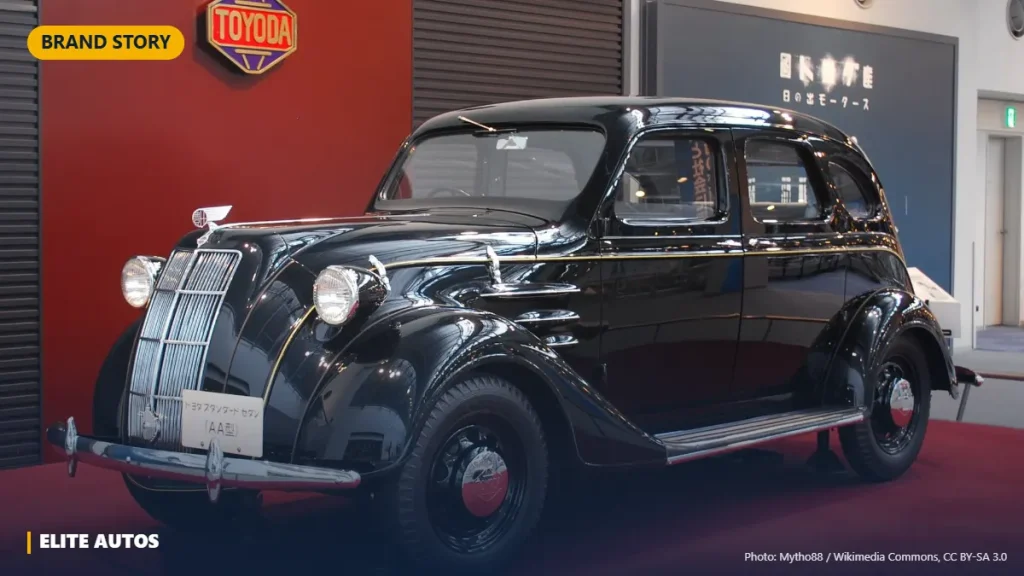
Toyota began as the automobile division of Toyoda Automatic Loom Works, the company built on Sakichi Toyoda automatic loom. His son Kiichiro Toyoda led the move into cars, and Toyota Motor Co., Ltd. was established in 1937.
In this article
- Timeline
- The first car: Model AA
- What made Toyota different
- Toyota today
- Toyota in 2025: record sales for the sixth year at number one
- Five things most people do not know about Toyota
- Toyota in Pakistan and the Gulf
- Three lessons from the Toyota story
- What it means for buyers today
- What to watch from Toyota next
- Frequently asked questions
Timeline
| Year | Milestone |
|---|---|
| 1933 | Automobile department set up inside Toyoda Automatic Loom Works |
| 1934 | First Type A engine |
| 1935 | Model A1 prototype car and G1 truck |
| 1936 | Model AA, the first production passenger car, priced at ¥3,350 |
| 1937 | Toyota Motor Co., Ltd. established |
| 1938 | Koromo (now Honsha) plant opens |
| 1955 | Toyopet Crown, developed with Japanese technology |
| 1957 | Crown becomes the first Japanese passenger car exported to the US |
The first car: Model AA
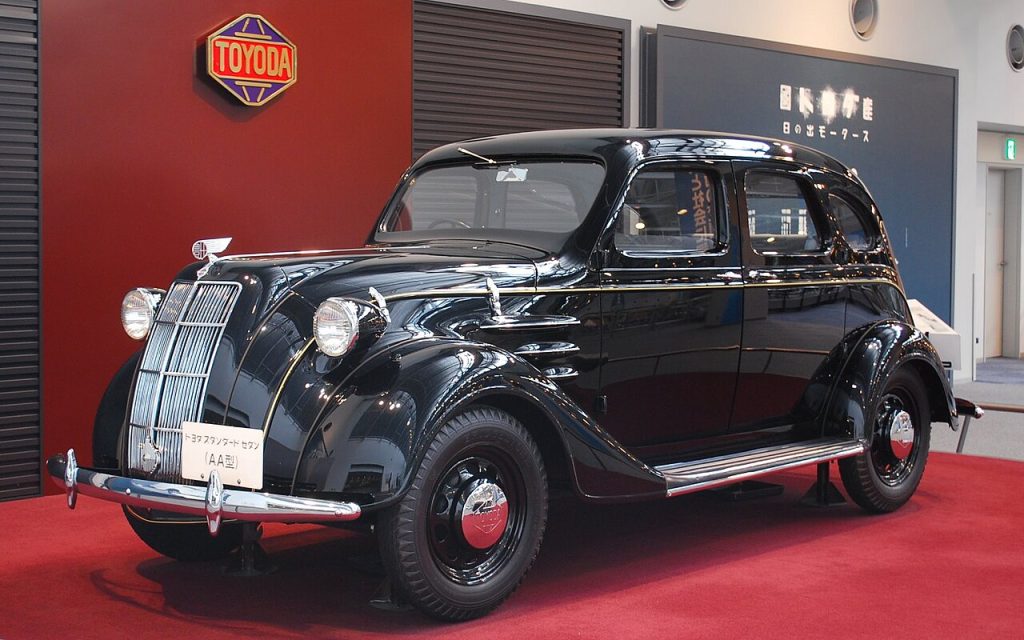
The Toyoda Model AA went on sale in 1936. It followed US design ideas of the time, including streamlined styling inspired by the Chrysler Airflow, and 1,404 were built by 1942. The name changed from Toyoda to Toyota in 1936 when the logo was designed.
What made Toyota different
- Manufacturing method: the Toyota Production System and just-in-time thinking, rooted in the loom business.
- Patience on hybrids: the Prius bet now pays off as hybrid demand rises.
- Global scale: Toyota is the world largest automaker by volume.
Toyota today
In November 2026 Toyota raised its operating profit forecast to ¥3.9 trillion for the year to March 2027, with electrified vehicles at 55.6% of Toyota and Lexus sales in the first half.
Toyota in 2025: record sales for the sixth year at number one
Toyota remained the world’s largest carmaker in 2025 for the sixth year in a row. Group sales, including Daihatsu and truck maker Hino, rose 4.6% to a record 11,322,575 vehicles, well ahead of the Volkswagen Group’s 8,983,900. Toyota and Lexus brand sales alone rose 3.7% to a record 10,536,807, and Lexus reached its own record of 882,231 cars. Group production rose 5.7% to 11,221,960 vehicles.
| Measure (2025) | Value | Change |
|---|---|---|
| Toyota group sales | 11,322,575 | +4.6% |
| Toyota and Lexus brands | 10,536,807 | +3.7% |
| Lexus | 882,231 | +3.6% |
| Group production | 11,221,960 | +5.7% |
The engine of that growth was hybrids. Strong demand for hybrid models in North America and Japan more than offset higher U.S. tariffs, and sales rose 7.3% in North America and 4.1% in Japan. While rivals bet heavily on pure electric cars, Toyota kept a “multi-pathway” strategy of hybrids, plug-in hybrids, battery-electric cars and hydrogen, and 2025 showed how well that approach suits a world where EV demand is uneven.
Five things most people do not know about Toyota
- Toyota began as Toyoda Automatic Loom Works; the name was changed to Toyota partly because it is easier to write and is considered lucky in Japanese.
- The Toyota Production System, with ideas such as “just-in-time” and “kaizen”, is studied by factories far outside the car industry.
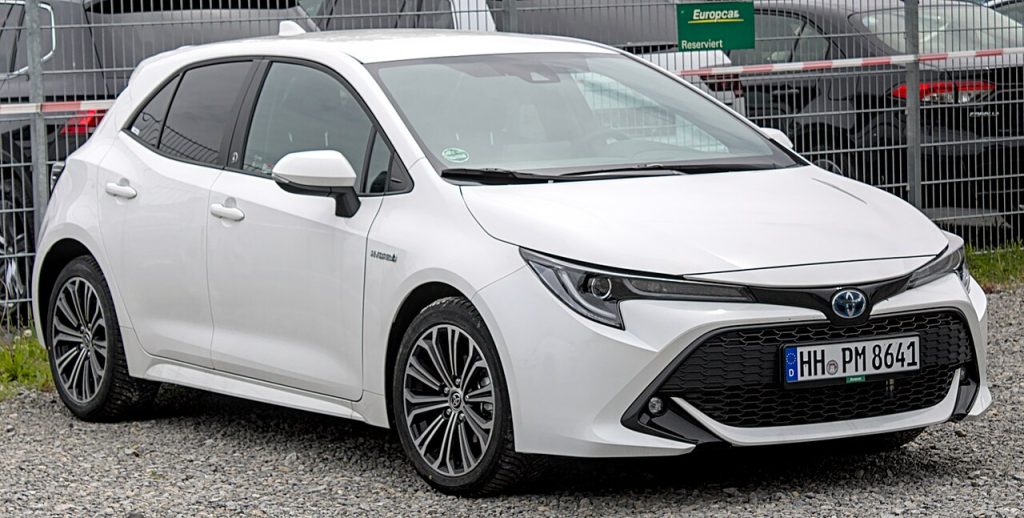
- The Corolla is one of the best-selling car nameplates in history, sold in more than 150 countries.
- The Prius of 1997 was the first mass-produced hybrid car.
- Toyota also owns Daihatsu and Hino, and holds stakes in Subaru, Mazda and Suzuki.
Toyota in Pakistan and the Gulf
In Pakistan, Toyota cars are assembled in Karachi by Indus Motor Company, a joint venture that began production in 1993. The Corolla has been one of the country’s best-selling sedans for decades, the Hilux and Fortuner dominate the pickup and SUV segments, and the locally assembled Corolla Cross hybrid brought hybrid technology to Pakistani assembly lines. In the Gulf, Toyota is the market leader in several countries, and the Land Cruiser is almost a national symbol in Saudi Arabia and the UAE.
Three lessons from the Toyota story
- Small steps add up: continuous improvement, not one big invention, built the world’s largest carmaker.
- Hedging pays: keeping hybrids, EVs and combustion cars in the range protected Toyota when the EV market slowed.
- Quality is a brand: a reputation for reliability lets Toyota charge more and keeps resale values high, especially in Pakistan and the Gulf.
What it means for buyers today
For buyers, Toyota’s strength means three practical things. First, resale values: Toyotas, especially the Corolla, Hilux, Fortuner and Land Cruiser, hold their value better than most rivals in Pakistan and the Gulf, which lowers the true cost of ownership. Second, parts and service: a large dealer network and a huge used-car population mean parts are easy to find, including outside big cities. Third, hybrids: Toyota’s long experience with hybrid systems makes models such as the Corolla Cross and Yaris Cross hybrid a lower-risk choice for buyers who want better fuel economy without relying on public charging.
The main drawback is price. Strong demand and high taxes mean Toyotas are rarely the cheapest option, and waiting times for popular models can be long. Chinese and Korean brands now offer more features for the money, so buyers should compare equipment and warranty terms carefully rather than choosing on badge alone.
What to watch from Toyota next
Toyota is expanding its electric range with models such as the bZ3X and bZ5 in China and working on solid-state batteries for future Lexus models. At the same time it continues to invest in hydrogen and synthetic fuels. Whether this broad strategy keeps paying off will depend on how quickly China and Europe move to pure electric cars.
Read the full family of brand histories in our Brand stories hub and compare Toyota with its rivals on the Car brands A–Z.
Frequently asked questions
When was Toyota founded?
Toyota Motor Co., Ltd. was established in 1937.
What was Toyota first car?
The Toyoda Model AA passenger car, released in 1936.
Why is it Toyota and not Toyoda?
The family name is Toyoda; the company adopted Toyota for its brand in 1936.
Sources
- Toyota global: the beginnings
- Toyota 75 years: Model AA
- Toyota UK: where it all began
- Credence Research: Toyota forecast
This article was prepared with AI assistance and checked against the sources listed. Read our AI use policy and corrections policy.
Related on Elite Autos
 Toyota Century Royal: the $500,000 V12 limousine of Japan’s Emperor, and only four exist
 British royal cars: the Bentley State Limousines, King Charles’s wine-powered Aston Martin and the Royal Mews
 Sultan of Brunei car collection: 7,000 cars, 500 Rolls-Royces and the one-offs built only for him
 Pagani history: Horacio Pagani’s journey from Argentina to the Utopia V12