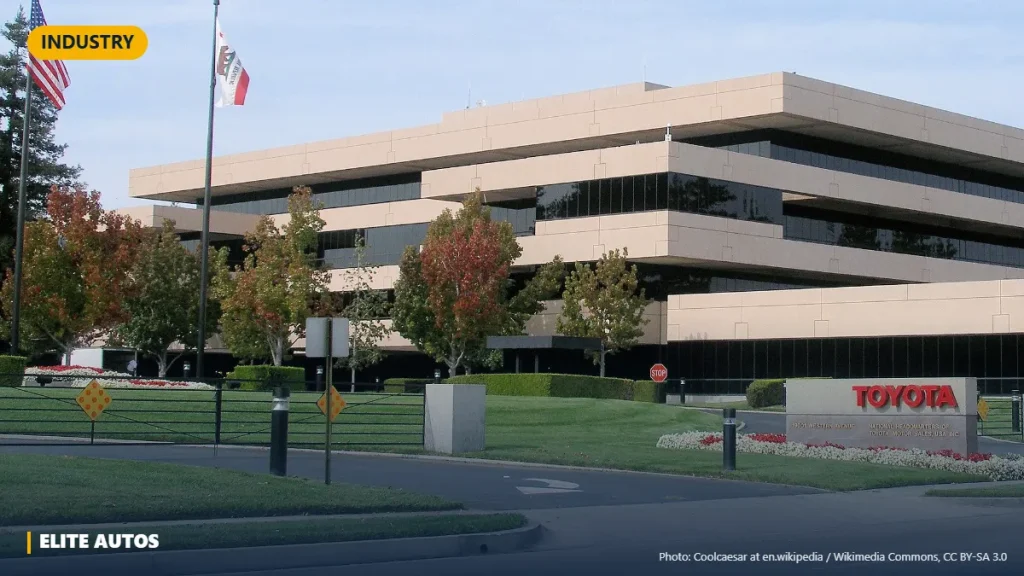
Toyota raised its operating profit forecast for the fiscal year ending March 31, 2027, to ¥3.9 trillion (about $24.6 billion) from ¥3.4 trillion, even as it cut its group retail sales projection to 10.99 million vehicles from 11.18 million. The company reported results on November 5, 2026.
In this article
The numbers
| Metric | Previous guidance | New guidance |
|---|---|---|
| Operating profit (FY to Mar 2027) | ¥3.4 trillion | ¥3.9 trillion |
| Net profit attributable | ¥3.25 trillion | ¥3.57 trillion |
| Sales revenue | ¥54 trillion | ¥53.5 trillion |
| Group retail sales | 11.18 million | 10.99 million |
| Consolidated vehicle sales | 9.7 million | 9.7 million (unchanged) |
- July to September quarter operating profit rose 34% to about ¥1.13 trillion, above the median analyst forecast of ¥992 billion.
- First-half operating income reached ¥2.19 trillion on revenue of ¥26.96 trillion, and North America returned to profit.
- Electrified vehicles were 55.6% of Toyota and Lexus sales in the half, up from 46.7%.
- China retail sales fell to 685,000 from 914,000 in the half.
Reading between the lines
Profit is up while volume is down. That combination comes from hybrid pricing power, cost cuts and a weak yen, not from selling more cars. The China number is the warning: a 25% drop in half-year retail sales in the world largest market shows how hard Chinese brands are squeezing foreign makers on their home turf. Toyota also asked Washington whether its $3.6 billion Texas plant qualifies for the kind of tariff relief Audi is reportedly getting for a Georgia plant, a sign tariffs are still a live cost.
The numbers behind the upgrade
Toyota raised its operating profit forecast for the year ending March 2027 by 15%, from ¥3.4 trillion to ¥3.9 trillion, and its net profit forecast from ¥3.25 trillion to ¥3.57 trillion. It trimmed its revenue forecast from ¥54 trillion to ¥53.5 trillion. In the July–September quarter, operating profit rose 34% to ¥1.128 trillion, well above the ¥992 billion analysts expected (Grafa, Star Advertiser).
| Forecast (FY to March 2027) | Before | Now |
|---|---|---|
| Operating profit | ¥3.4 trillion | ¥3.9 trillion |
| Net profit | ¥3.25 trillion | ¥3.57 trillion |
| Revenue | ¥54 trillion | ¥53.5 trillion |
Toyota also raised its interim dividend to ¥50 per share and expanded its share buyback. Even after the upgrade, net profit is still expected to be about 7.2% lower than the previous year (Qatar Tribune).
Why profit is up while sales are down
Three factors explain the gap. First, a weaker yen raises the value of overseas earnings when converted back to yen. Second, U.S. tariffs turned out lower than Toyota had feared, and its North American business returned to profit in the first half. Third, Toyota’s mix of high-margin hybrids, SUVs and pickups means it earns more per vehicle even when total sales fall, including in China, where its sales are under pressure from local brands (Credence Research, BusinessDay).
Toyota also earns a growing share of profit from its “value chain”, such as parts, servicing, financing and used cars for the roughly 150 million Toyotas on the road. That business grew from ¥1 trillion in fiscal 2021 to ¥2.1 trillion in fiscal 2026, according to the company.
What it means for Pakistan
Toyota’s strong global finances support continued investment in hybrids, which benefits Indus Motor Company in Pakistan, assembler of the Corolla, Corolla Cross hybrid, Yaris, Hilux and Fortuner. But a weak yen and global profit do not automatically lower Pakistani prices, which depend more on the rupee, local taxes and the new auto policy. Read the Toyota brand story for the full background.
Key takeaways
- Toyota raised its full-year operating profit forecast 15% to ¥3.9 trillion.
- July–September operating profit rose 34% to ¥1.128 trillion, beating analyst estimates.
- Revenue forecast was trimmed slightly to ¥53.5 trillion as sales soften, especially in China.
- A weak yen, lower-than-feared U.S. tariffs and a high-margin hybrid mix explain the gap.
The weak points in the result
The upgrade is strong, but it is not the whole story. Net profit is still expected to fall about 7% from last year. A large part of the gain comes from the weak yen, which Toyota does not control; if the yen strengthens, the forecast could come under pressure. Sales in China remain weak as local brands win buyers with cheaper electric cars, and Toyota’s battery-electric line-up is still small compared with Chinese rivals. Toyota’s profit engine depends on hybrids staying popular in North America and Japan.
What it means for investors and the industry
For the industry, Toyota’s results show that a strong hybrid line-up plus a large service and finance business can protect profits in a difficult market. Rivals that bet early and heavily on battery-electric cars, especially in Europe, are reporting cuts and restructuring instead. That contrast is likely to push more carmakers toward hybrids in their next product plans.
What to watch next
- The yen exchange rate against the dollar.
- Toyota’s sales trend in China and new local EV launches.
- Any change in U.S. tariff policy on Japanese vehicles and parts.
Bottom line
Toyota’s upgrade shows the strength of its hybrid-first strategy, but much of the profit boost comes from currency and tariff relief. The real test will be whether it can defend sales in China and grow its EV line-up without hurting margins.
Frequently asked questions
What is Toyota operating profit forecast for FY2027?
¥3.9 trillion (about $24.6 billion) for the year ending March 31, 2027, up from ¥3.4 trillion.
Did Toyota cut its sales forecast?
Yes. Group retail sales guidance was cut to 10.99 million vehicles from 11.18 million.
What share of Toyota sales are electrified?
55.6% of Toyota and Lexus sales in the first half, up from 46.7% a year earlier.
Sources
- just-auto: Toyota raises annual profit forecast despite lower sales outlook
- Credence Research: Toyota raises operating income forecast to ¥3.9 trillion
- Star Advertiser: Toyota posts profit surge and lifts annual outlook
This article was prepared with AI assistance and checked against the sources listed. Read our AI use policy and corrections policy.
Related on Elite Autos
 Brief: General Motors moves its stock listing from NYSE to Nasdaq
 Brief: Stellantis sells idled Brampton car plant to armoured-vehicle maker Roshel
 Pakistan vs India car industry 2026: sales, exports, ownership and growth compared
 Pakistan auto industry news, November 2026: $6bn export plan, Sazgar’s Philippines plant, fuel relief